

Tech stocks are getting all the attention right now, and it’s easy to see why.
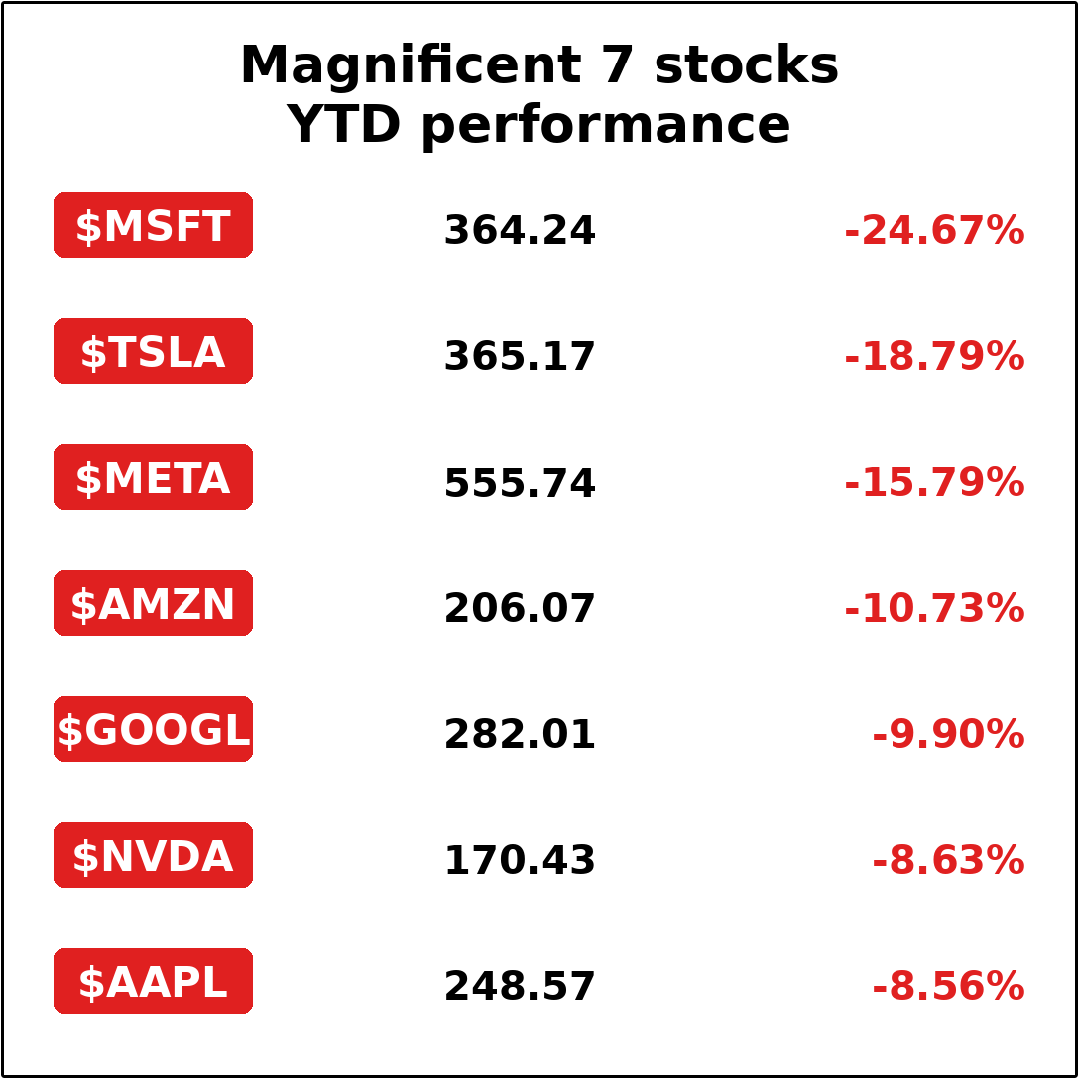
All of the MAG7 stocks have seen a serious pullback so far in 2026.
But there’s a more interesting story going on behind the scenes that isn’t currently getting any attention.
The REIT market has seen a massive shift in the last month-
And no one seems to be talking about it.
🏢 REITs Are Outperforming
REITs were an asset class I had been bullish on over the last few months, primarily due to two reasons:
Historically low valuations
Declining interest rate environment
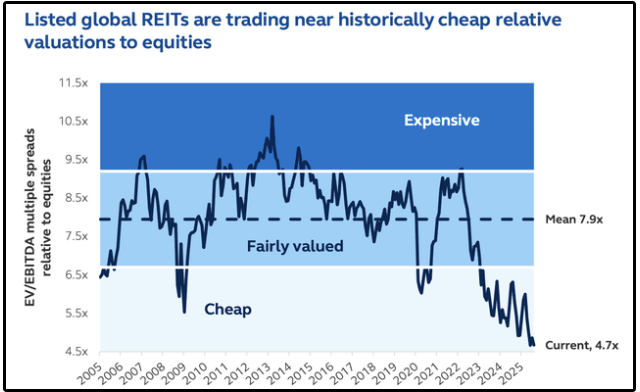
It was a perfect scenario for investors who had been accumulating shares of this out of favor asset class.
And so far, REITs have outperformed in 2026.
In fact, at the beginning of March, Vanguard’s Real Estate ETF (VNQ) was up 8.5%, while the S&P 500 was up only 0.5%.
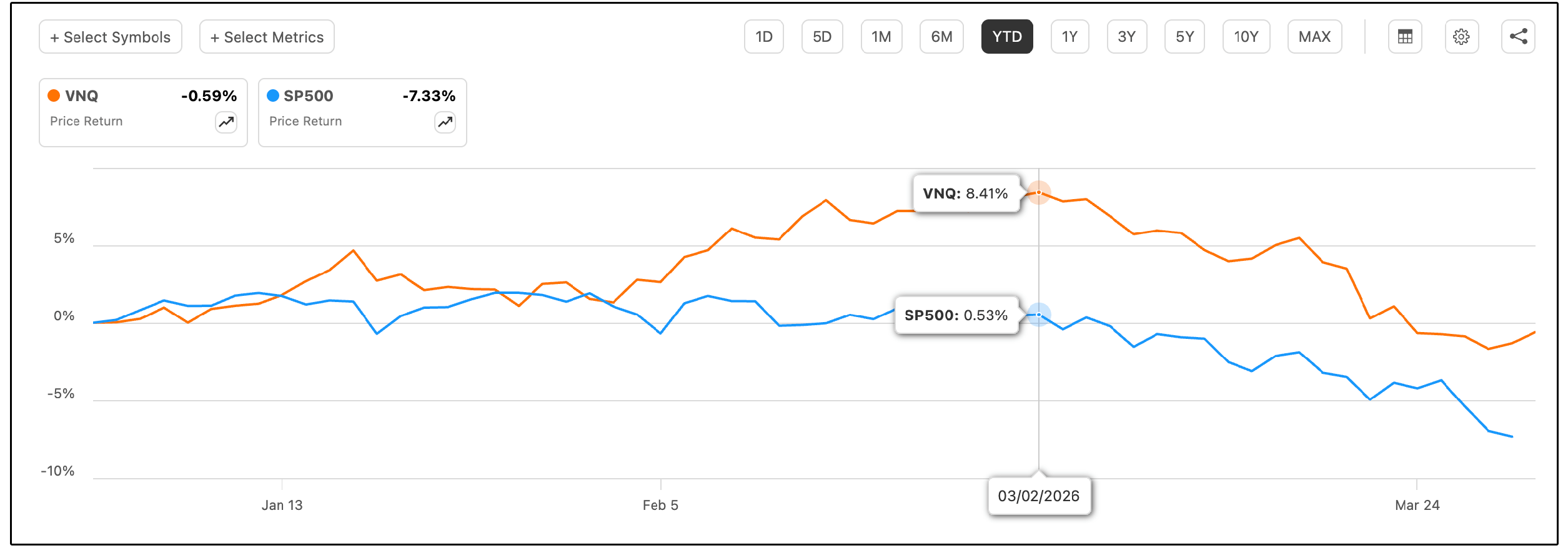
But everything changed in March for REITs.
So much so, that we saw a significant sell off for many higher quality REITs.
In fact, most REITs were down this month anywhere from 7% to 10%!
That’s a large sell off in just one single month.
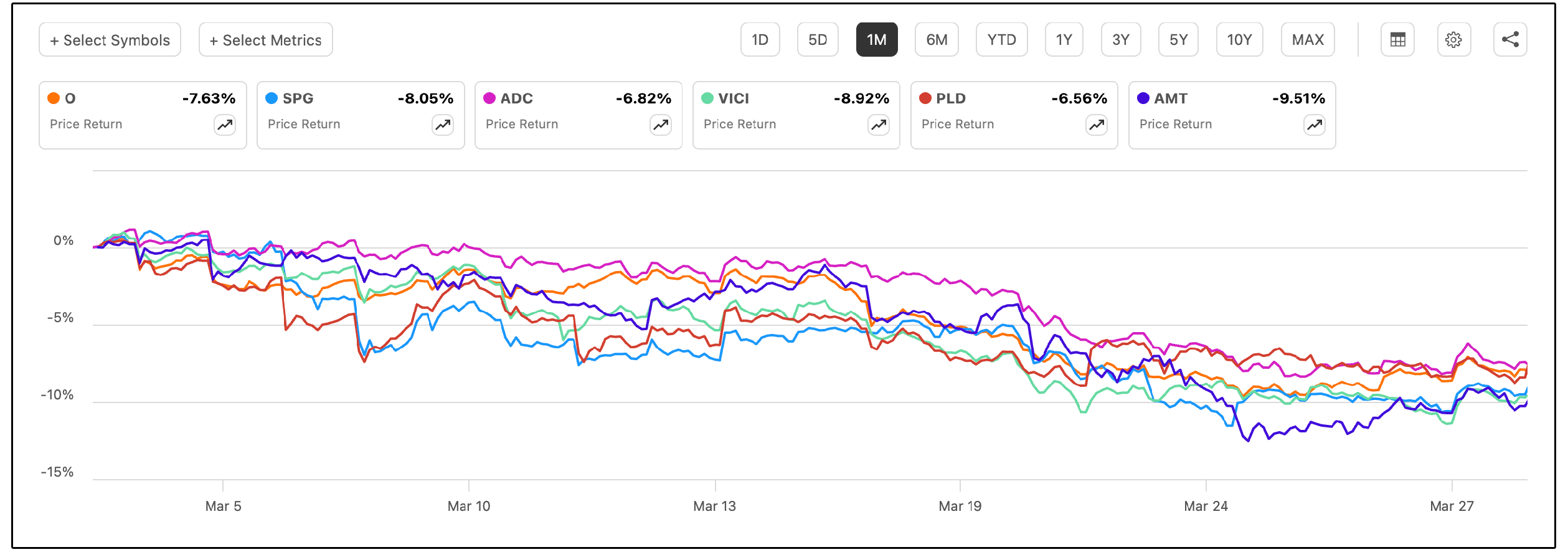
A sell off of this degree that occurs across an entire sector typically means something bigger has changed beneath the surface.
Not just sentiment changing, but the underlying macro environment that drives the entire asset class.
What has actually happened is the result of a chain reaction of events.
🔗 The Chain Reaction
It all started with oil.
Oil is the lifeblood of the global economy.
And when oil prices rise, it doesn’t just impact energy companies, it ripples through everything.
Transportation costs go up
Manufacturing costs go up
Food production becomes more expensive
And ultimately… prices rise across the entire economy.
So, what’s happened to oil prices in the last month?
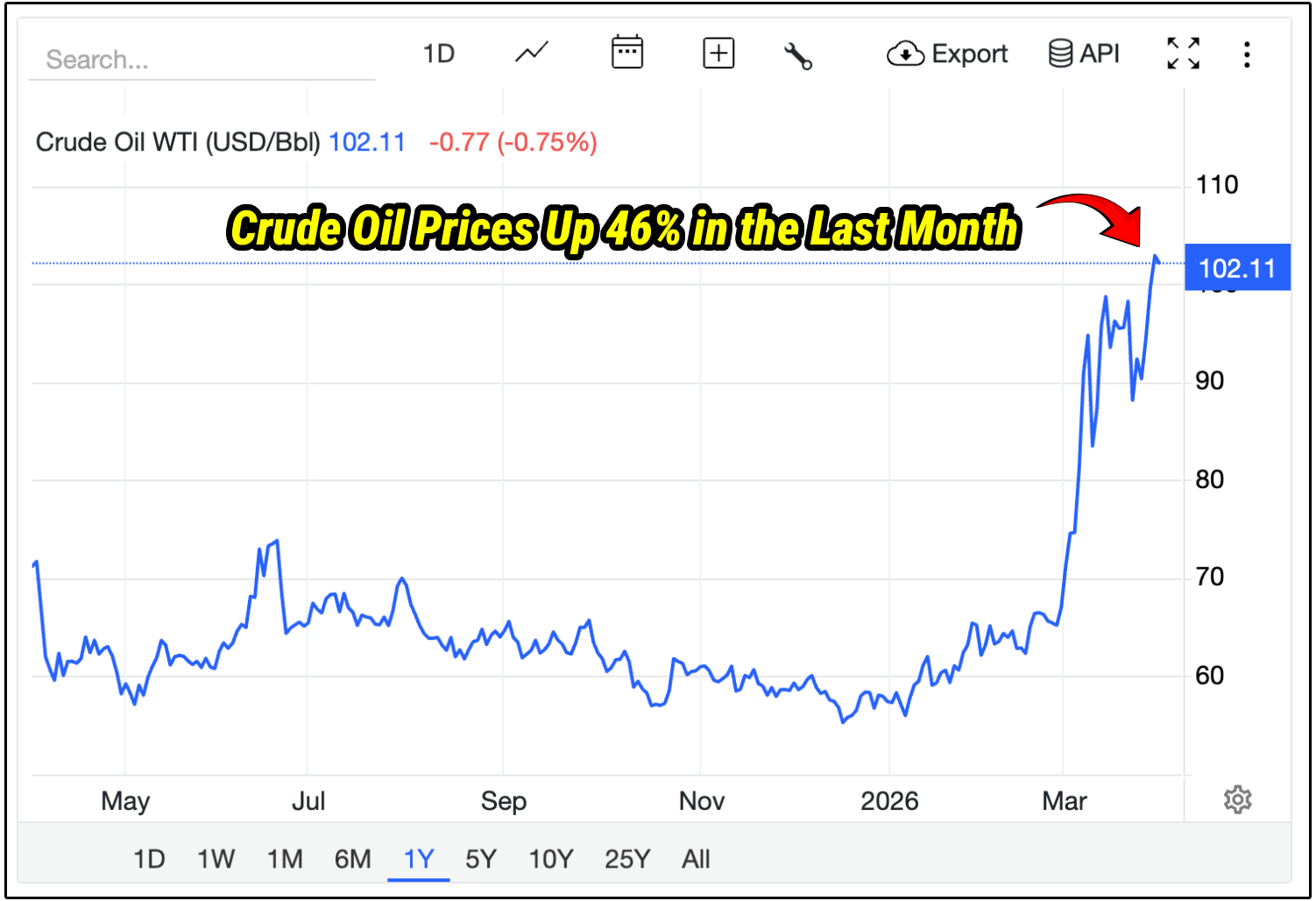
Crude oil is up 46% in just the last month, and is easily sitting at a 52 week high.
The key question is this:
How does this impact overall inflation?
In 2023, the Federal Reserve released research on how oil prices impact inflation.
The end result was this formula:

Let me translate what this actually means in English.
According to the Federal Reserve, a 10 percent increase in the price of oil raises the energy CPI by about 1.5 percent almost immediately.
On the surface, a rise in energy prices might not seem like a big deal.
After all, energy only makes up about 6.3% of the CPI basket, meaning even a 1.5% increase would directly add just ~0.1% to inflation.
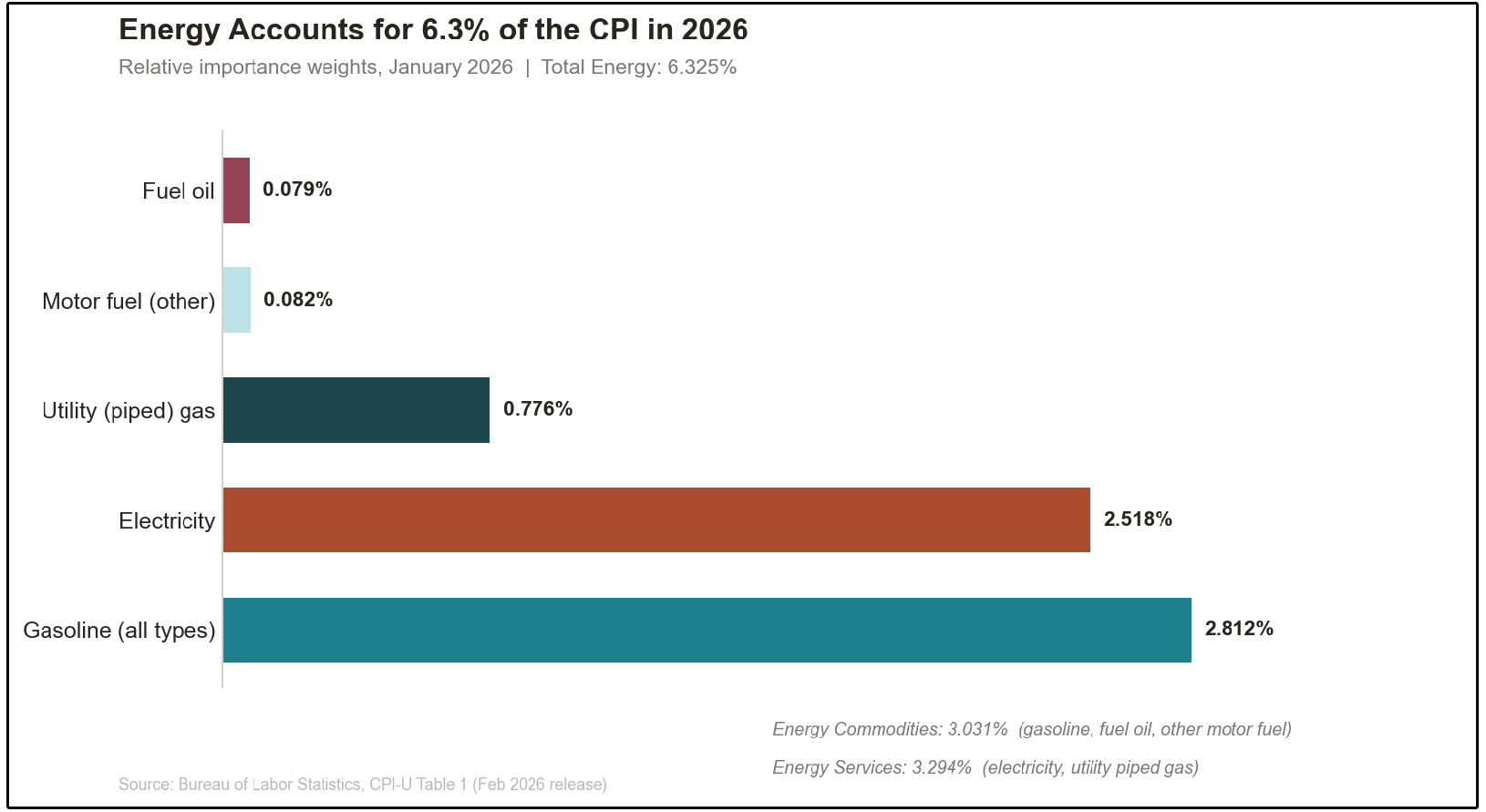
Now let’s start to do some math.
With crude oil up 46% in just the last month, the direct impact alone would suggest a noticeable bump in inflation.
If a 10% increase in oil prices adds roughly 0.4 percentage points to headline CPI when accounting for both direct and indirect effects, then a move of this magnitude could hypothetically push inflation higher by well over 1% over time.
For reference, CPI has just recently started to get close to the FED’s target of around 2%.
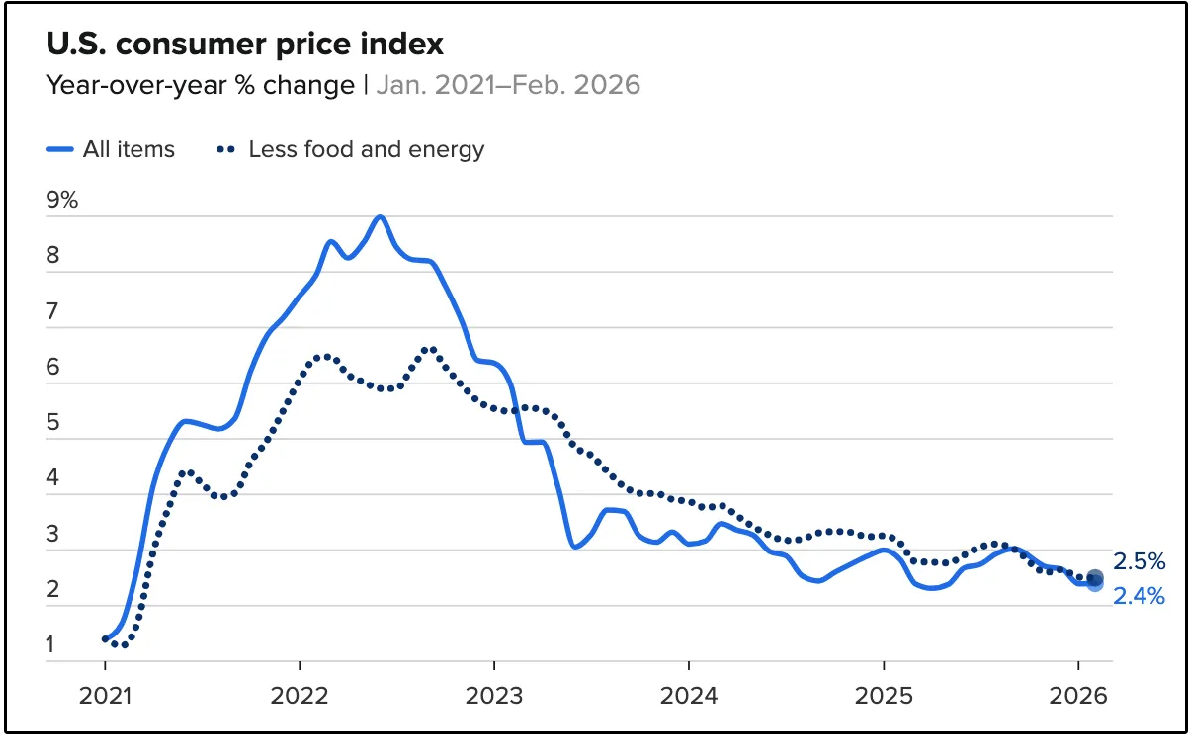
And importantly, this wouldn’t happen all at once.
The initial spike would show up quickly through energy prices, but the larger impact would come gradually, as higher transportation, production, and food costs work their way through the economy.
Essentially, this has the potential to reignite sustained inflationary pressure in the months ahead.
🏦 The FED’s Response
The Federal Reserve has two goals:
Keep inflation tame
Support the job market

There is one lever they can pull to impact both of these:
Interest rates.
When inflation is rising, the Federal Reserve raises interest rates to slow the economy down.
Higher rates make borrowing more expensive, reduce spending, and ultimately bring inflation back under control.
On the flip side, when the economy weakens, the Fed lowers interest rates to stimulate growth.
In October of last year, Jerome Powell stated this about the market:
“In this less dynamic and somewhat softer labor market, the downside risks to employment appear to have risen” - Jerome Powell
Powell and the FED indicated through the end of 2025 that two to three rate cuts were likely in 2026.
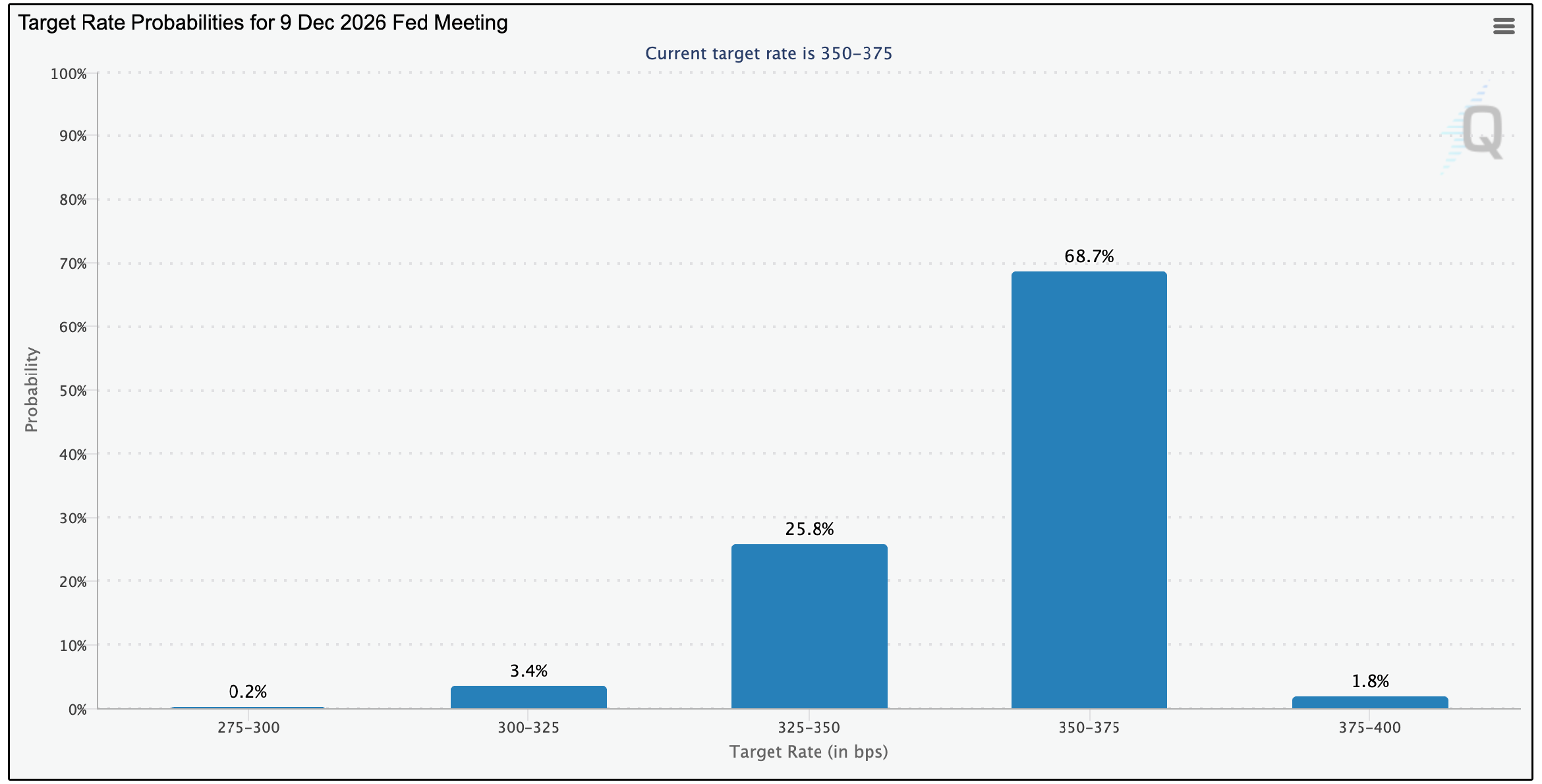
But due to the significant rise in oil prices and the chain reaction that occurred as a result, we’ve seen a significant shift in rate projections for 2026.
The market is now projecting a 68.7% chance we don’t see any rate cuts by December of 2026.
⚖️ The Opportunity Cost
As an example, Agree Realty (and most REITs in general) are heavily impacted by interest rates from an opportunity cost perspective.
Every investment must be viewed through the lens of opportunity cost.
For the risk-averse investor seeking yield, Treasury rates play a massive role in shaping behavior.
When the Federal Reserve keeps rates elevated, or even considers hiking, Treasury yields remain high, allowing investors to earn 4–5%+ on “risk-free” assets with virtually no volatility.
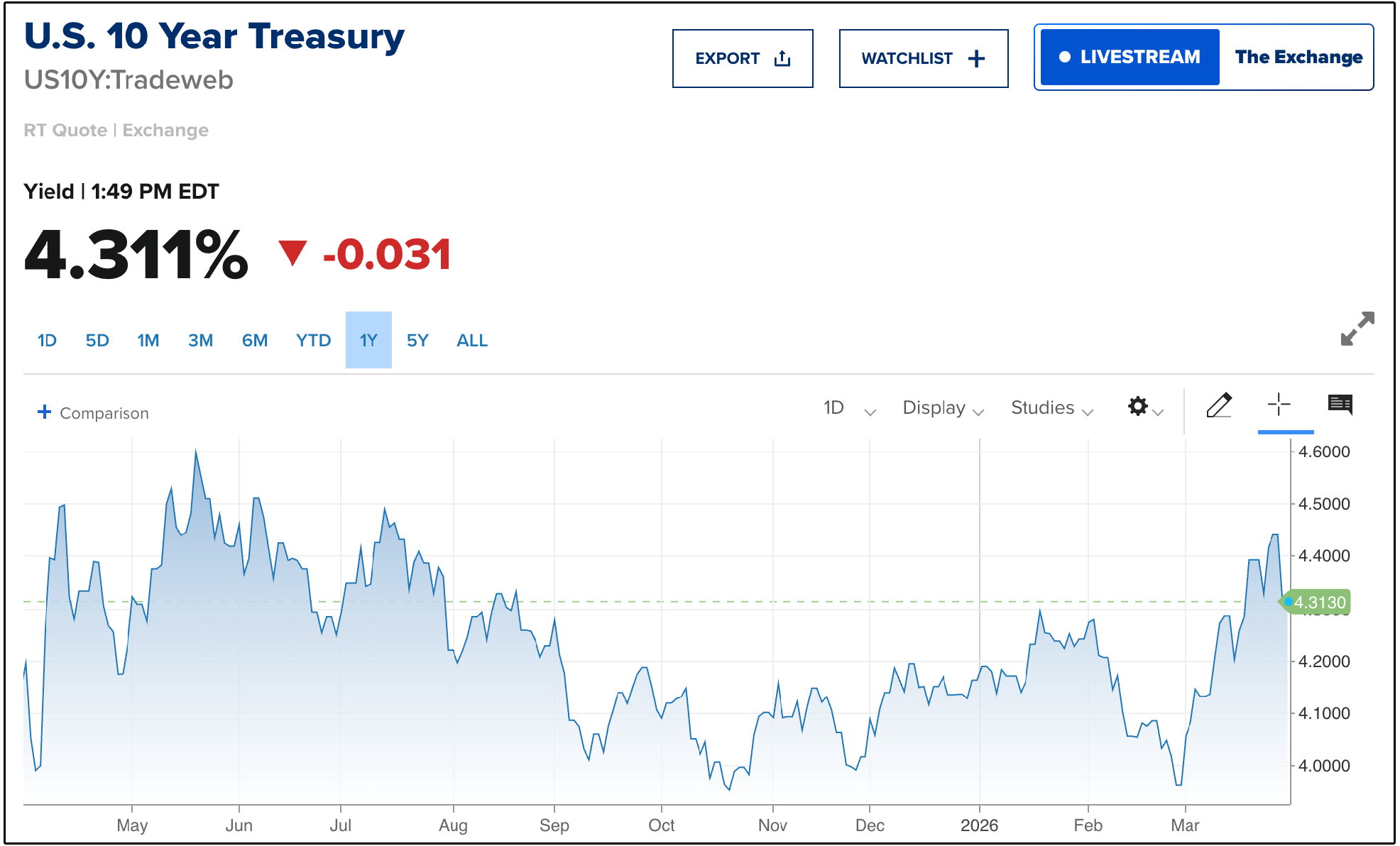
And that’s where the problem begins for REITs.
ADC currently yields 4.2%.
But if investors can earn 4.3%+ risk-free…
Why take on additional risk for a similar yield?
📈 Reality For REITs & AI
The reality for higher quality REITs is that their fund from operations continues to grow year after year.
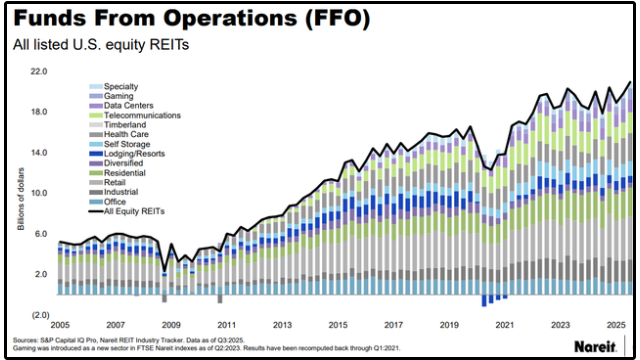
In other words, intrinsic value continues to grow.
When share price doesn’t immediately follow intrinsic value, it creates valuation gaps.
On top of this AI is rapidly expanding across industries, but it’s also lowering barriers to entry, leading to more competition, weaker pricing power, and margin pressure across many businesses.
This creates a growing risk for passive investing, which allocates capital without considering durability or competitive advantage.
At the same time, tech giants like Meta Platforms, Microsoft, and Alphabet are being forced into massive, uncertain CapEx spending to stay competitive in AI.
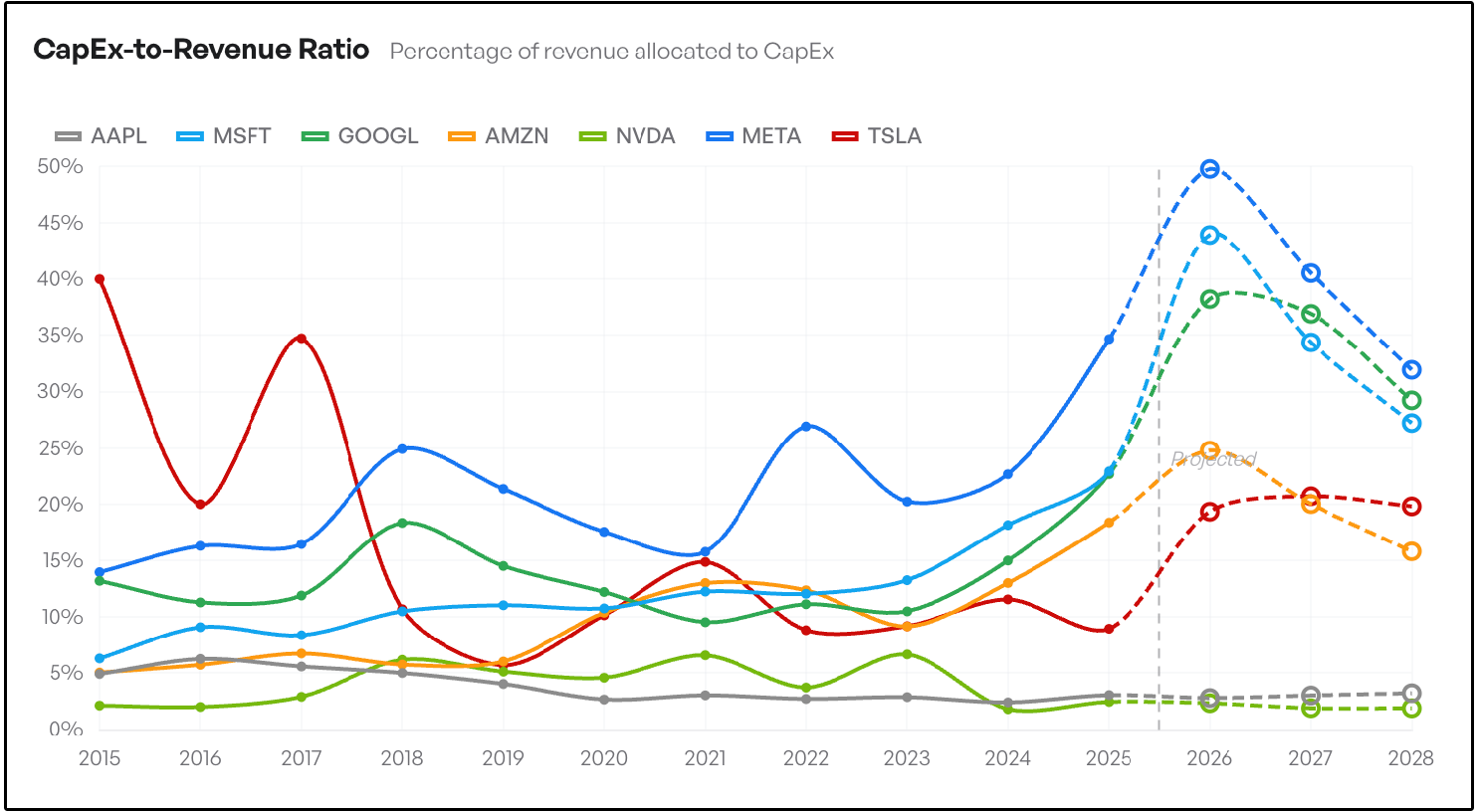
In contrast, REITs offer something fundamentally different, scarcity, predictable cash flow, and inflation protection.
Real estate can’t be replicated by AI, and many REITs have built-in inflation-linked rent escalators, making them structurally more resilient.
As AI increases competition in digital industries, capital may increasingly shift over the long term toward real assets that are durable and cash-flowing, and that’s exactly where REITs stand out.
📊 REIT Database
Members of Dividendology have access to the Dividendology REIT Database at anytime.
Today, I’m sharing a portion of it with you.
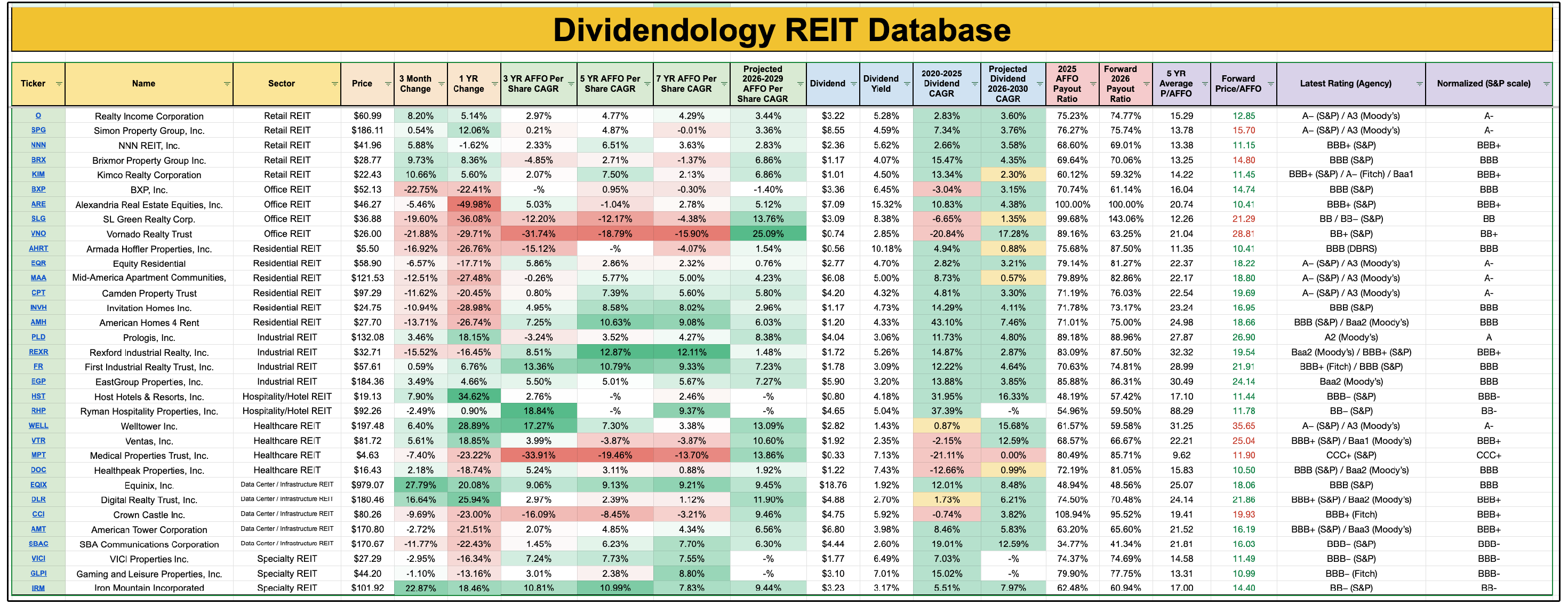
As of right now, 25 of the 33 REITs tracked in the database are trading well below their historic average multiples.
20 of the REITs are projected to grow AFFO per share at a CAGR of above 5% through 2029.
While REIT valuations might remain temporarily compressed due to potentially no interest rate cuts in 2026, the reality is that this sector still appears to be one of the better risk adjusted return opportunities.
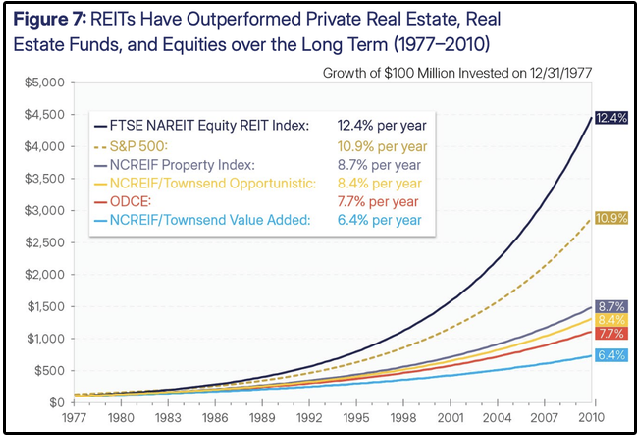
And keep in mind the reality that REITs have done exceptionally well over full market cycles.
🎯 …Something Big is Coming…
I’ve been conducting extensive interview with fund managers over the last 6 months, in an effort to identify the best income ETF opportunities.
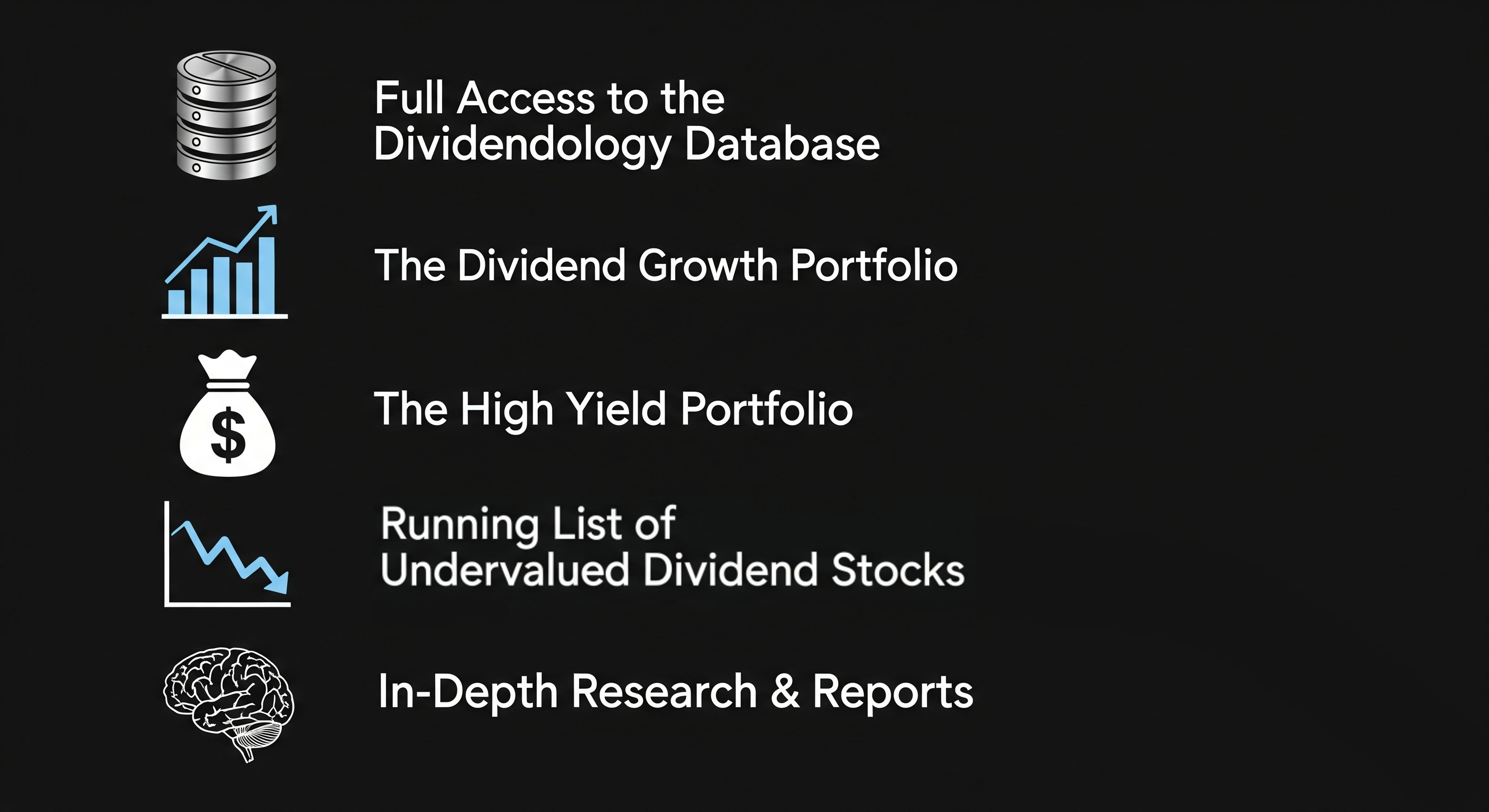
I’m compiling these interviews into a massive database, which will be available to members of Dividendology soon.
If you want to get access to it, as well as all other features mentioned below, then you can join here:
Stay tuned!
Dividendology
Check out these resources:
Tickerdata 🚀 (My automated spreadsheets and instant stock data for Google Sheets!)
Interactive Brokers 💰 (My favorite place to buy and sell stocks all around the world!)
Seeking Alpha 🔥 (Research stocks $30 off! + 7 day free trial)
HYSA 📊 (Get Access to the Best High Yield Savings Accounts!)
REITs didn’t “change”—
the rate expectation did.
If yields stay high, the valuation gap isn’t opportunity—
it’s pressure that hasn’t finished working through yet.
so... opportunity to buy?