

The most common mistakes I see dividend investors make?
Not knowing where they are on the dividend growth pyramid.

If you want to maximize your income, you must understand the dividend pyramid.
📝 How You Should Invest
The end goal for most interested in dividends, is to be able to one day live off dividends.
However, the path to achieving that goal looks different for everyone.
Fortunately, the dividend growth pyramid tells you exactly:
How to invest
When to invest
Where to invest

If we had to summarize what this means, this is the key concept:
The longer your time horizon, the more you should focus on dividend growth.
The shorter your time horizon, the more you should focus on yield.
This concept is best understood when visualized.

Over the long term, dividend growth stocks tend to payout more in dividends than high yielders.
But in the short to mid term-
High yielders typically pay out substantially more.
📊 My High Yielders
I often discuss how powerful a dividend growth strategy can be over long periods of time, particularly when it comes to living off dividends.
And as you probably already know, dividend growth stocks have historically outperformed.

In my personal portfolio, the bulk of my investments are dividend growth.
However, high yielding investments have the potential to be incredibly powerful when utilized correctly-
And it would be unwise to take advantage of them when they provide strong total return potential.
Believe it or not, that happens more often than you might think.
In fact, I currently have 2 high yielding stocks in my personal portfolio:
EPD - Enterprise Products Partners (my yield on cost: 9.67%)
MO - Altria Group (my yield on cost: 9.75%)
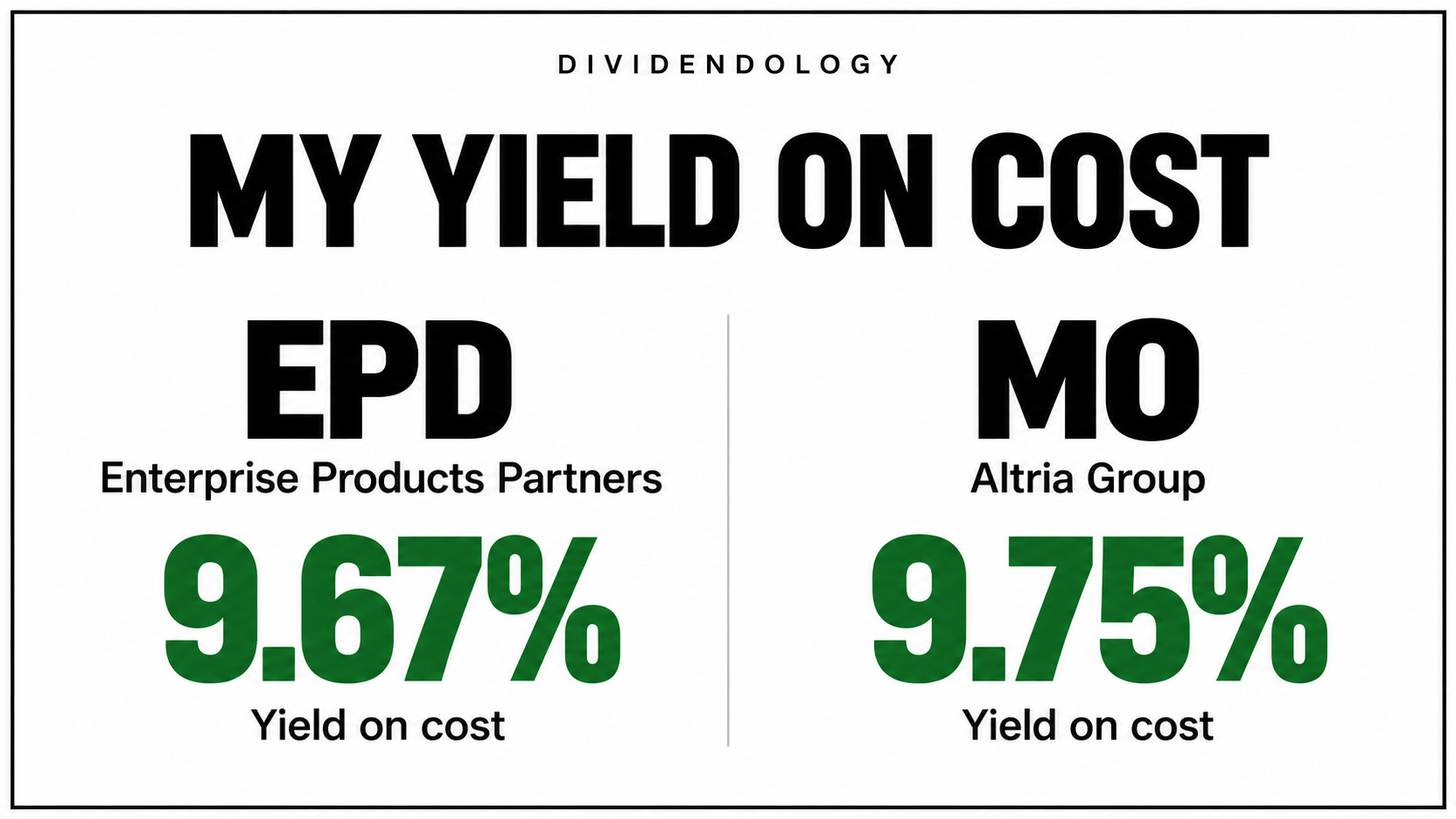
Not only is my yield on cost for both of these positions well above 9%, but I’ve seen phenomenal gains from these positions:
EPD +95.44%
MO +97.9%
Despite having yields on cost of nearly 10% for both positions, the total returns for these stocks have been incredible.
At the beginning of this year, I also added MPLX.
At the time, it was yielding roughly 8.5%.
That position has already grown by roughly 25%.
The idea that high yield automatically means high risk couldn’t be further from the truth.
📈 When Dividend Growth Overtakes High Yield
Let’s say you invest $100,000 in each of two portfolios:
Dividend Growth Portfolio: A starting yield of 3%, with dividends growing 10% annually.
High Yield Portfolio: A starting yield of 8%, with dividends growing 2% annually.
For simplicity, assume you spend the dividends, reinvest nothing, and make no additional contributions.
Here’s how much annual dividend income each portfolio would produce:
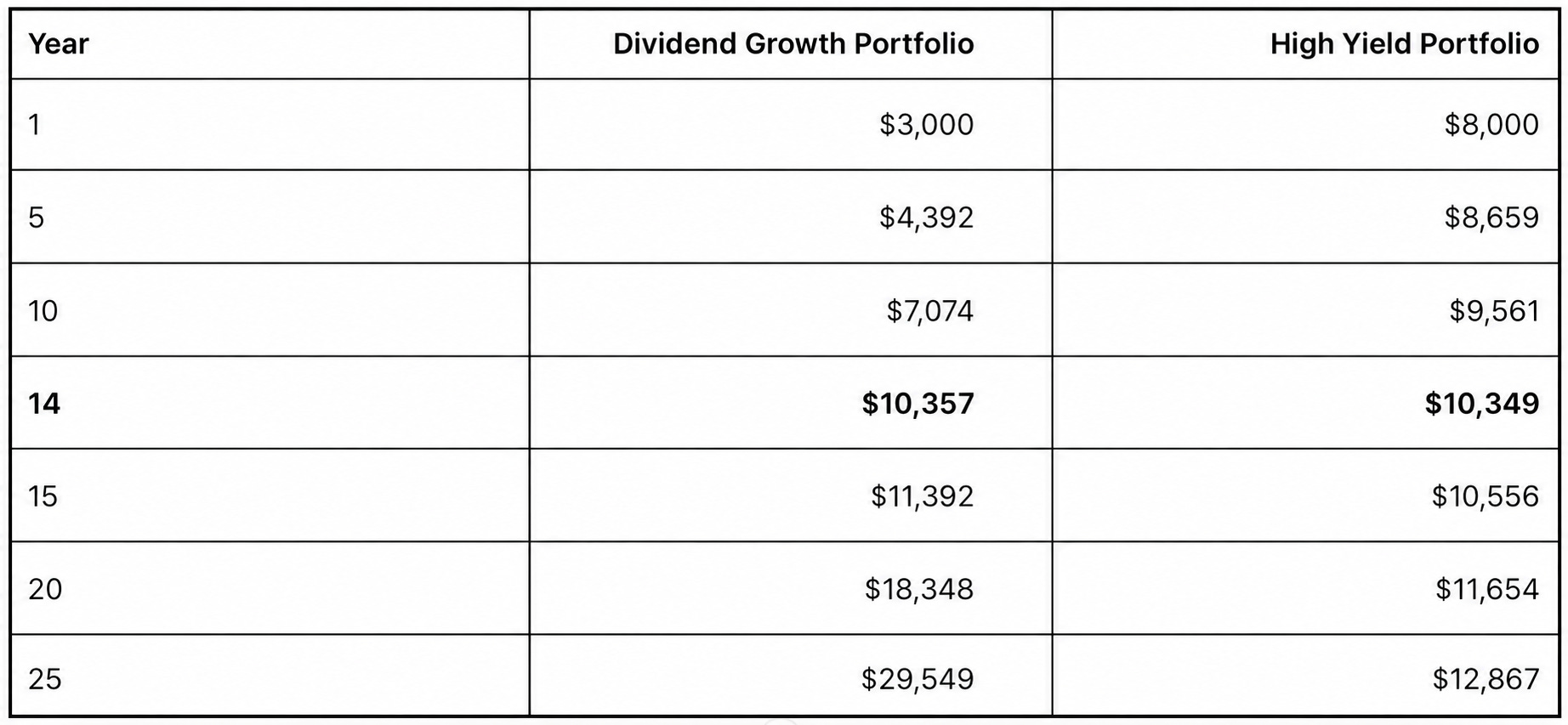
Initially, the high-yield portfolio produces more than twice as much income.
But in year 14, the dividend growth portfolio begins producing more annual income.
By year 25, it pays more than twice as much each year.
That doesn’t mean it has collected more dividends overall by year 14.
The high-yield portfolio built a substantial income lead during those early years.
Over the full 25 years, however, cumulative dividends reach approximately $295,041 for dividend growth versus $256,242 for high yield.
Of course, things like reinvestment and continually adding capital can change the model substantially as well.
🏦 High Yield vs. Dividend Growth
Last year, ahead of launching our two real-money model portfolios, I asked which strategy you were most interested in:
High yield or dividend growth.
The most popular answer was both!

Today, we’re building both the High Yield Portfolio and the Dividend Growth Portfolio-
Because each serves a different purpose.
The High Yield Portfolio emphasizes generating more income today, with a focus on generating a sustainable 8%+ yield.
Based on the 4% rule, this would reduce the capital needed to retire by 50%.
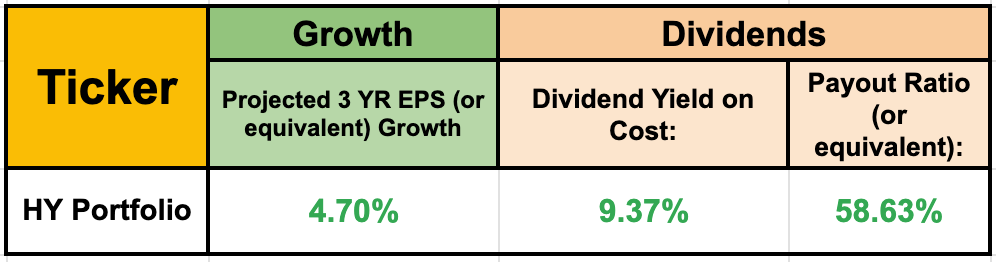
So far, this strategy has done incredibly well-
And we’ve been able to lock in a yield on cost of 9.37%.
Not only have our dividends been sustainable, but the underlying holdings have actually grown their distributions this year!
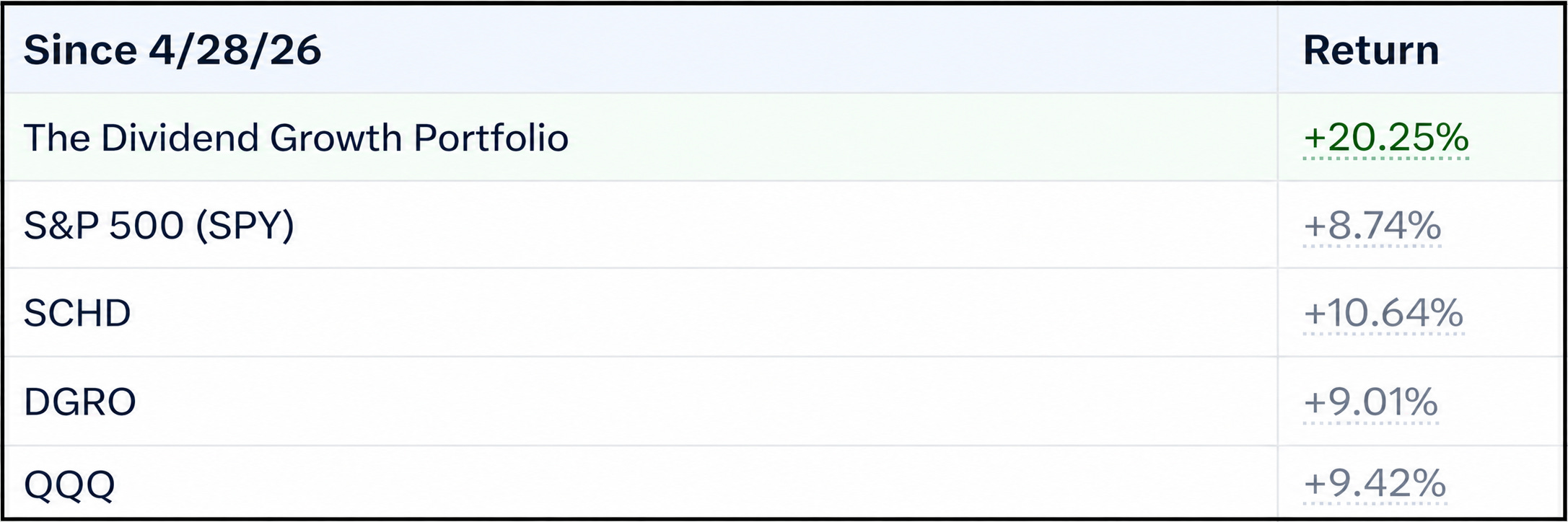
The Dividend Growth Portfolio emphasizes companies that can increase their dividends substantially over time.
The past few months for the Dividend Growth Portfolio have been incredible.
If your goal is to one day live off dividends-
Both strategies can play a role.
The right balance depends on when you need the income and how much time you have to let it compound.
This is exactly why we must understand the Dividend Growth Pyramid.
Ultimately, it will help you back into the type of strategy you should pursue.

💡 The Goal of Dividendology
The goal of this newsletter is to help you compound your knowledge and your wealth-
And to make this the number 1 place for information and research on dividend growth and high yield strategies.
Next week, we will be diving deeper into a High Yield asset class that is being completely overlooked by the market right now.
These stocks will be potential candidates for the High Yield Portfolio.
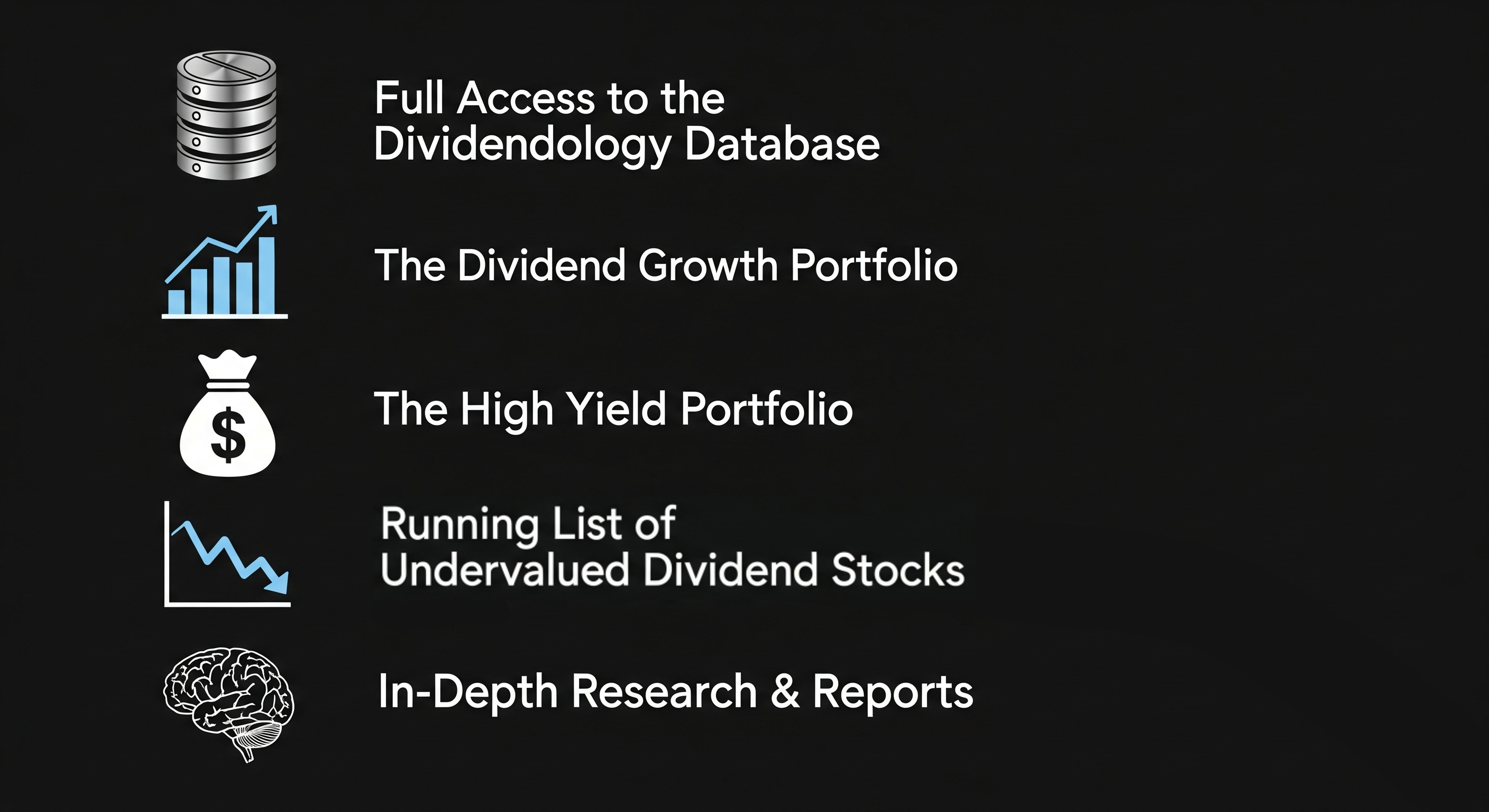
As a reminder, you can get access to all of the following by becoming a member of Dividendology.
See you soon!
Dividendology
Check out these resources:
Tickerdata 🚀 (My automated spreadsheets and instant stock data for Google Sheets!)
Interactive Brokers 💰 (My favorite place to buy and sell stocks all around the world!)
Seeking Alpha 🔥 ($30 off! + 7 day free trial)
Disclaimer: As a reader of Dividendology, you agree to our disclaimer. You can read the full disclaimer here.
The $100,000 comparison of a 3% yield growing dividends 10% a year against an 8% yield growing 2% makes the crossover point concrete. It shows why time horizon decides whether yield or growth should lead.
Interesting perspective! The time horizon really does make a big difference in how investors approach their portfolios.