

At the beginning of each month, I send out a spreadsheet that lists out the dividend stocks that I believe to be undervalued.
This is the end result of 100’s of hours of research every month.
It’s time to dive in.
1. 📊 S&P Global (SPGI)
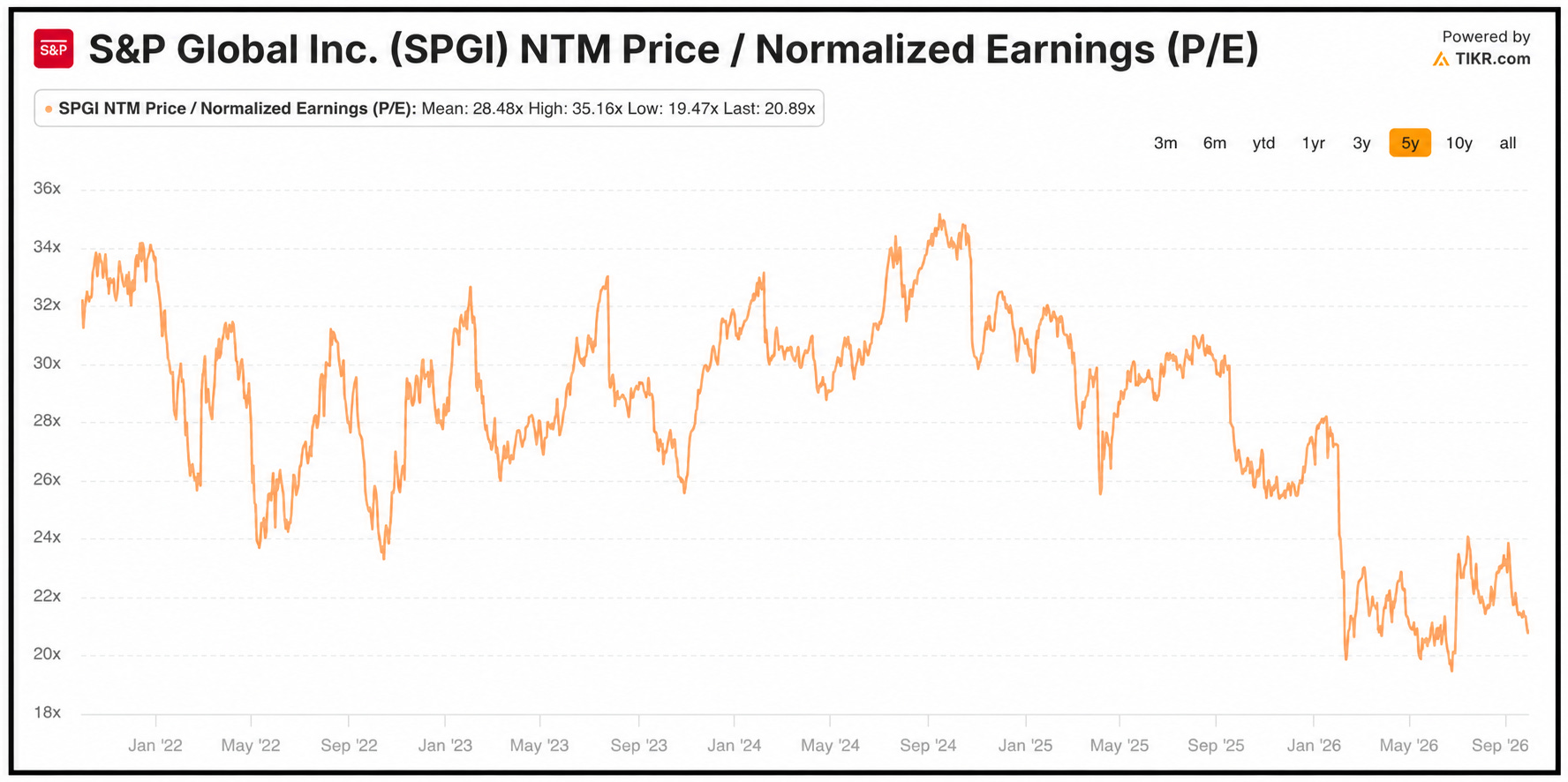
S&P Global is now down around 26% so far in 2026.
This sell off has caused a stock that has historically traded at a premium, to now be at it’s lowest valuation multiple in the last 5 years.
Meanwhile, its Ratings and Indices businesses just reported revenue growth of 17% and 20%, respectively.
That’s a pretty significant disconnect between the stock price and the performance of two of its most valuable businesses.
The primary concern behind the recent selloff is that the market sees the potential that AI could disrupt the financial data business.
As AI tools become more capable of analyzing companies and building models, investors are questioning how much customers will continue paying for platforms like Capital IQ Pro.
Of course, that is something worth watching closely.
But… The concern is being applied too broadly across S&P Global’s business, and the math reveals this clearly.
Look at the business segments for S&P Global:
Ratings: Companies and governments pay S&P to evaluate the creditworthiness of their debt.
Indices: S&P creates benchmarks such as the S&P 500 and earns licensing fees from ETFs, derivatives, and other products tied to those indices.
Energy: S&P provides commodity price assessments, benchmarks, data, and research used throughout energy markets.
Market Intelligence: S&P sells financial data, analytics, research, and software, including Capital IQ Pro, to financial professionals.
Market Intelligence faces the most direct questions about AI competition.
But here’s what’s so interesting-
The ratings and indices portion of the business is worth roughly what the entire stock is currently trading for.
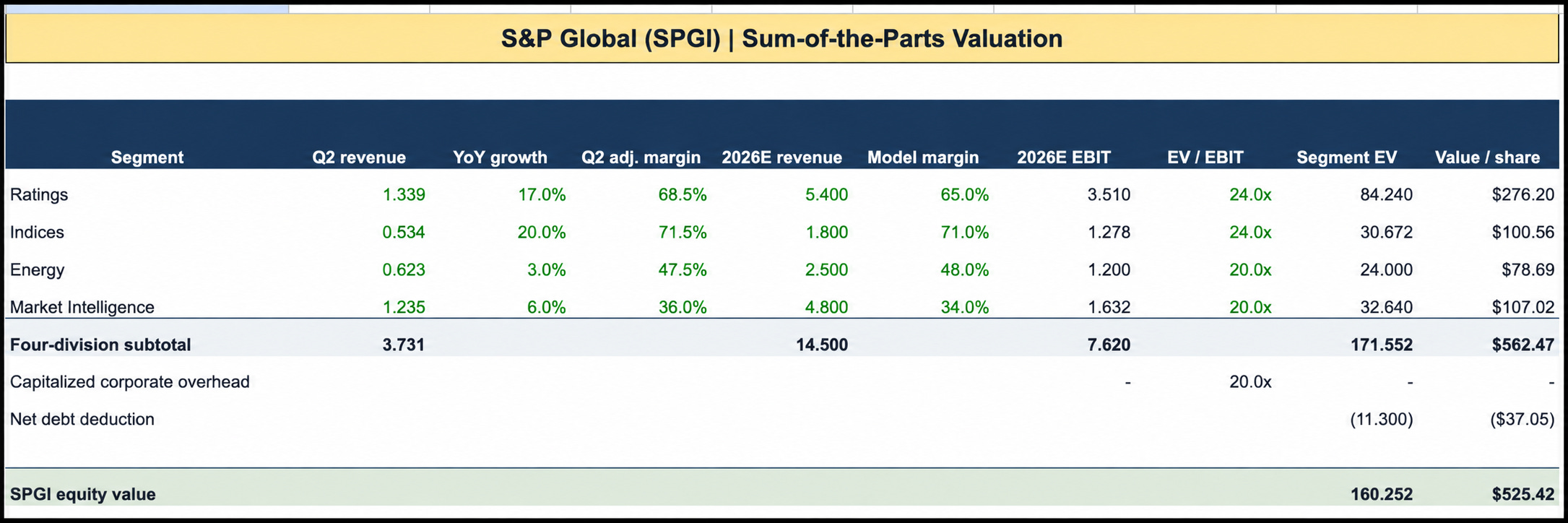
The multiples are based on business quality, growth, and comparable companies.
For Ratings, Moody’s provides a useful comparison.
For Indices, MSCI provides a benchmark for valuing an established index business.
Energy and Market Intelligence receive lower multiples of 20 times, reflecting slower assumed growth and lower margins, with additional competitive uncertainty surrounding financial research tools.
Under those assumptions, the estimated values are:
Ratings: $276 per share
Indices: $101 per share
Energy: $79 per share
Market Intelligence: $107 per share
Ratings and Indices alone total approximately $377 per share, nearly matching SPGI’s current price.
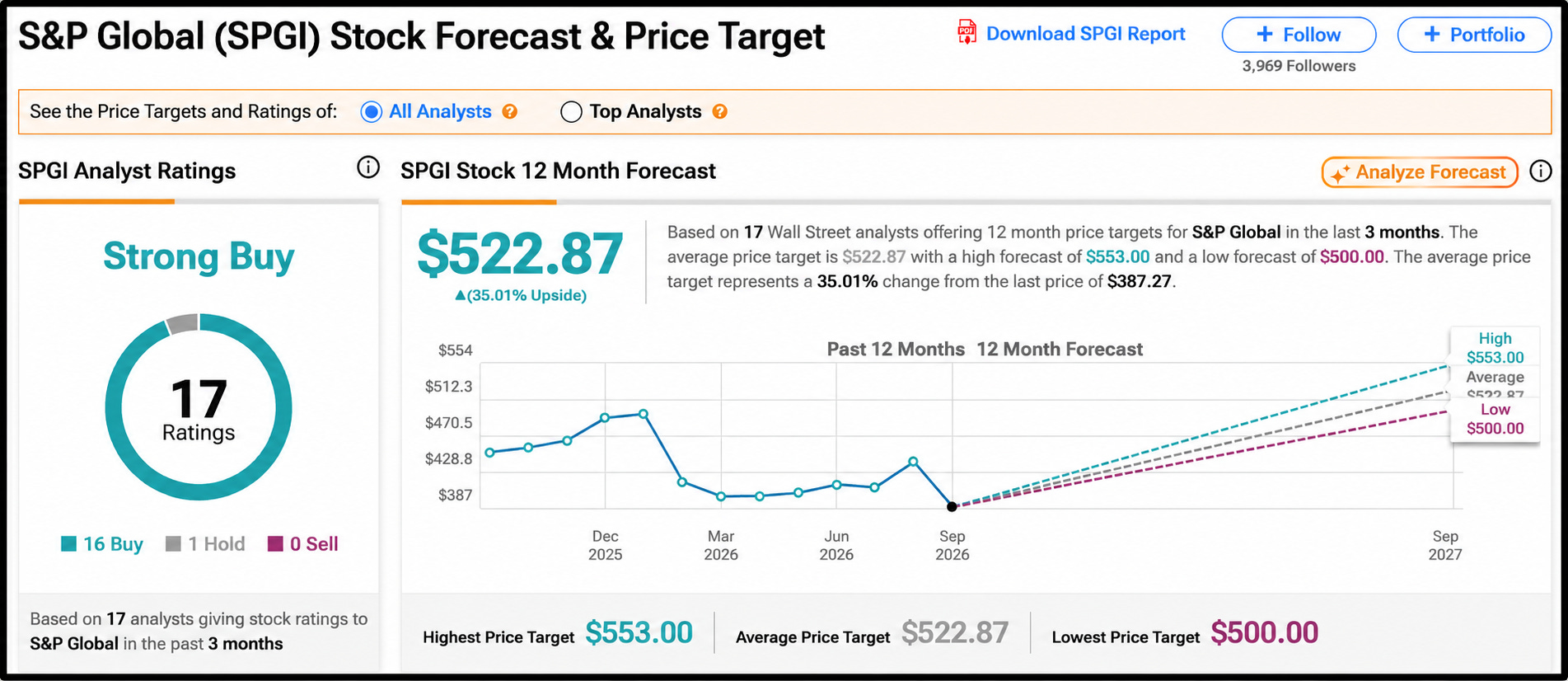
Including all four divisions and subtracting net debt produces an estimated equity value of roughly $525 per share, or about 35% upside.
Ironically enough, this is nearly identical to the average price target from Wall Street analyst right now.
As a side note, keep a close eye on the ratings business.
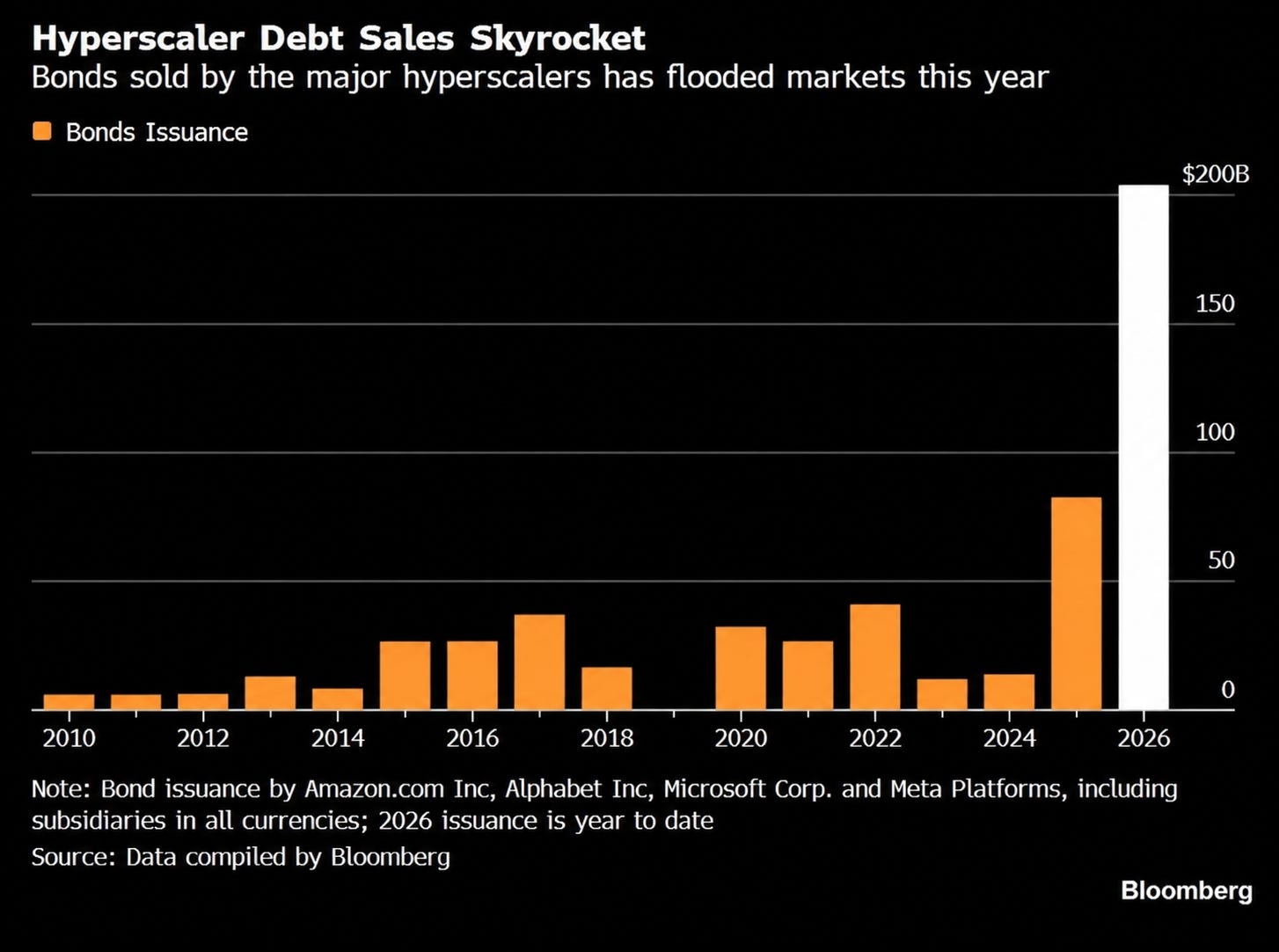
Debt issuance by hyperscalers has surged to astronomical levels in 2026-
And SPGI will continue to be a major beneficiary of this trend.
2. 🏬 Agree Realty (ADC)
REITs have been hammered in the last few months, and it isn’t hard to spot why.
Treasury yields, particularly the 10YR yield have surged in the last month.
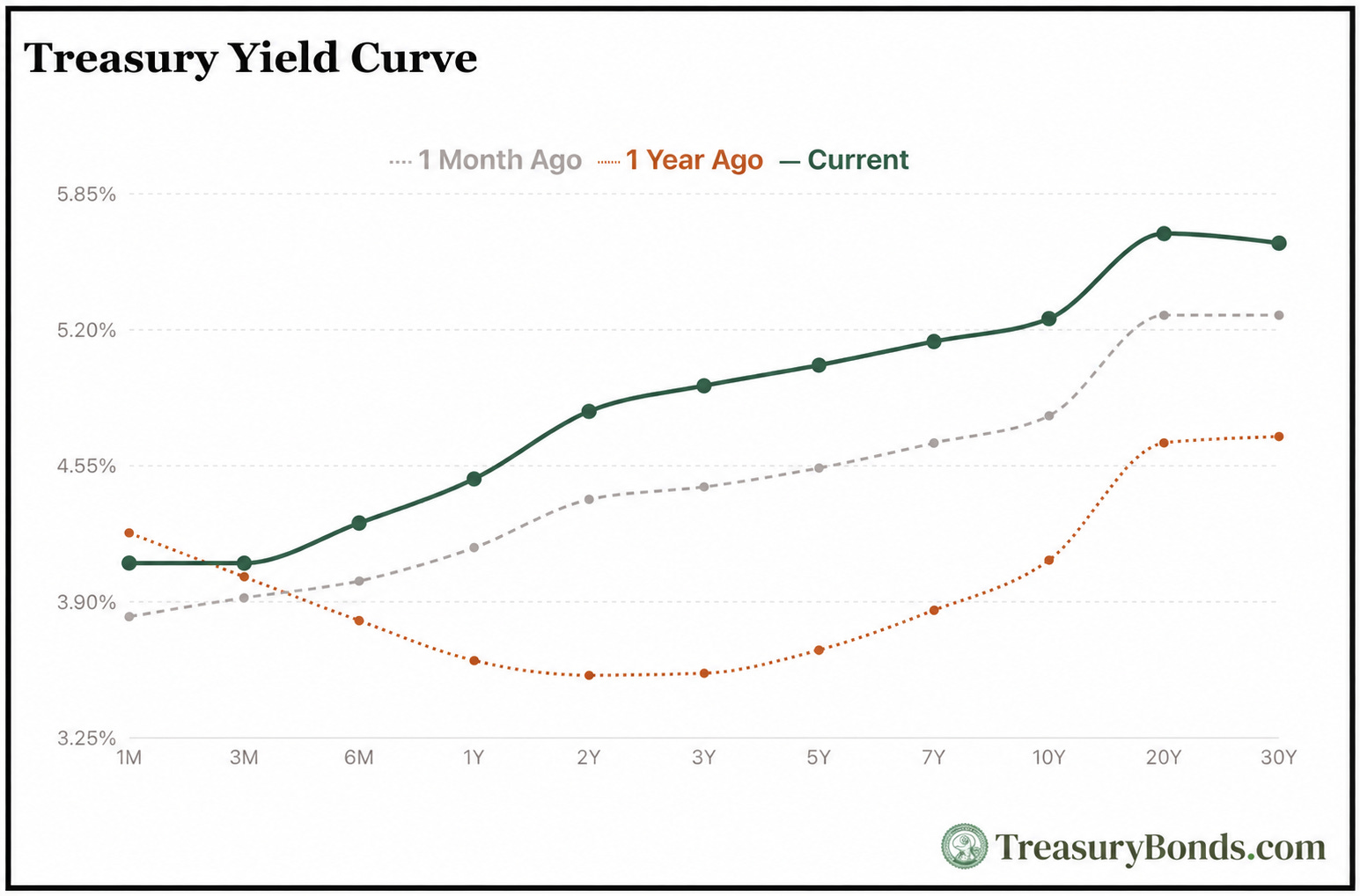
Higher treasury yields give income investors a more competitive alternative to dividend stocks while also increasing financing costs for REITs.
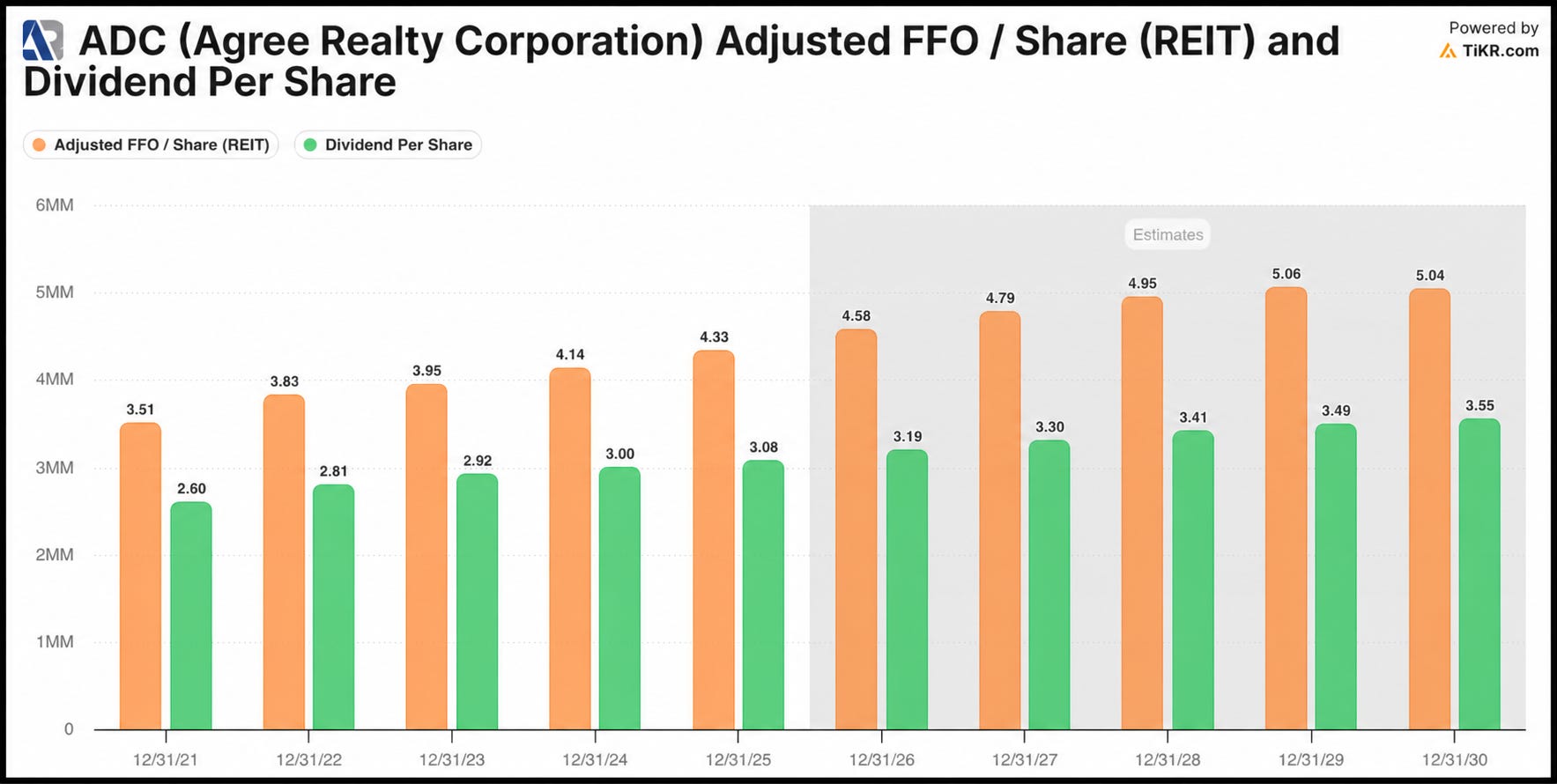
But ADC’s ability to grow its AFFO per share at a strong rate even in this environment is interesting, especially considering it’s yield is now roughly 5% and the valuation has hit attractive levels.
I recently interviewed CEO Joey Agree (which will be posted to the Mispriced podcast in the next few days), and we spent quite a bit of time discussing this.
With that being said, let’s start with the properties.
ADC owns retail real estate leased to companies such as Walmart, Tractor Supply, Dollar General, and Hobby Lobby.
Under its net leases, tenants generally cover property taxes, insurance, and maintenance.
The portfolio screenshot shows 2,825 properties as of June 30, with investment-grade tenants accounting for 65.8% of annualized base rent.
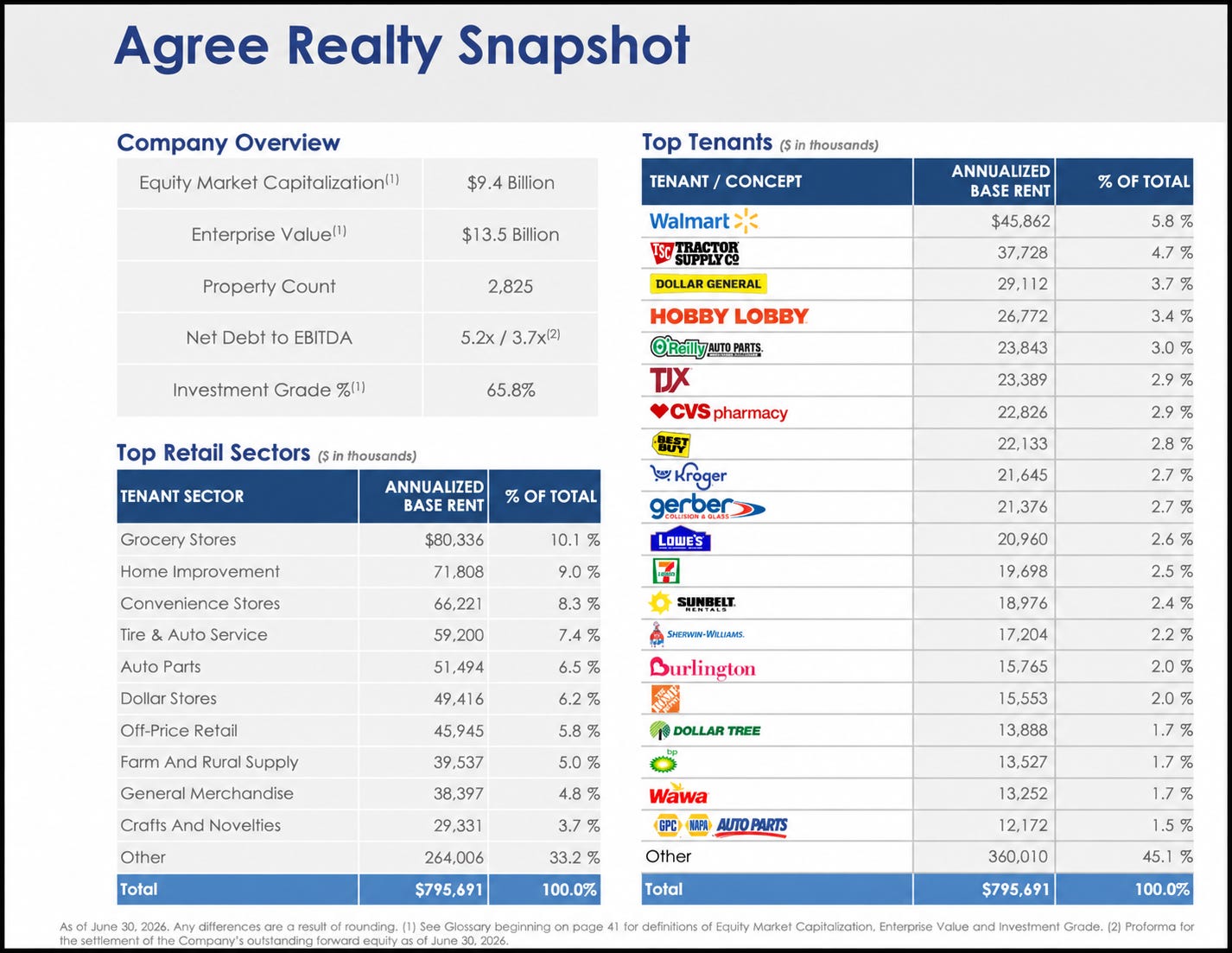
Walmart is the largest tenant at 5.8%, while no other tenant accounts for more than 5%.
That gives ADC a much more diversified income stream backed by familiar retailers.
And the recent results show continued growth.
Second-quarter adjusted funds from operations, or AFFO, increased 7.4% per share. Management also raised full-year guidance to $4.57–$4.59 per share.
Ultimately, growing AFFO per share is what allows and leads to dividend growth.
When I interviewed CEO Joey Agree, I asked what level of dividend growth over the next five years would excite him.
He stated he would be disappointed if the company could not grow its dividend by 20% to 25%.
If the dividend ends up 20% to 25% higher after five years, that translates into approximately 3.7% to 4.6% annualized growth.
Now we use that data to model out upside via a reverse dividend discount model.
The market is currently pricing in 3.6% dividend growth moving forward.
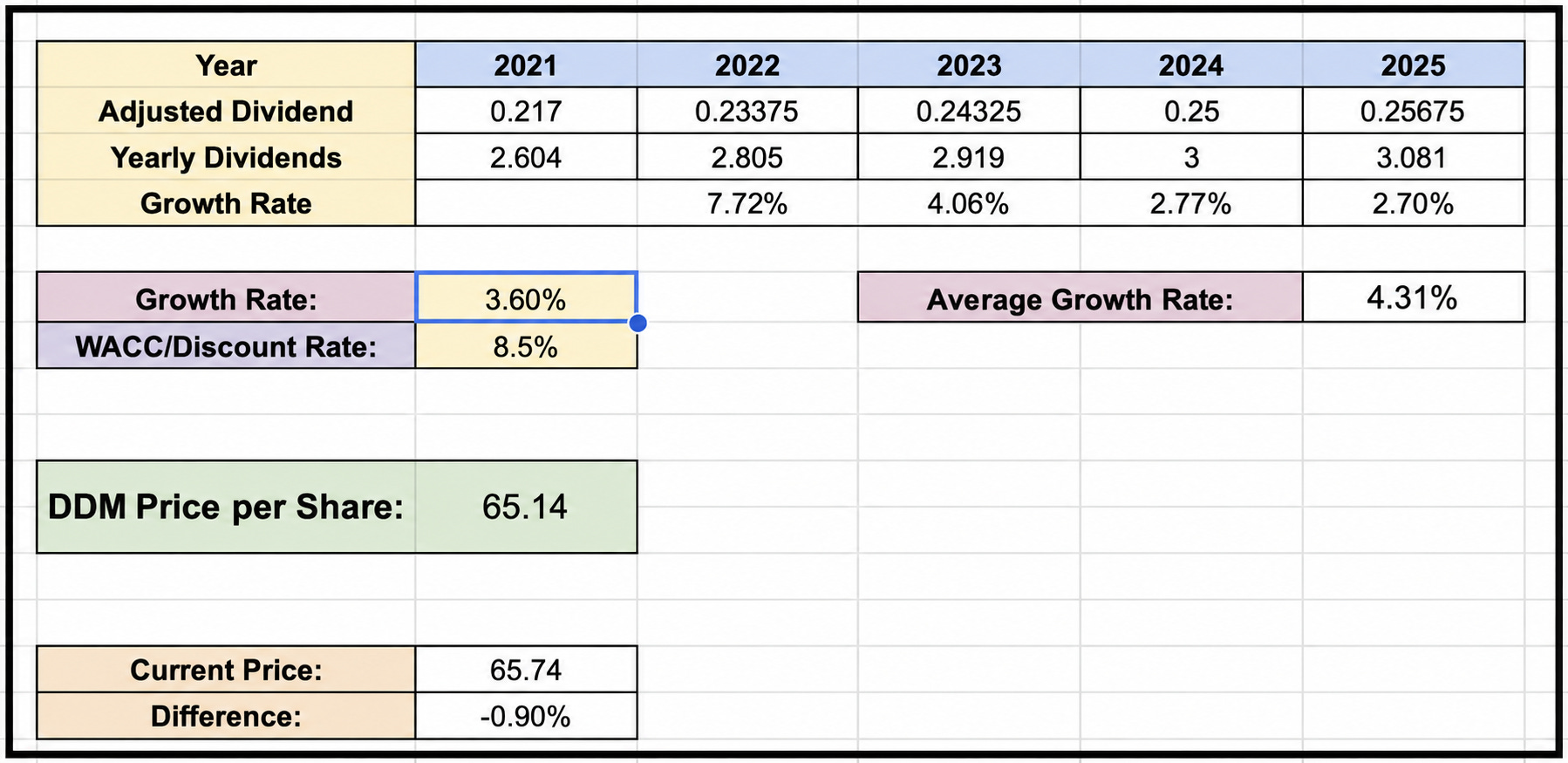
Even based on the lower assumptions from Joey Agree, it appears there is upside with this REIT-
And with very little debt coming due over the next 1.5 years, refinancing debt at higher rates is not a risk in the short term the way it is for other REITs.
Make no doubt about it, REITs in the short term will continue to have to compete with the 10YR Treasury, so this is more of a mid to long term income play.
3. ♻️ Waste Management (WM)
Waste Management is trading at its lowest price-to-free-cash-flow multiple in over five years.
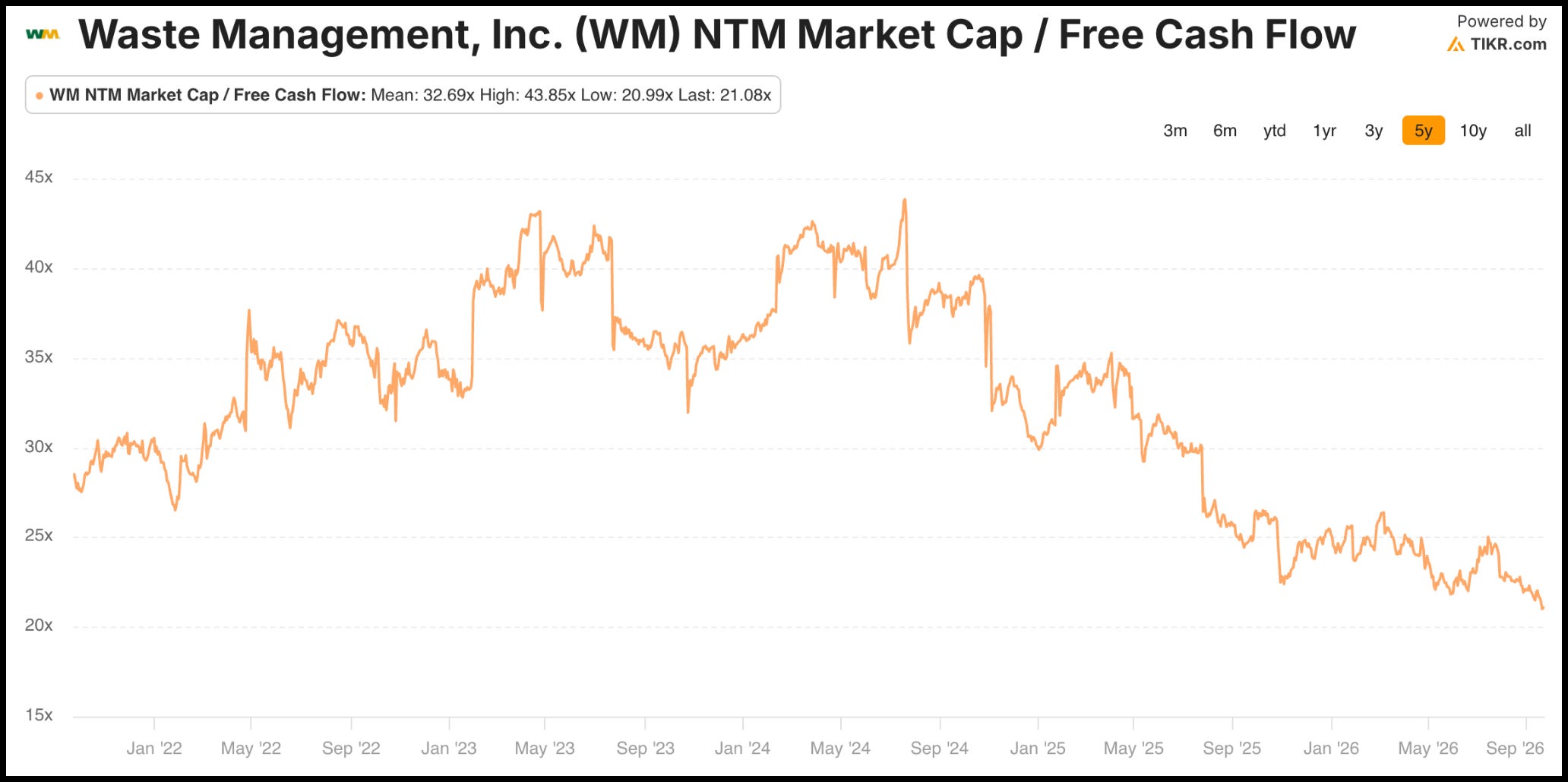
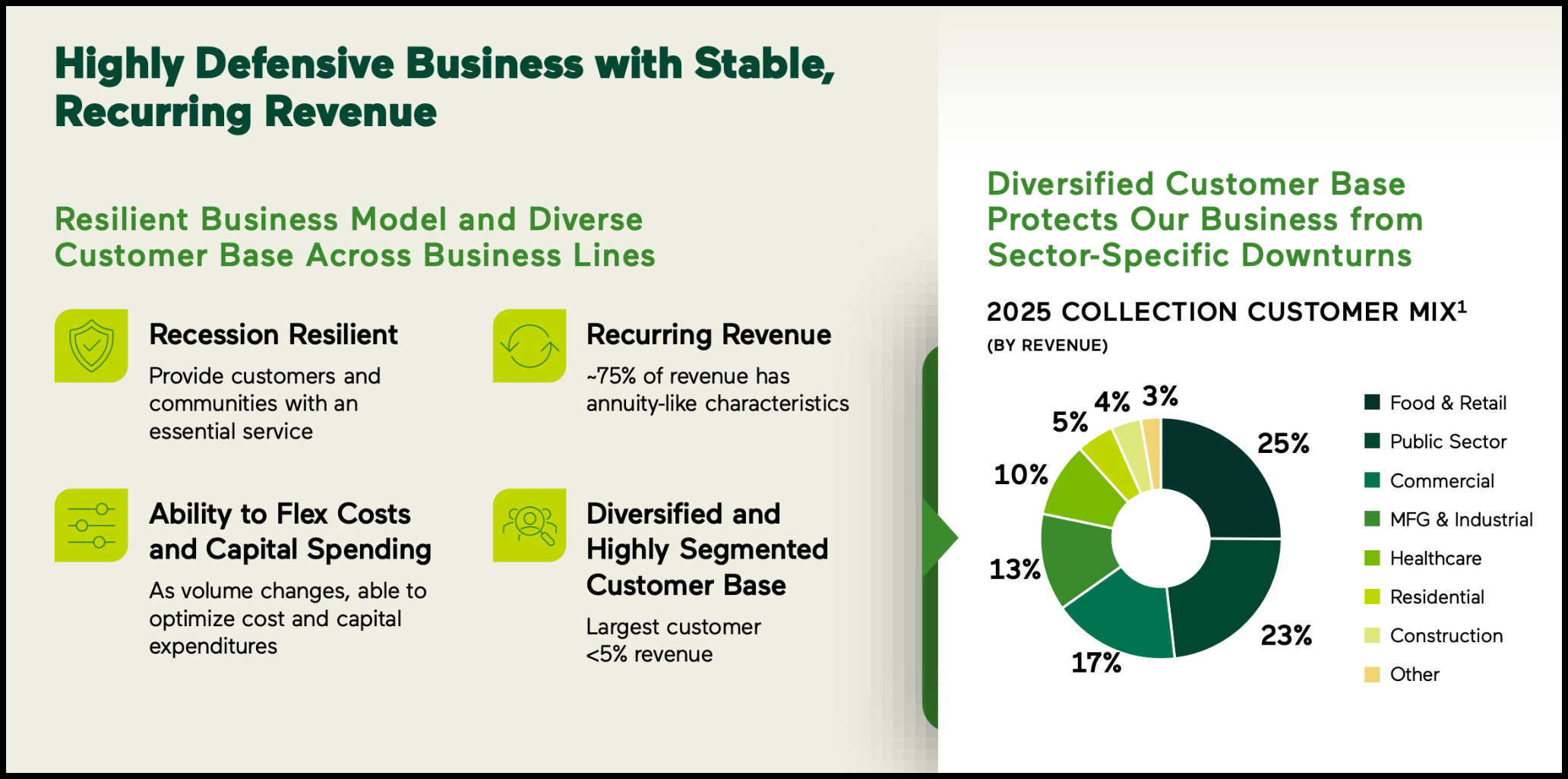
This is a business that has typically traded at a premium for two primary reasons:
Approximately 75% of revenue has annuity-like characteristics.
Recession proof cash flows
WM collects, transports and processes waste through its network of trucks, transfer stations, landfills and recycling facilities.
Businesses and households continue to need these services regardless of where inflation or interest rates are heading.
Of course, economic conditions still affect waste volumes and operating costs-
But the underlying need for the service is difficult to disrupt.
Even through the lens of AI, WM is still interesting.
Waste still has to be physically collected and processed, while better routing and automated recycling equipment can help WM operate more efficiently.
The opportunity is to make an essential physical service more productive.
In the recent quarter, management slightly reduced its revenue outlook due primarily to lower volume expectations, but maintained its full-year free cash flow outlook of $3.75 billion to $3.85 billion.
The yield is approximately 1.87% at current prices, but predictable dividend growth is the obvious attraction.
WM increased its quarterly dividend from $0.825 to $0.945 in 2026, a 14.5% increase.
With its price-to-free-cash-flow multiple sits roughly 35% below its five-year average, making WM quite interesting.
Now, let’s jump into this month’s full list.