

At the beginning of each month, I send out a spreadsheet that lists out the dividend stocks that I believe to be undervalued.
This is the end result of 100’s of hours of research every month.
It’s time to dive in.

1. 🏦 Hercules Capital (HTGC)
It’s continued to be a brutal year for the BDC market.
The VanEck BDC Income ETF is down 6% this year.
Entering into 2026, this sector was facing two primary issues:
The threat of rate cuts
Overexposure to the software sector in their loan portfolio
Entering into the year, the market was pricing in 3 potential rate cuts in 2026.
Now, the opposite has happened, with the market pricing in at least one rate hike this year.
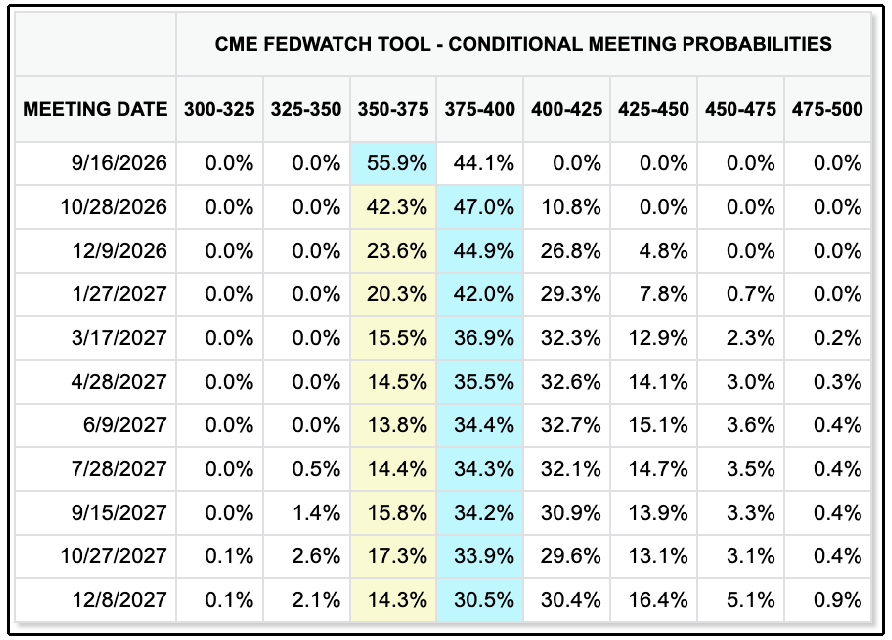
This is generally good news for BDC’s, as the majority of the loans in their portfolio are floating rate.
So naturally, higher rates mean BDCs can generate more net investment income.
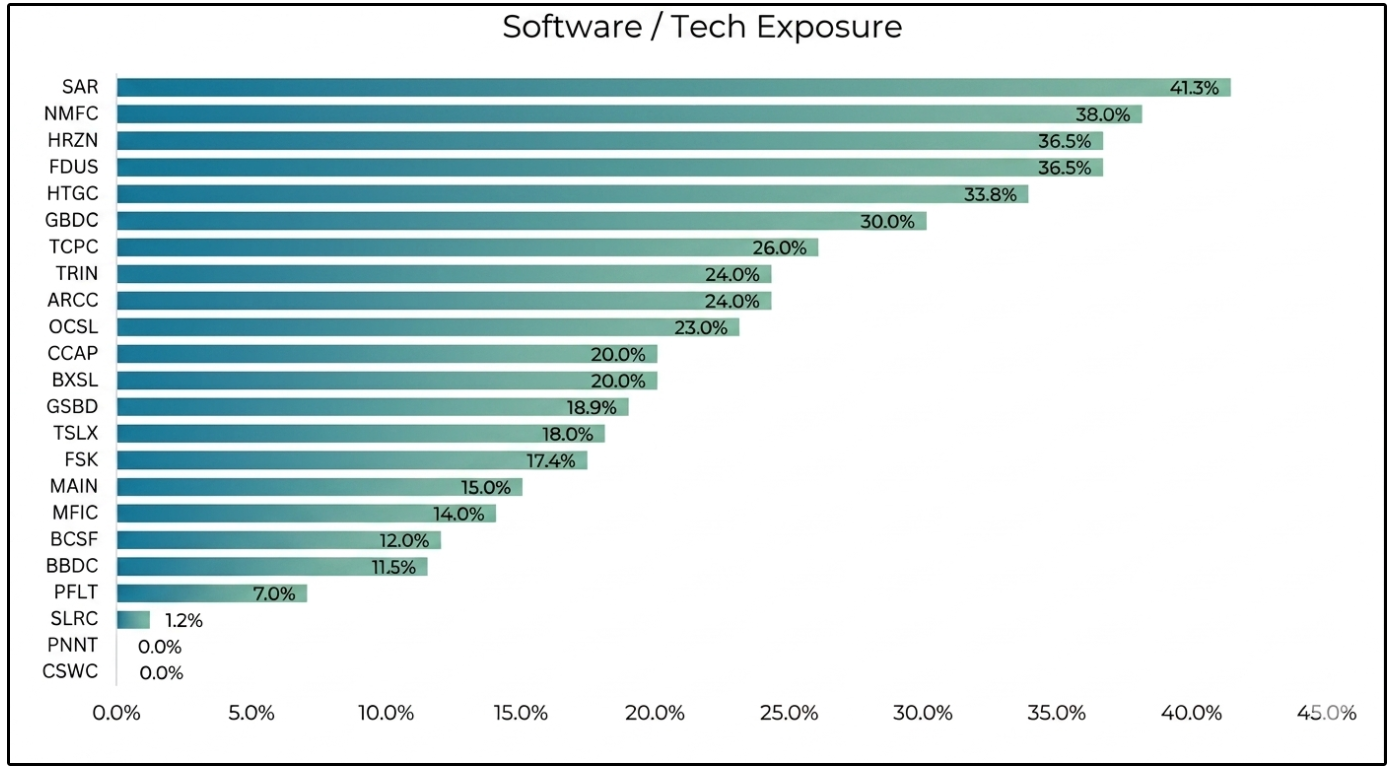
However, the market still seems to be quite concerned about the fact that many BDCs have heavy exposure to software companies in their portfolio-
Which are companies that are potentially at risk of disruption with the threat of AI.
This has been the primary concern for Hercules Capital this year, with over 1/3rd of their loan portfolio tied to software/tech companies.
Despite this, it appears the overall strength of Hercules Capital’s portfolio has continued to grow stronger this year.
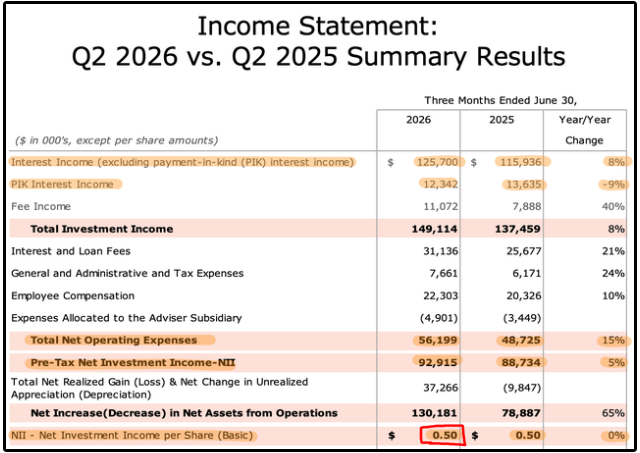
During Q2 2026, Hercules generated $0.50 per share of net investment income, comfortably covering its $0.40 regular quarterly dividend by 125%.
The company also pays a $0.07 supplemental dividend, bringing its annualized distribution to roughly $1.88 per share.
Keep in mind, this BDC has a forward yield of 11.03%.
But of course, more importantly, credit quality remains particularly impressive.
Only 0.1% of HTGC’s portfolio is currently made up of troubled loans that have stopped generating interest income, highlighting the company’s exceptionally strong credit quality.
Meanwhile, total investment income increased 8.5% year over year to $149.1 million, while the debt portfolio grew roughly 10%.
HTGC currently trades around 1.35x–1.37x NAV, which is certainly not cheap compared with most BDCs.
However, that premium remains well below historical levels, and is likley justified considering:
The exceptional credit quality of the portfolio
NAV per share increasing to $12.15 per share during the quarter
The 11% yield being well covered by net investment income
Our model High Yield Portfolio has performed extremely well in 2026.
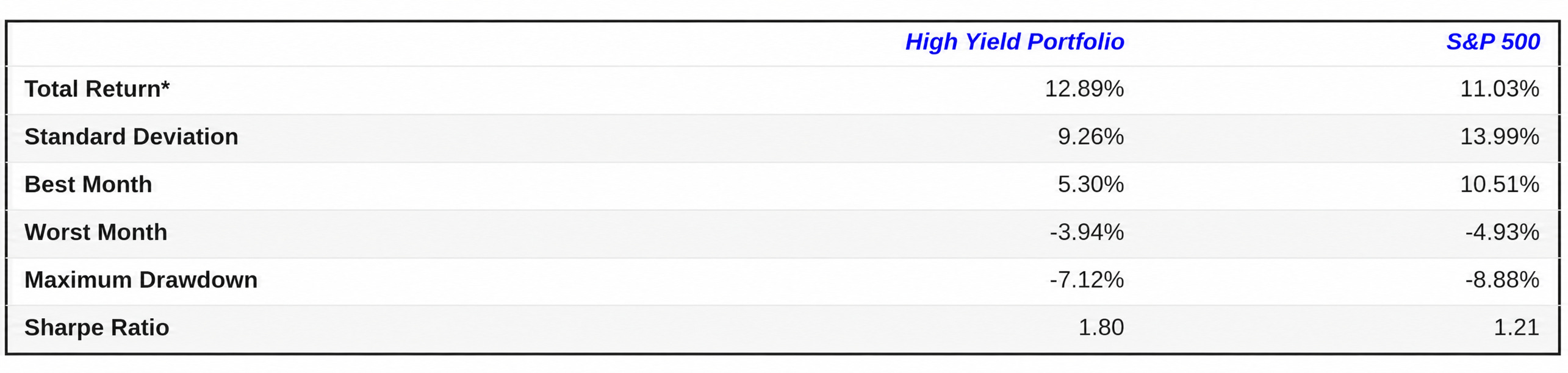
Not only did this portfolio outperform, but it:
Had lower volatility (standard deviation)
Had a lower maximum drawdown
Had a stronger Sharpe Ratio
This is in part due to the fact that we were able to wisely avoid entering the BDC market over the last year.
However, we are now closely monitoring a select few BDCs as credit quality starts to improve across the sector.
2. 📡 AT&T (T)
If you’ve been in the dividend space long enough, you probably remember when AT&T was everyone’s favorite dividend stock.
Then they overloaded their balance sheet with debt, growth slowed, and they had to reduce their dividend.
But as a result of the company restructuring over the last few years, AT&T is now in a drastically different position, and the dividend itself is much more attractive.
The company yields over 4.6%, while only using 42% of its free cash flow to payout the dividend.
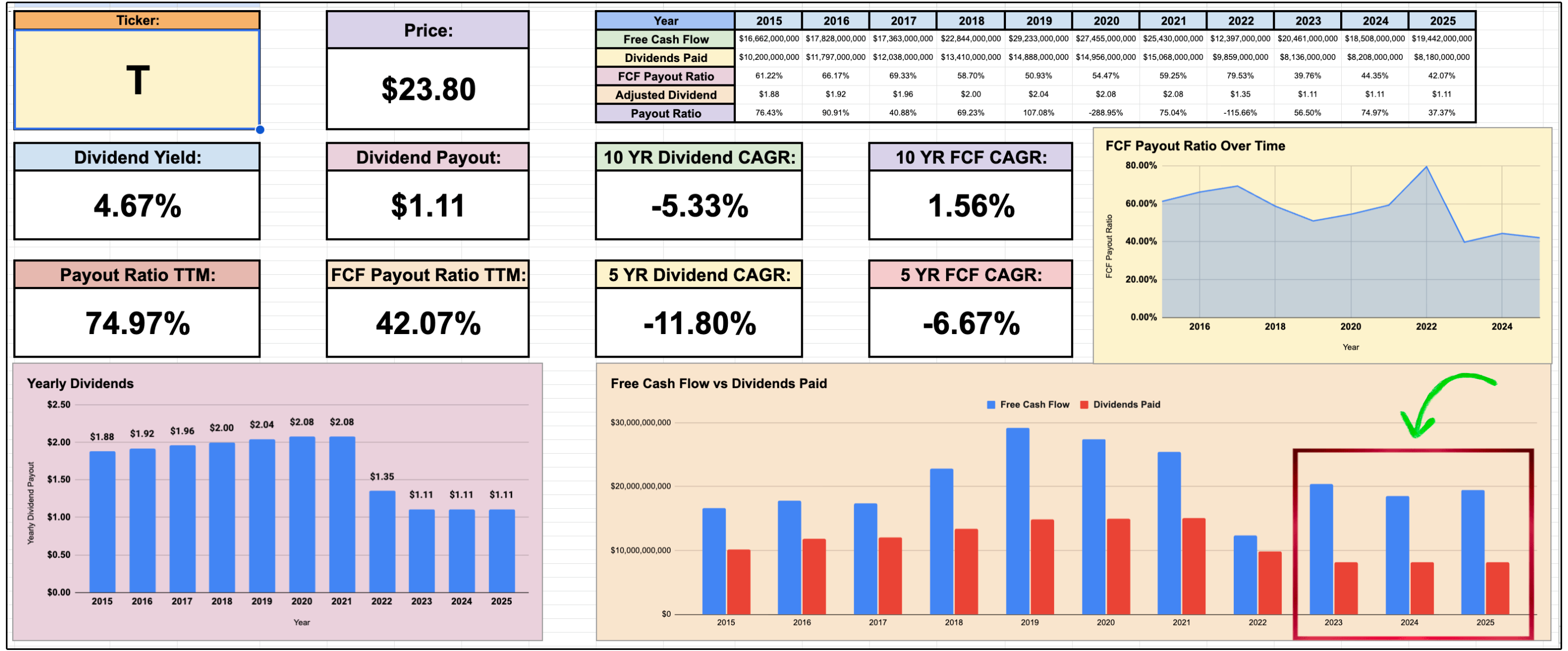
It’s certainly good news there is ample free cash flow left over after the dividend, because the company is still in the process of deleveraging the balance sheet.
AT&T still has a $126.4 billion net debt balance.
Management is targeting leverage of approximately 2.5x EBITDA over the next several years, and continued debt reduction will make the investment case considerably stronger.
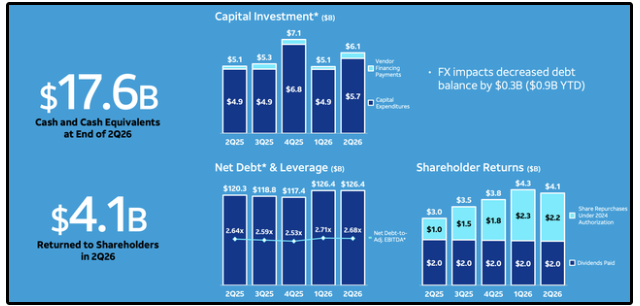
During Q2 2026, AT&T added more than 1 million Advanced Connectivity customers, including a record 367,000 fiber subscribers.
Fiber net additions increased 36% year over year, while the company also added more than 430,000 postpaid phone customers.
Overall revenue increased 2.6% year over year to $31.6 billion, while Advanced Connectivity service revenue grew 5.1%.
The company’s expanding fiber network remains one of the biggest reasons I find AT&T attractive at these prices.
Following its acquisition of Lumen’s fiber assets, AT&T now reaches more than 38 million fiber locations and plans to expand that footprint to approximately 60 million locations by the end of the decade.
With that being said, AT&T is particularly interesting at today’s valuation, due to the fact that EPS growth is expected to pick up over the next four years-
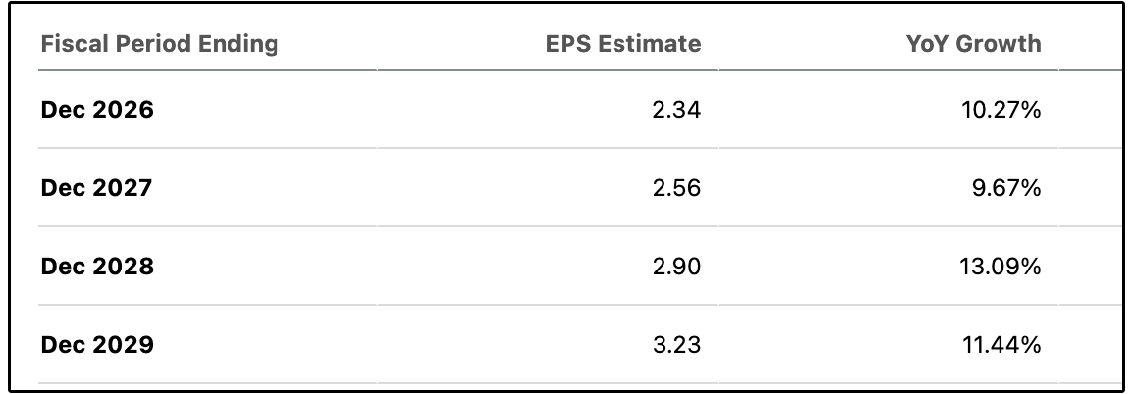
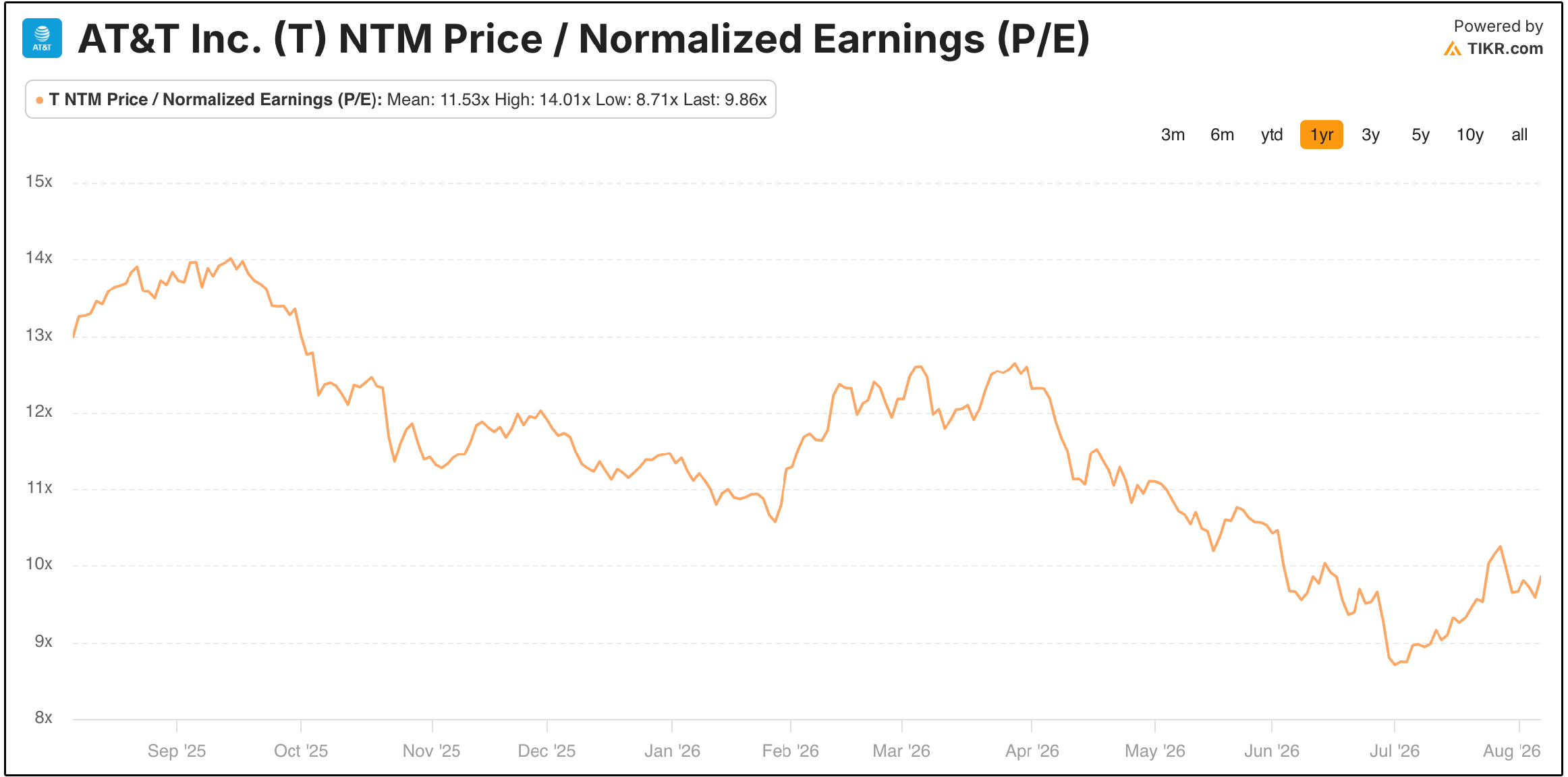
Double-digit EPS growth for a stock trading at a forward P/E multiple of just 10.14 is quite impressive.
If shares eventually rerate closer to 12x earnings, AT&T could be worth approximately $31 per share, providing meaningful upside in addition to the dividend.
3. 🎰 VICI Properties (VICI)
VICI is down 12% over the last 5 years (not including dividends), and currently yields nearly 6.8%.
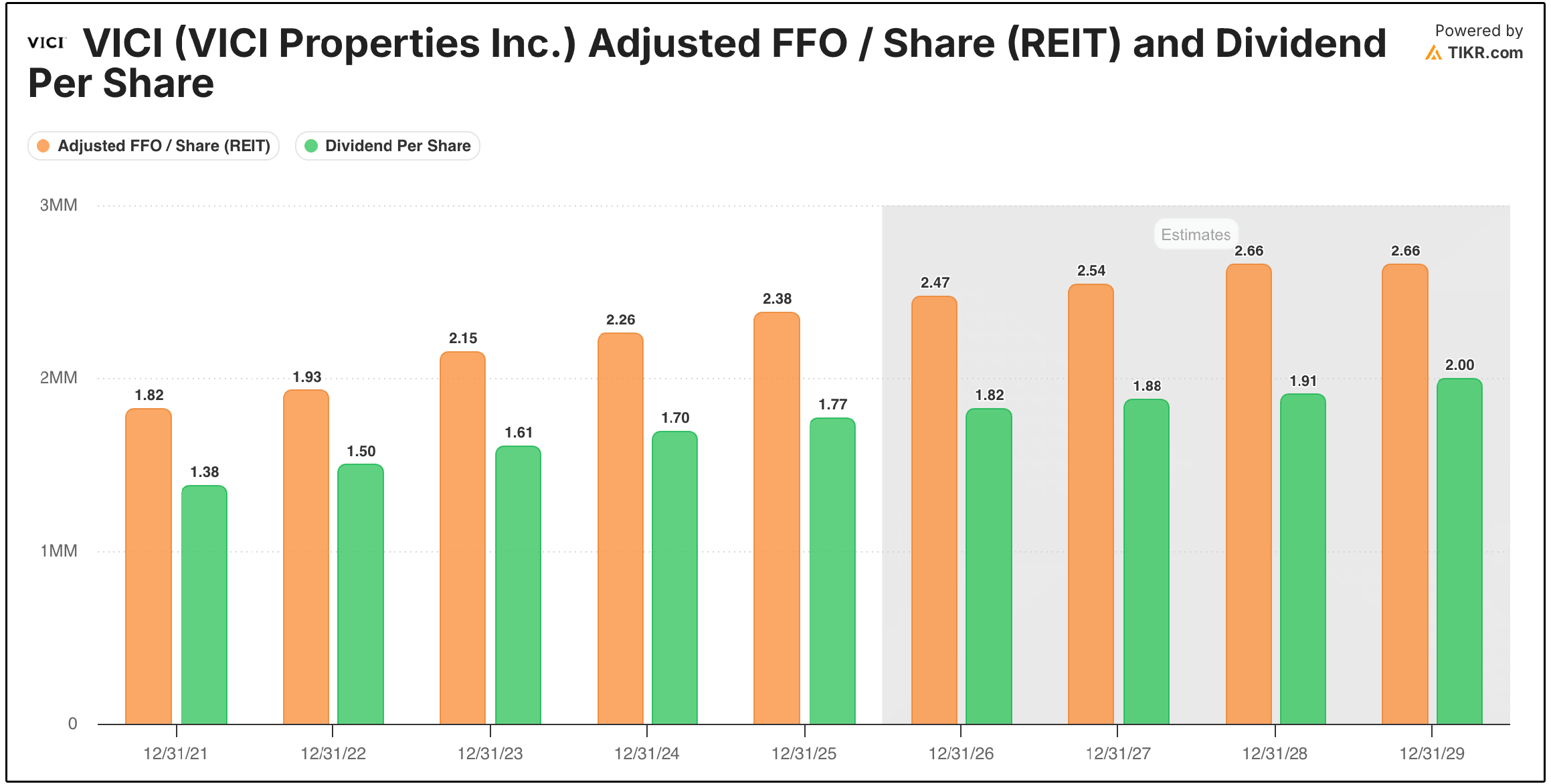
Despite this, the company has continued to grow AFFO per share (the measure of intrinsic value for REITs) every year at a healthy rate, while also paying out a yield of 5%-7%.
The dividend remains well covered at a 75% AFFO payout ratio.
Of course, there are three primary concerns for VICI:
Tenant concentration and quality
The rise of online gaming
Las Vegas Visitor traffic
The market views each of these as a potential concern of their own.
Earlier this week, I interviewed the CEO of VICI Properties, Ed Pitoniak, to address each of these three concerns.
If you have any interest in VICI whatsoever, I highly suggest you watch this video first:
Be sure to subscribe to the podcast on YouTube or Spotify so that you don’t miss any new interviews with CEOs and fund managers.
To give you just a little insight-
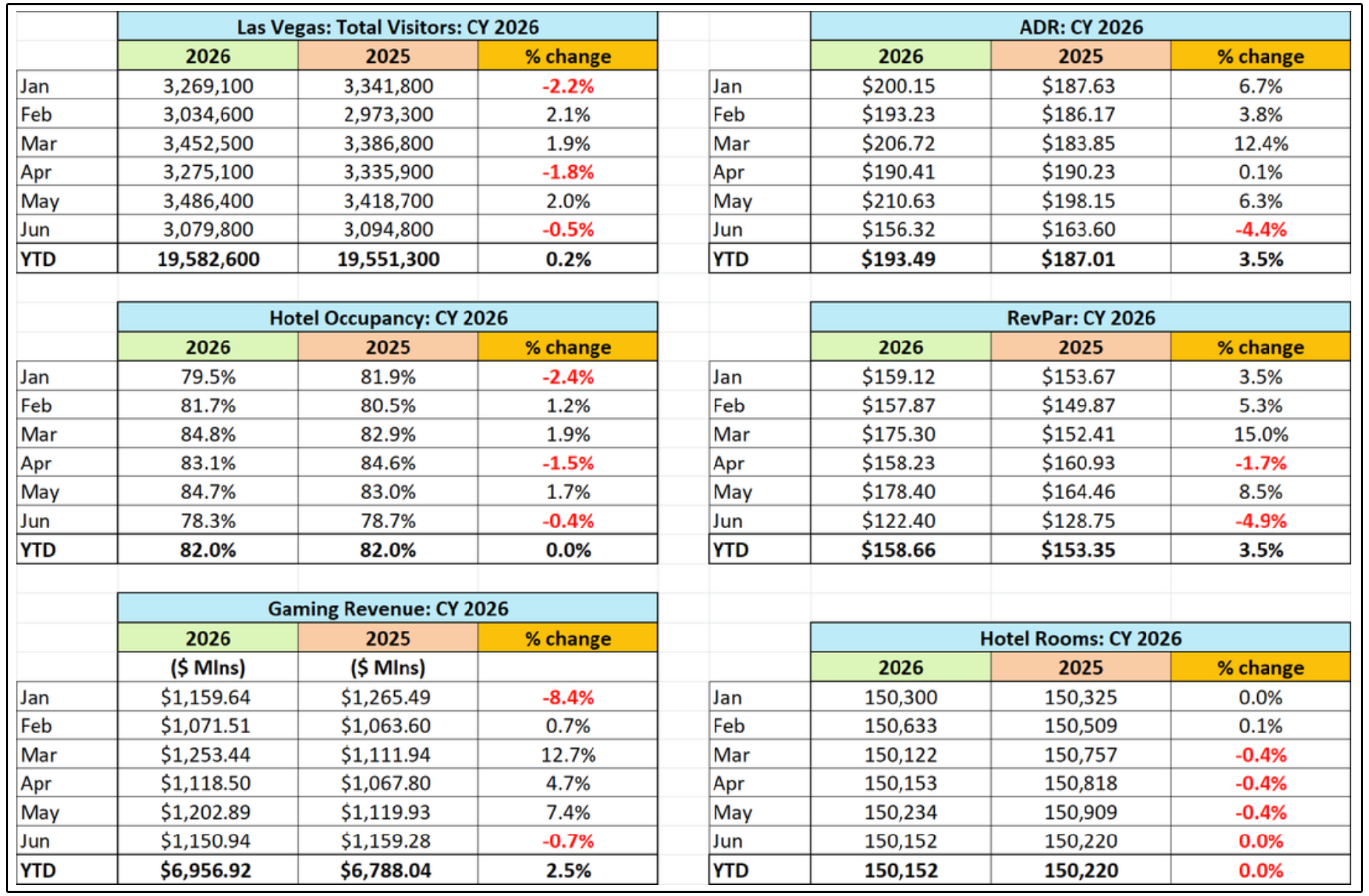
The data through the first half of 2026 suggests that conditions have largely stabilized rather than deteriorated.
Total Las Vegas visitors are up 0.2% year over year, while hotel occupancy is unchanged at 82%.
More importantly, average daily room rates are up 3.5%, RevPAR (Revenue Per Available Room) is up 3.5%, and gaming revenue has increased 2.5% year over year.
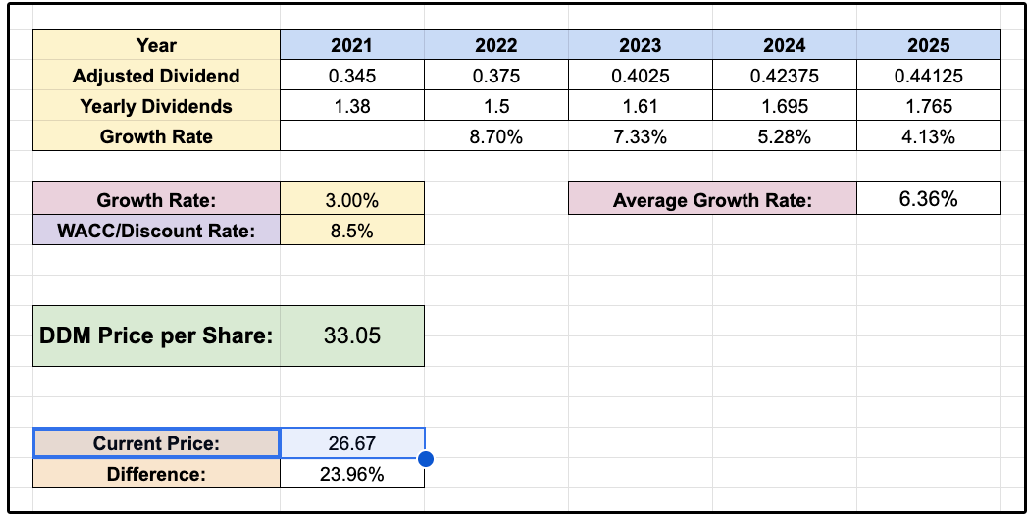
The best way to look at VICI is through the lens of a dividend discount model.
Assuming VICI can grow their dividend at just 3% (which is below their projected AFFO per share growth)-
VICI would have around 24% upside from current prices.
Now, let’s jump into this month’s full list.