

10 AI-proof SaaS Stocks for 2026
Meta once dropped 70%. Netflix: 50%. Amazon: 40%. Every investor had ruled them out, citing “the companies were done”.
But they all rebounded - Meta: 690%. Netflix: 540%. Amazon: 153%.
Every world-class company suffers deep drawdowns. Rebound Capital identifies high-quality companies undergoing drawdowns to capitalize on their eventual rebound.
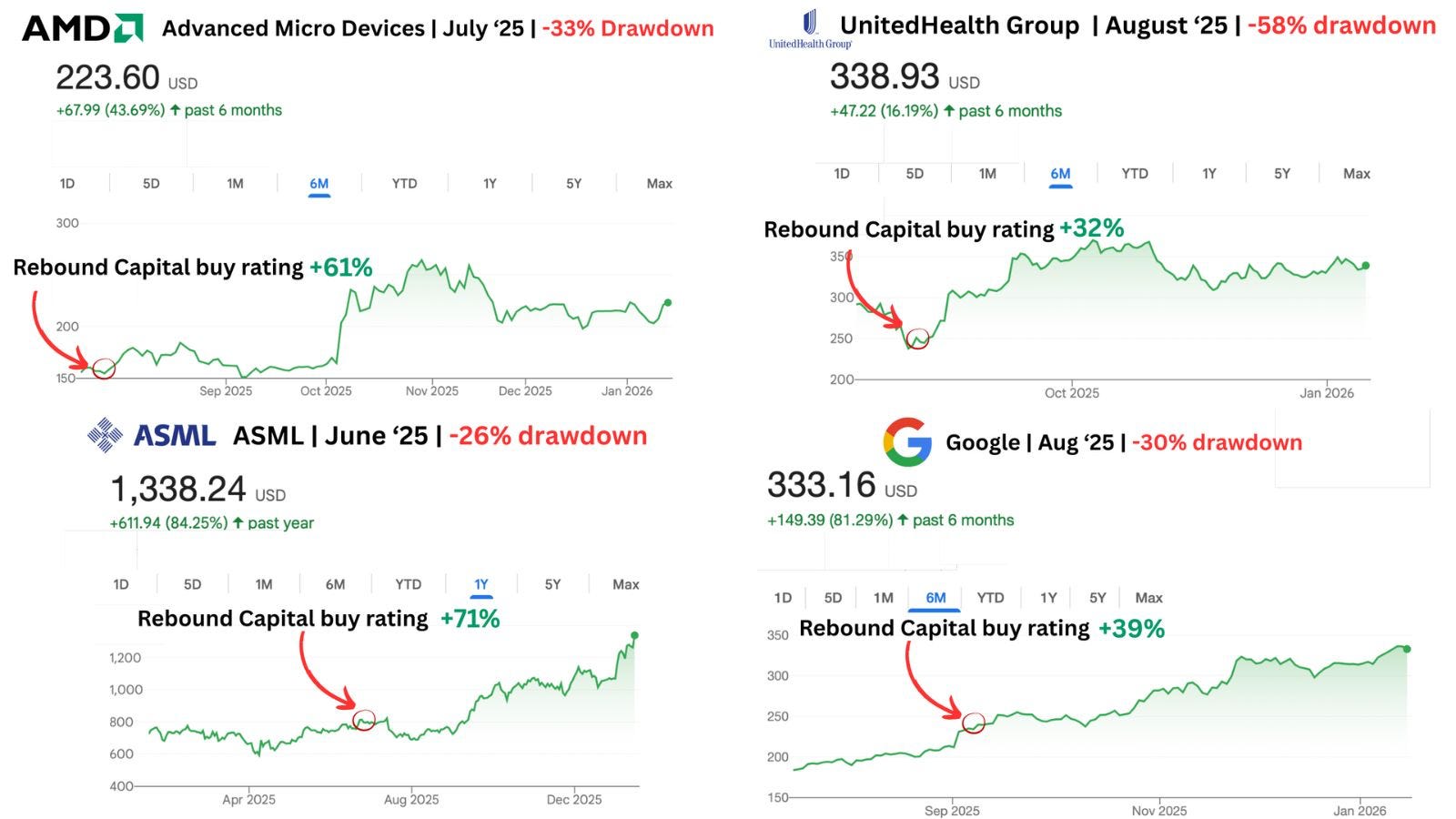
Just last year, they identified ASML (up 58%), Google (up 40%), and AMD (up 61%) as ideal rebound prospects.
And now, SaaS is in peak pessimism due to AI-led disruption.
Rebound Capital has identified 10 AI-proof SaaS companies with deep moats in steep drawdowns.
Dividendology readers can now unlock their exclusive 24-page AI-proof stock report for free!
Thanks to Rebound Capital for sponsoring.
🚨 SCHD Just Changed
Every year in March, the dividend ETF SCHD undergoes reconstitution.
This is the one time per year where:
Stocks get added and removed
Sector allocations shift
Dividend characteristics change
And in 2026…
The changes were significant.

Today, we will be reviewing everything you need to know about the 2026 SCHD reconstitution.
⚠️ Dangerous Territory
In December of 2025, I posted an in-depth analysis of SCHD, and why abandoning the popular ETF would likely be a massive mistake in 2026.
If you missed it, you can read that here.
While there was a multitude of topics discussed in that article, one of the most important topics was the U.S. equity risk premium, which is essentially the S&P 500 earnings yield minus the 10-year Treasury yield.
In simple terms, it answers one critical question:
How much extra return are investors being paid to own stocks instead of “risk-free” government bonds?
According to this chart, the answer is:
Almost nothing or even negative.
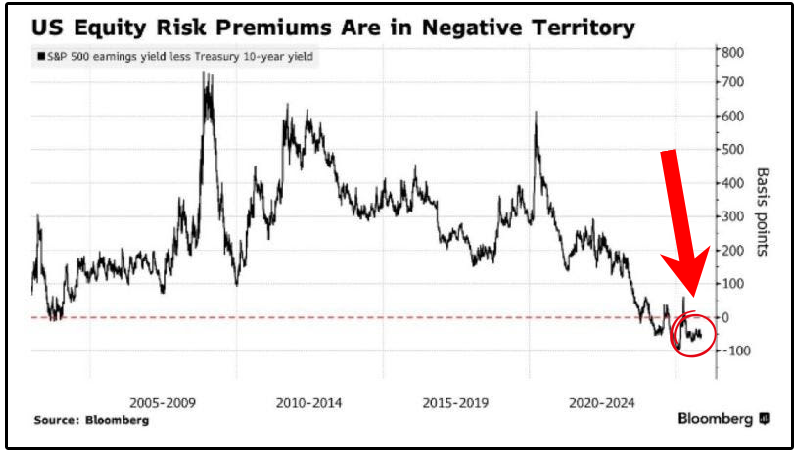
Basically, investors were taking on more risk for less potential return.
So why was SCHD positioned to perform so well in light of this?
Because SCHD isn’t just ‘a dividend ETF’-
It’s actually a systematic valuation strategy on top of being a dividend fund.
Let’s break down what this means.
⚙️ Methodology
SCHD’s annual reconstitution is not determined by fund managers.
It is completely determined by their methodology, which you can see below.
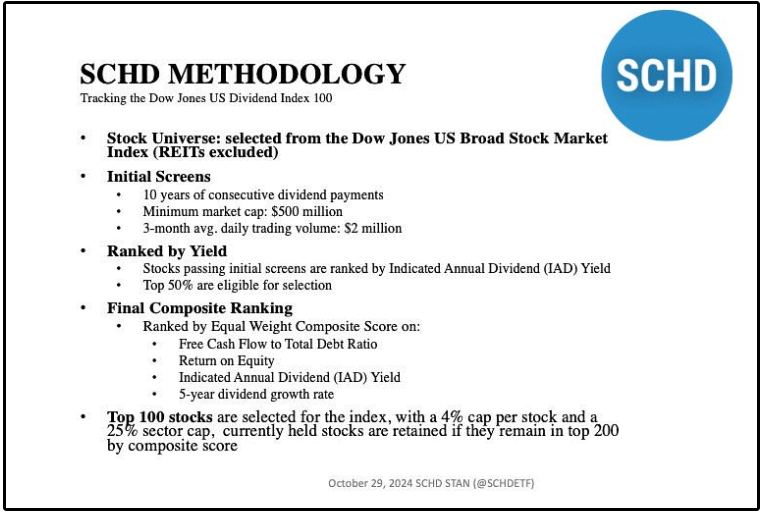
In short, the methodology is:
Applying quality filters
Ranking stocks by dividend yield
Rebalancing annually
The key is ranking stocks by yield.
Why?
Because dividend yield is heavily influenced by price.
Dividend yield isn’t just about income, it’s also a function of price.
When a stock’s price declines, its yield rises
When a stock’s price increases, its yield falls
It’s obvious, but think about what that does in terms of valuation for SCHD.
Stocks that have sold off, but still maintain strong fundamentals, naturally rise to the top of the rankings.
In fact, we can see that after the recent reconstitution, the top 20 holdings in SCHD have an average forward P/E multiple of 15.33!
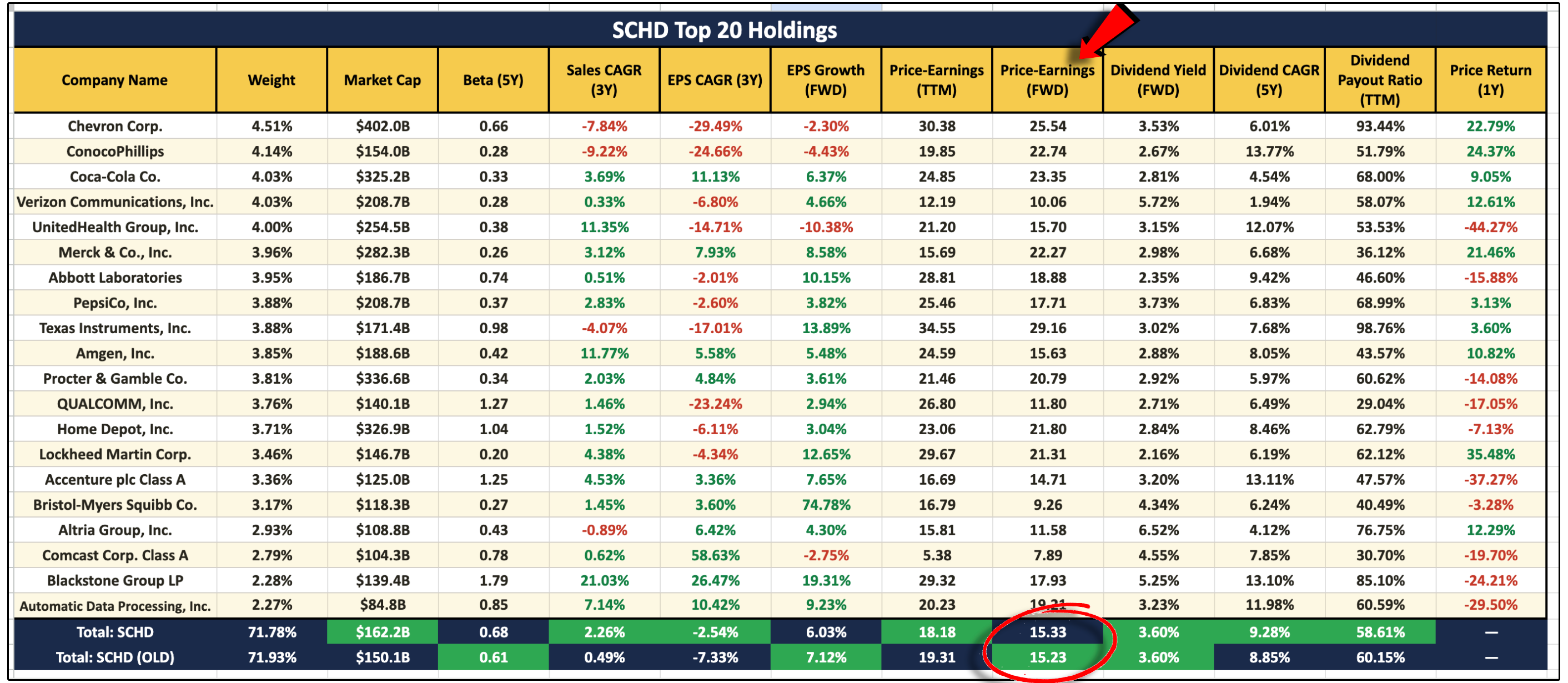
So during a time where valuation multiples were stretched and risk was increasing, SCHD was naturally rotating capital to keep its holdings at a reasonable valuation.
This ‘derisked’ SCHD from the fact that the US equity risk premiums were in negative territory.
Naturally, the results were amazing.
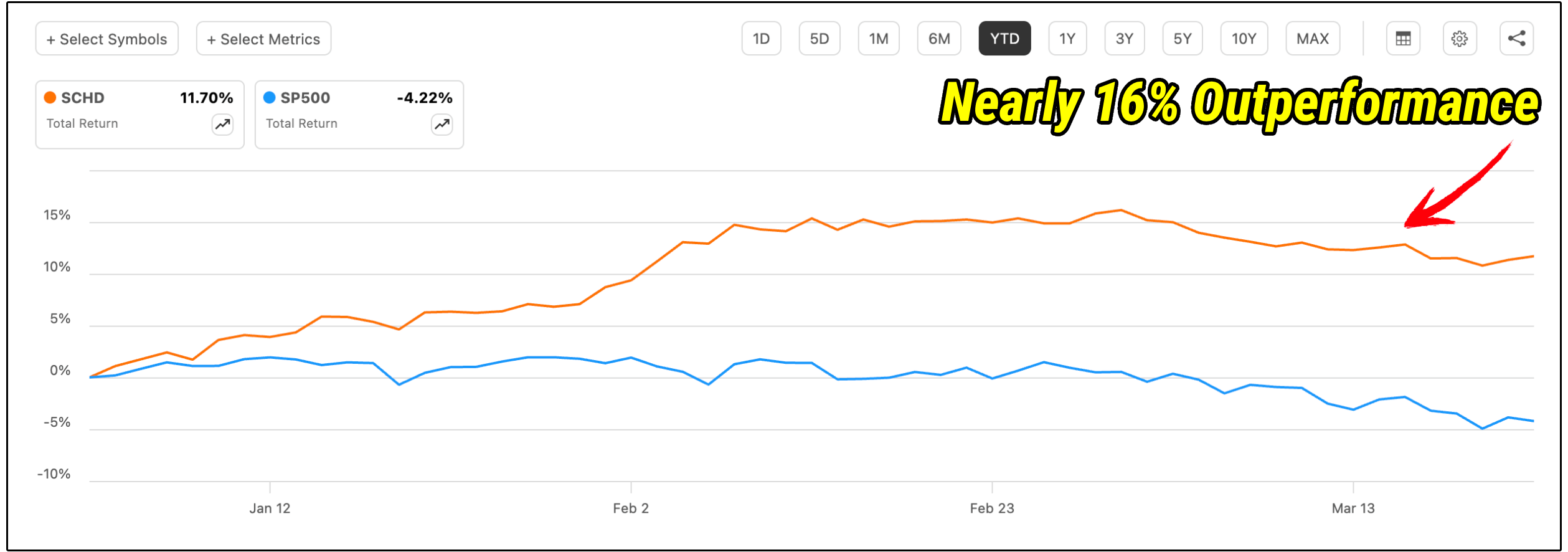
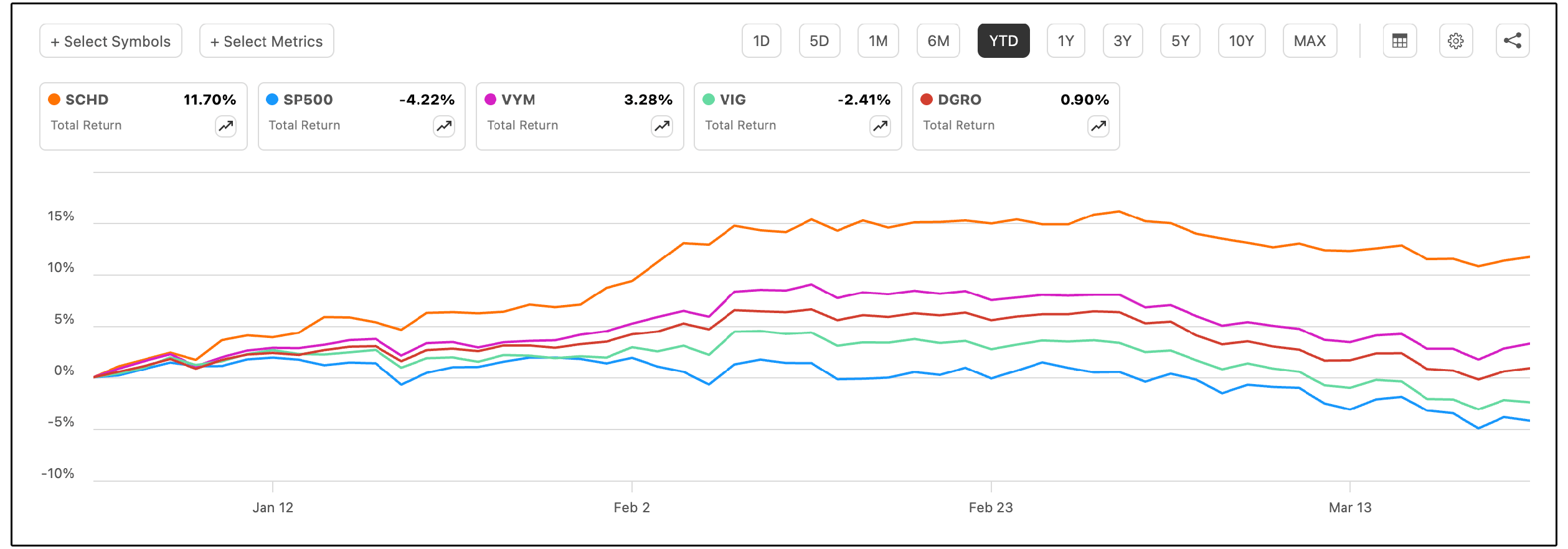
SCHD has now outperformed the S&P 500 by around 16% year to date!
But it hasn’t just outperformed the S&P 500, it outperformed its close dividend ETF peers, like DGRO, VYM, and VIG.
🎯 What Changed in 2026?
This year, SCHD:
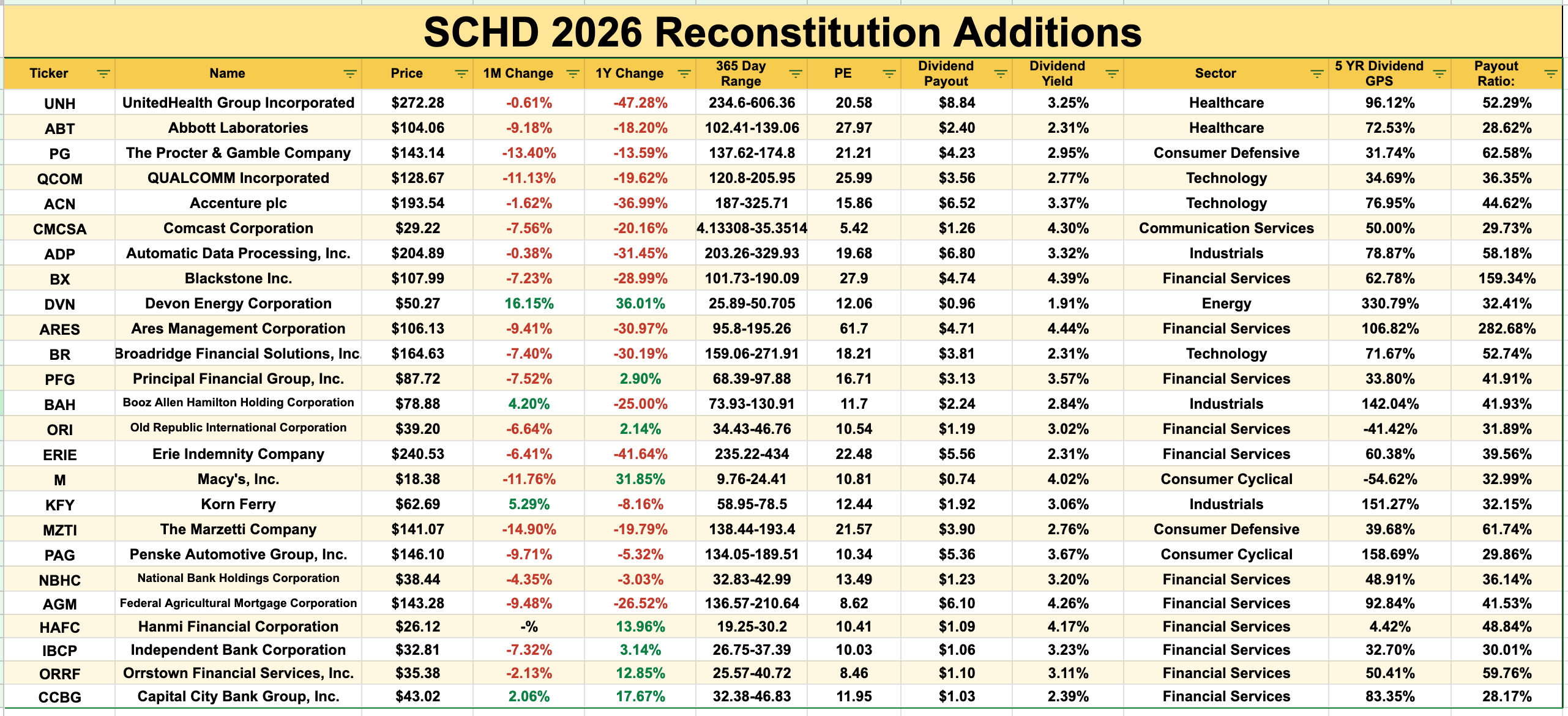
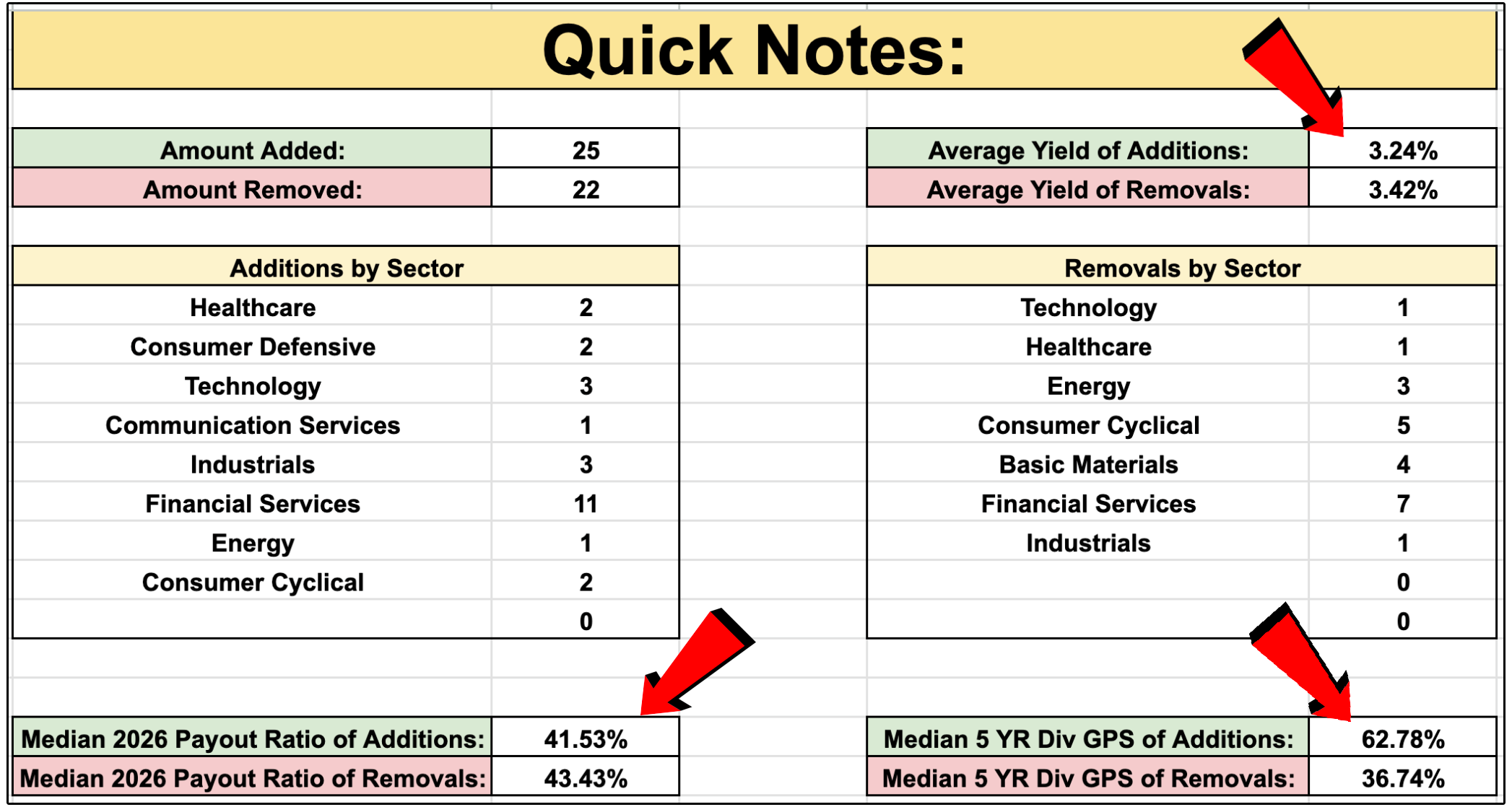
Added 25 stocks
Removed 22 stocks
Here are the 25 stocks that were added:
And here are the 22 stocks that were removed:
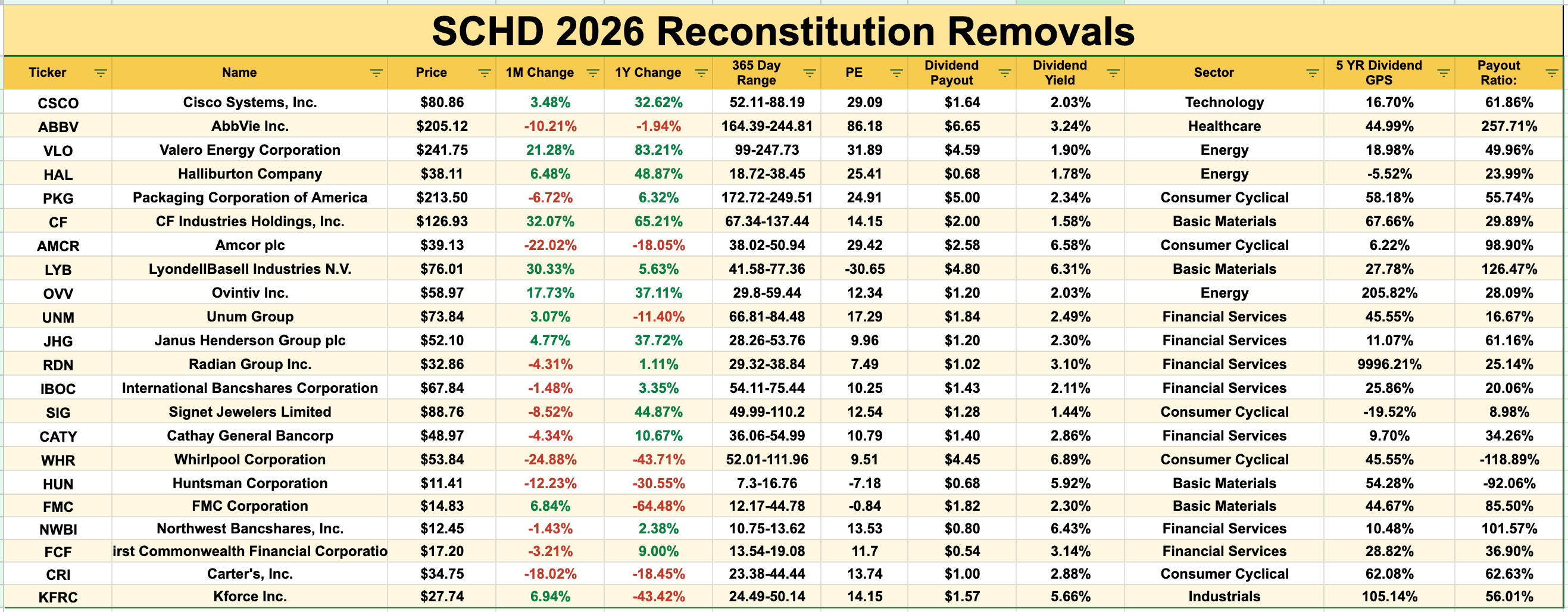
There’s a multitude of major moves that we could point out, such as the addition of UnitedHealth Group, or the removal of Abbvie and Cisco-
But the biggest takeaway is the sector rotation.
2025 was different for SCHD, in a sense that historically speaking, SCHD has typically had a large allocation to financials and a small allocation to energy.
2025 was the complete opposite.
SCHD went from a 5.7% allocation to energy in 2020, to over 20% before the 2026 reconstitution.
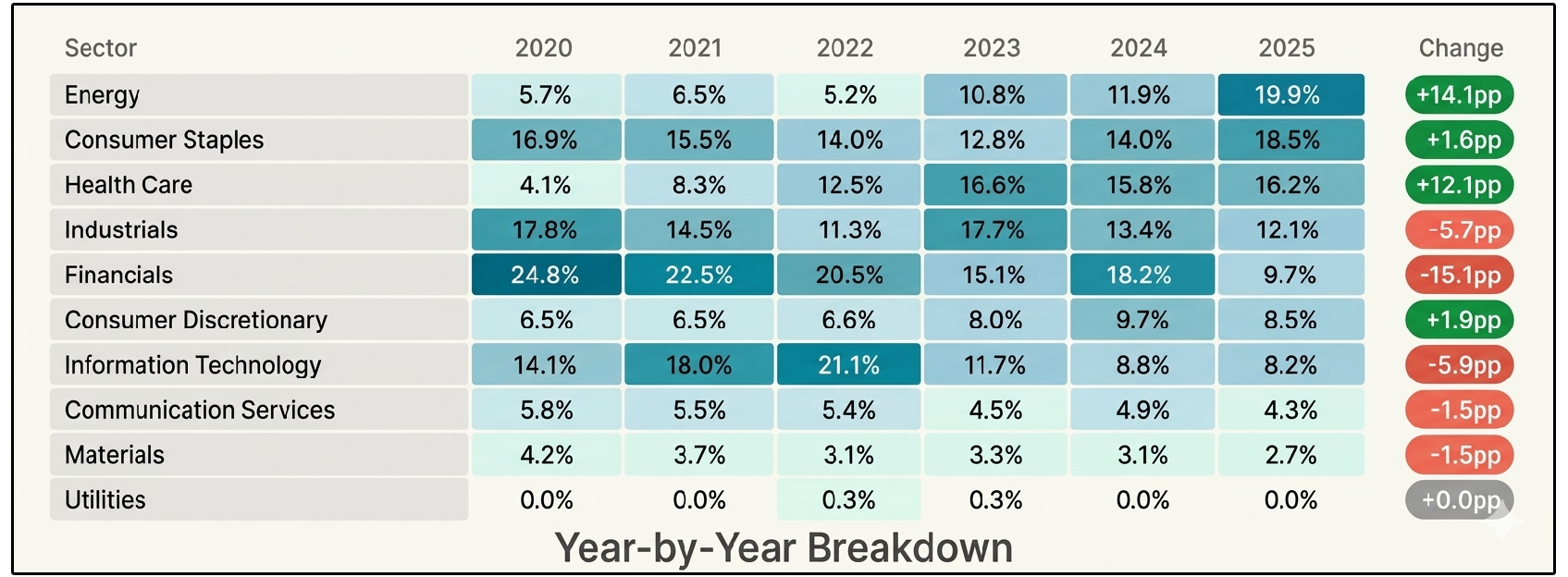
And while financials were 24.8% of the fund in 2020, it dropped to just 9.7% in 2025.
However, SCHD has a new look after the recent reconstitution:
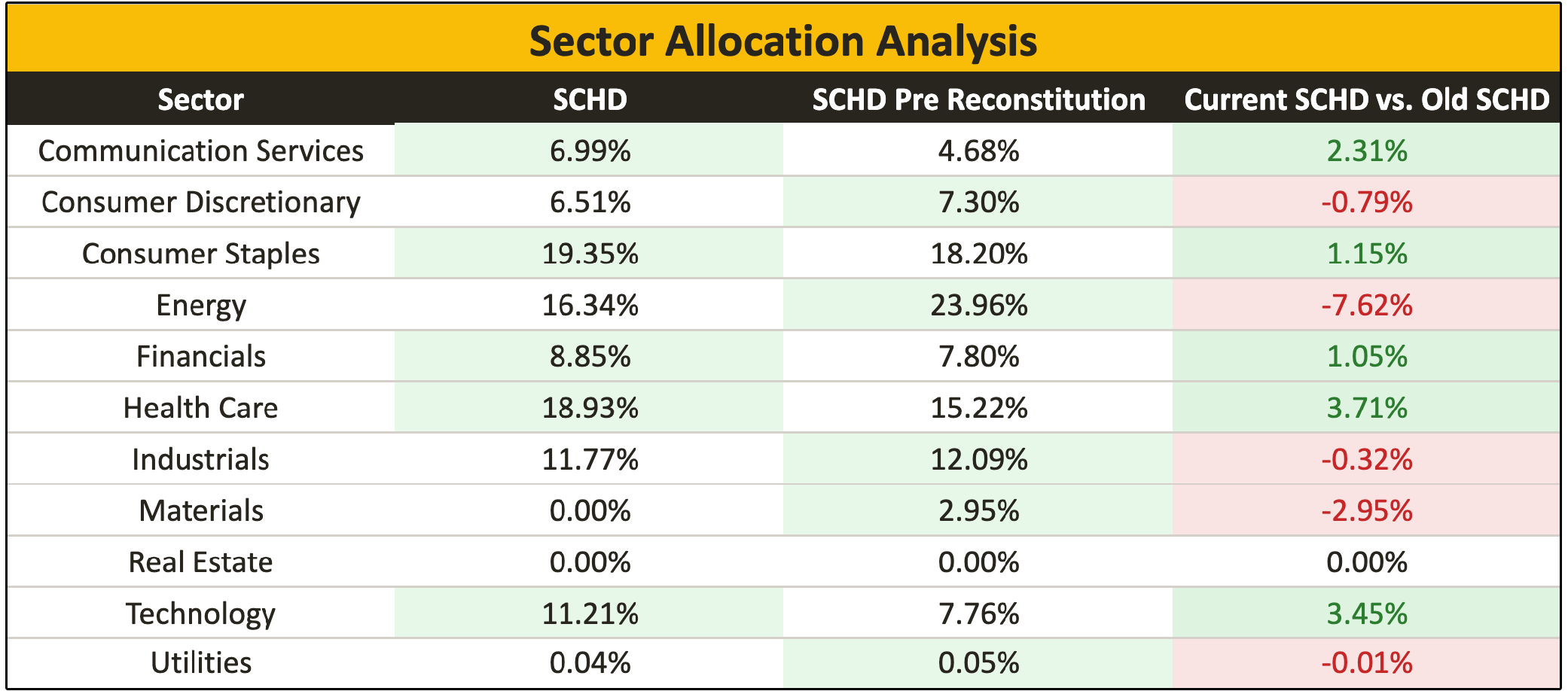
After a strong run, many energy stocks saw their yields compress, which pushed them down in SCHD’s rankings and led to several removals.
At the same time, financials had a much weaker year.
That decline in price pushed yields higher, making them far more attractive within SCHD’s model.
The end result was a near 8% reduction in the energy allocation.
That capital went into:
Financials
Communication services
Consumer staples
Health care
Technology
This is a very different look from 2025.
📊 The Hidden Dividend Growth
SCHD recently announced their Q1 2026 dividend, and it’s around 3.3% higher than 2025’s Q1 dividend.
But it is important to remember that SCHD’s high dividend growth isn’t just from the underlying holding growing payouts-
But from the annual reconstitution dropping the low yielders and adding the high yielders.
This essentially causes ‘artificial dividend growth’.
What’s even more exciting, is the fact the holdings added during the reconstitution have higher historical dividend growth, with lower payout ratios.
⚡ Reality
The reality for SCHD is this:
Sentiment around this fund changes rapidly.
Everyone loves the fund right now, but that wasn’t the case just a few months ago.
But over full market cycles, that discipline is exactly what has driven:
Strong total returns
Exceptional dividend metrics
Lower volatility than the broader market
And over time, that’s how you build a portfolio that compounds without needing to time or predict the market.
If you to get access to all Dividendology features mentioned below, then consider becoming a member here:
Check out these resources:
Tickerdata 🚀 (My automated spreadsheets and instant stock data for Google Sheets!)
Interactive Brokers 💰 (My favorite place to buy and sell stocks all around the world!)
Seeking Alpha 🔥 (Research stocks $30 off! + 7 day free trial)
HYSA 📊 (Get Access to the Best High Yield Savings Accounts!)
There was a table I saw, I believe from Schwab showing the improvement in cash flow/debt ratio and dividend growth!
SCHD is the anchor of my portfolio, add to it monthly.