

SCHD is the most popular dividend ETF, and for good reason.
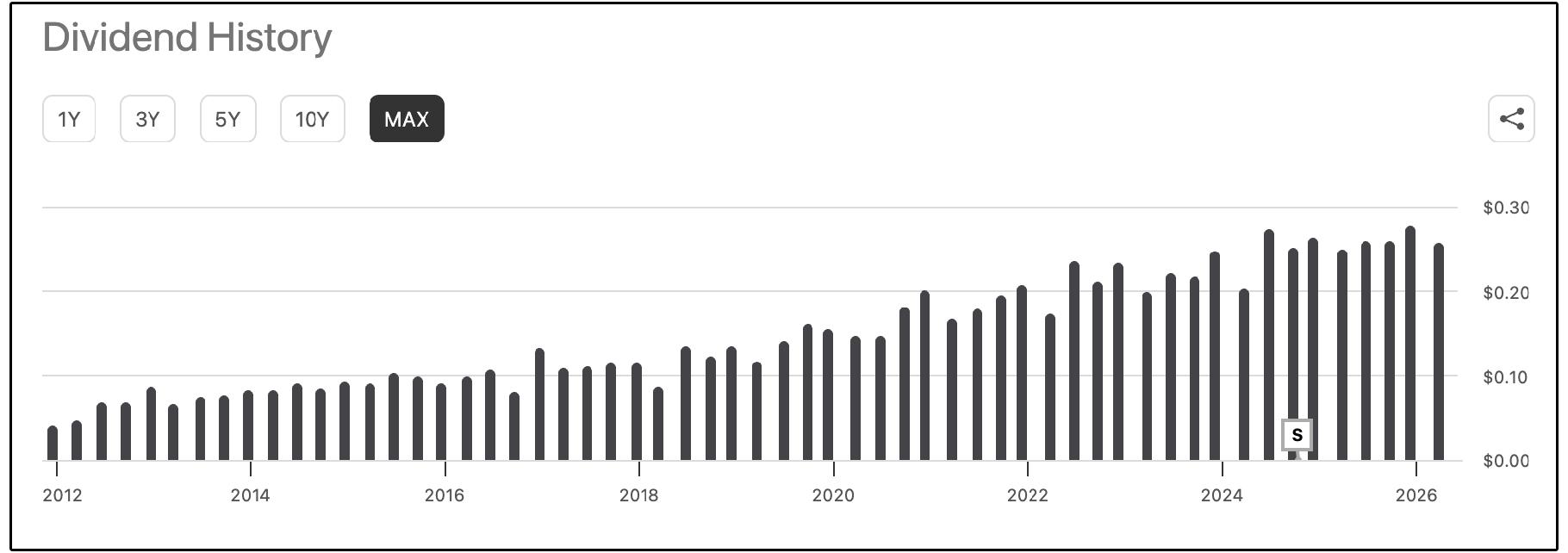
Since inception, SCHD has delivered annualized returns of nearly 13%, while also building one of the strongest dividend growth track records in the ETF market.
Today, the fund yields roughly 3.4%.
But do you know what truly makes SCHD special?
Dividend growth.
Since inception, SCHD’s dividend growth rate has averaged around 11% annually!
But eventually, as investors get closer to living off dividends, many begin to ask the same question:
How do you enhance SCHD’s yield without destroying the long-term compounding engine?
Let’s create a simple 3 fund portfolio to do exactly that.
⚠️ The Covered Call ETF Problem
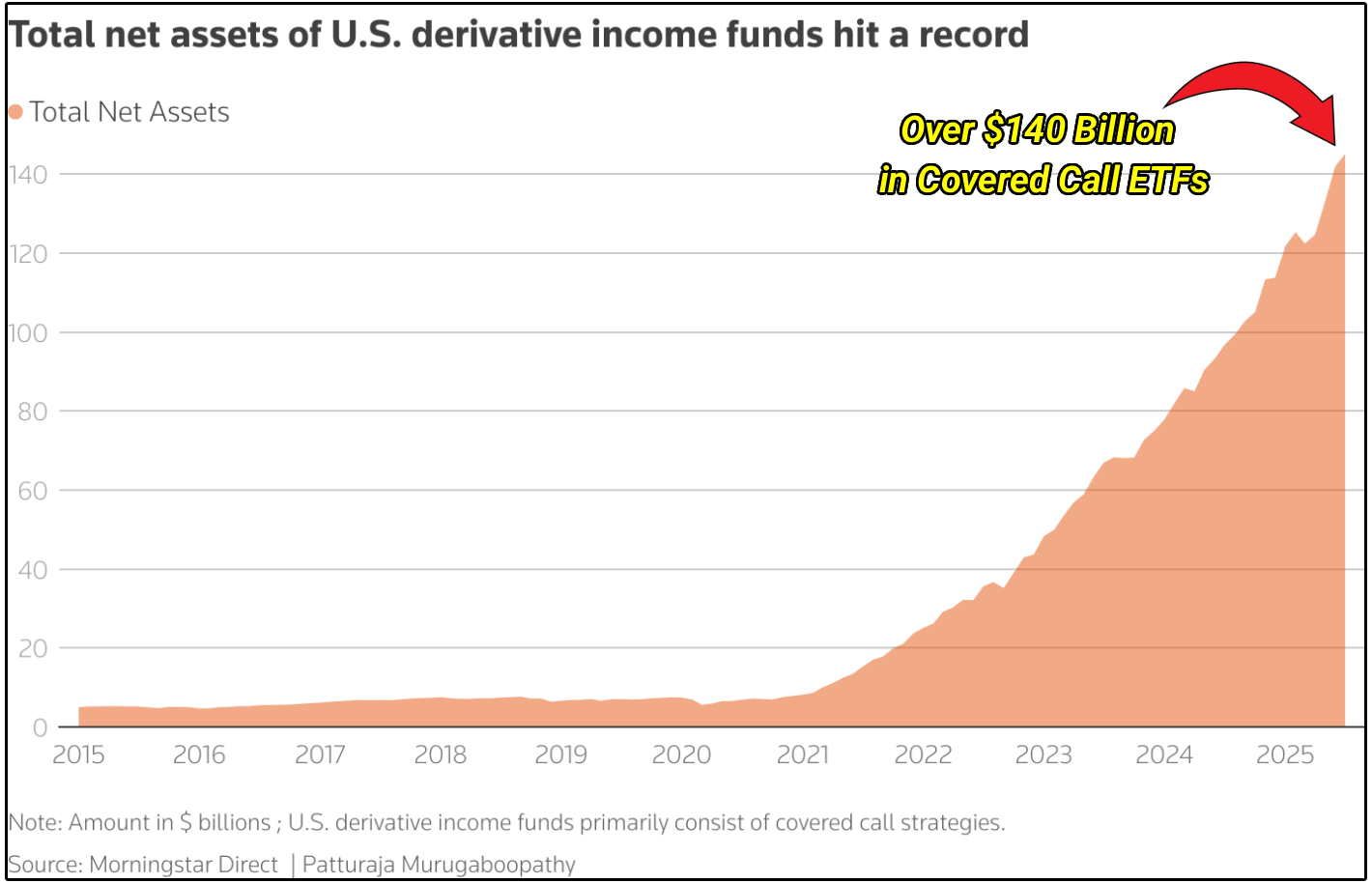
Covered call ETFs have exploded in popularity over the last several years.
Total net assets for these high income funds grew from under $10B to over $140B in just the last 5 years!
At first glance, it’s easy to understand why.
Many of these funds offer:
10%+ yields
Monthly income
Massive distribution payouts
But there’s a major issue most investors completely overlook.
The distributions from most of these funds are often not sustainable.
Inside the Dividendology Covered Call ETF Database, I currently track around 70 different covered call ETFs.

Out of those 70 funds?
Only around 38% of covered call ETFs have successfully maintained long-term NAV growth.
And this matters far more than most investors realize.
Because over the long run:
Lower NAV eventually leads to lower distributions.
Even funds that have historically had periods where they performed very well can be structured in a way where that performance will certainly NOT last.
Take YieldMax’s MSTY for example.
This fund was considered (by some) to be the gold standard for covered call ETFs.
However, in the last year, the fund has:
Fallen by 78%
Seen distributions fall by around 80%+
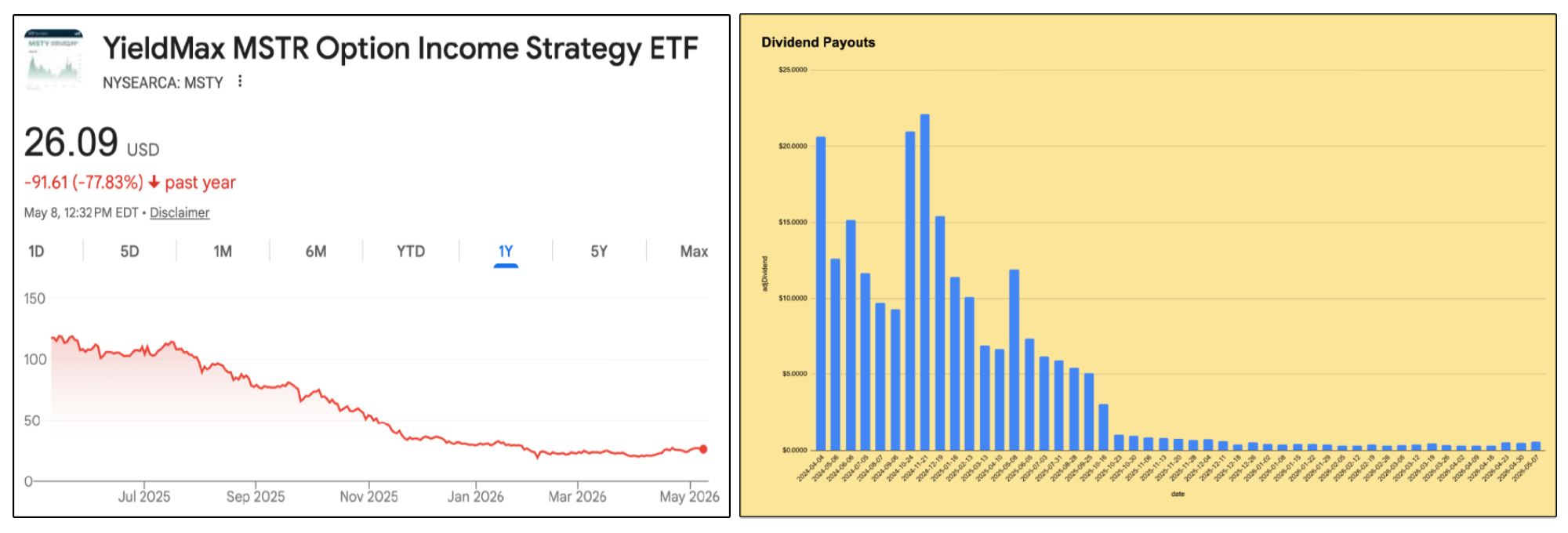
This is the hidden danger with many covered call ETFs:
They can generate enormous yields…
…but often at the expense of long-term sustainability.
And if you’re looking to live off dividends, then obviously the yield of your portfolio is important-
But so is the sustainability of the income you generate.
If you truly want to understand covered call ETFs, there’s one metric that matters more than almost anything else.
🔍 Portfolio Options Coverage
Most covered call ETFs operate with nearly 100% overwrite strategies.
In simple terms:
They continuously sell options on nearly the entire portfolio.
That creates high income today, but it also caps upside participation almost entirely.
And over time, that increases the potential of slowly eroding long-term NAV growth.
Now to be fair, there are some exceptions.
Funds like NEOS Nasdaq-100 High Income ETF (QQQI) and NEOS S&P 500 High Income ETF (SPYI) have done a much better job than most competitors, although even they don’t always utilize a 100% portfolio options coverage strategy.
But if we’re building a “sleep well at night” enhanced yield portfolio around SCHD, I actually think there’s an even more interesting option emerging.
⚡ Yield Enhancement #1
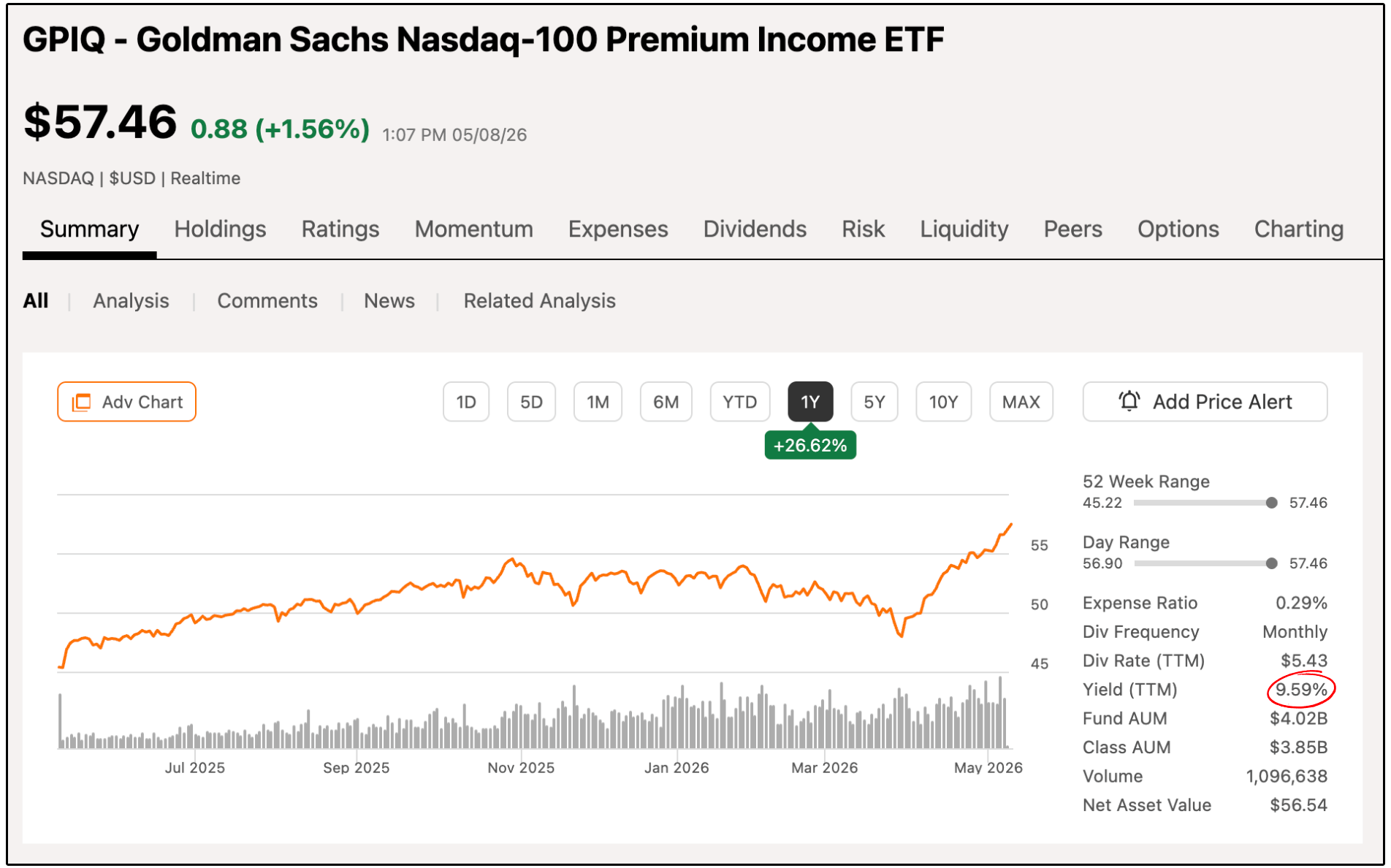
GPIQ generates high monthly income by investing in Nasdaq-100 stocks and selling call options against the portfolio, and has a trailing twelve month yield of 9.59%.
But structurally, there’s one massive difference.
Unlike many competitors that maintain nearly 100% overwrite exposure at all times…
GPIQ uses a dynamic overwrite strategy.
According to the fund prospectus, portfolio options coverage generally ranges between 25% - 75%.
That flexibility matters enormously.
Why?
Because ideally, it allows portfolio managers to:
adjust based on volatility
adapt to market conditions
participate more fully in upside rallies
preserve more long-term NAV growth
And in my opinion, that’s exactly what investors should want from a covered call ETF.
So what’s the tradeoff?
The starting yield is slightly lower than some ultra-aggressive competitors.
But that lower starting yield actually improves long-term sustainability.
Currently, GPIQ yields slightly below 10% on a TTM basis.
But unlike many covered call ETFs, GPIQ has actually shown modest distribution growth since inception.
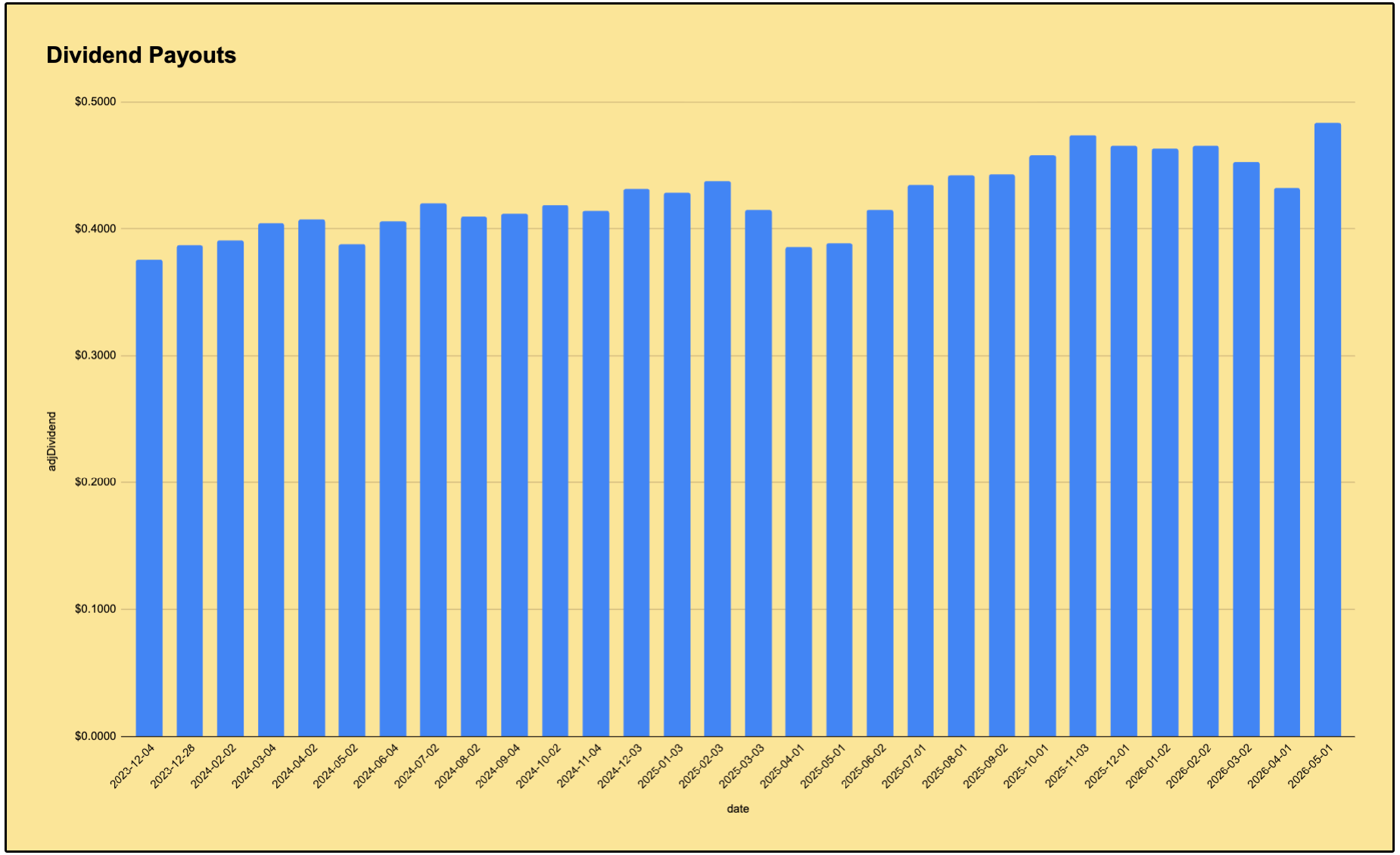
That’s an extremely important distinction.
And perhaps most importantly, GPIQ complements SCHD extremely well from a sector exposure standpoint.
SCHD has very little exposure to mega-cap technology and AI-driven companies, while GPIQ is heavily tech-focused, meaning there is surprisingly little overlap between the underlying holdings of the two ETFs.
🌍 Yield Enhancement #2
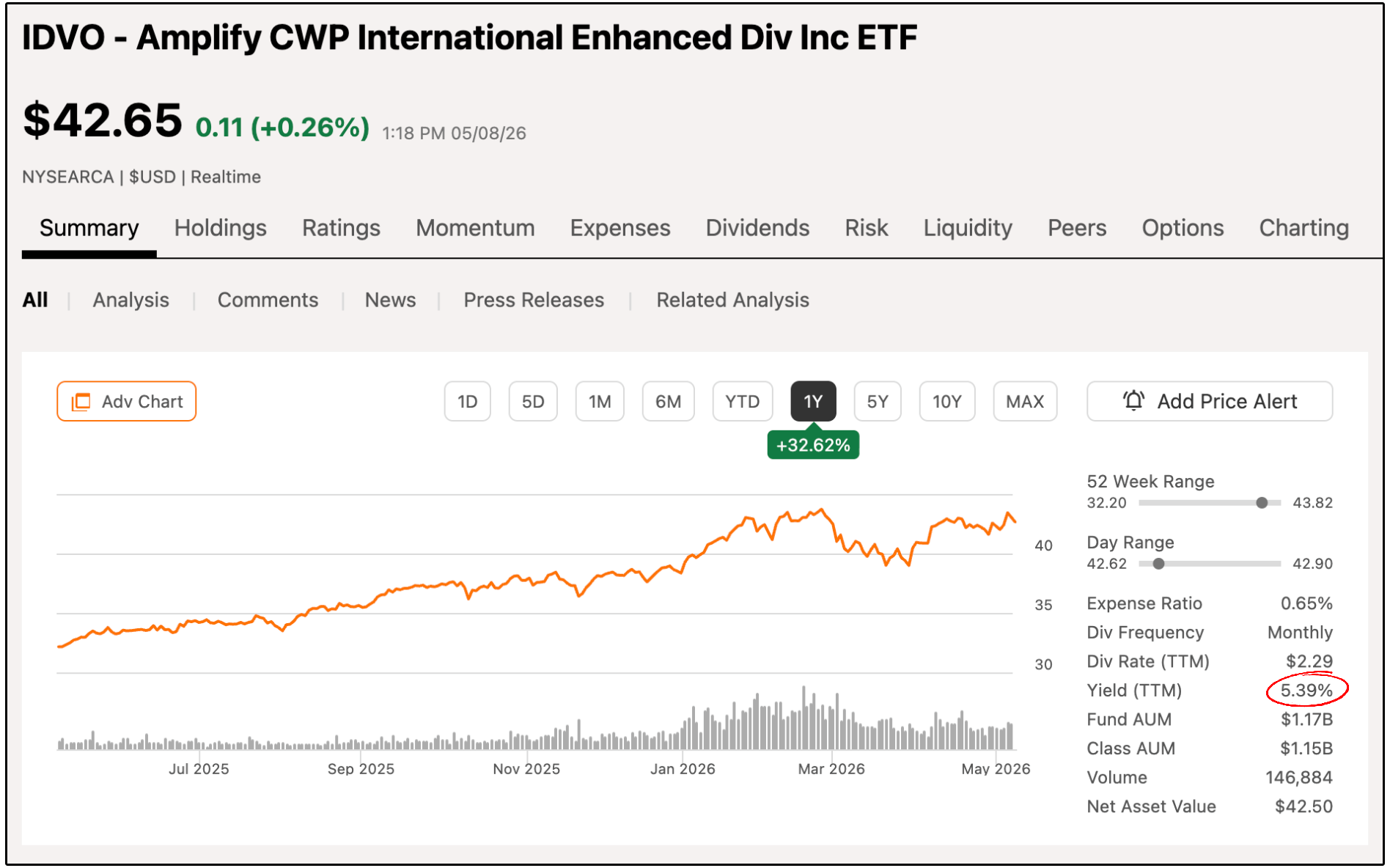
The second ETF that I believe fits extremely well into this type of portfolio is the Amplify CWP International Enhanced Dividend Income ETF (IDVO).
And in my opinion, this is one of the more overlooked income ETFs on the market today.
Unlike many covered call ETFs that focus heavily on U.S. mega-cap tech stocks, IDVO focuses internationally.
That immediately introduces another layer of diversification into the portfolio.
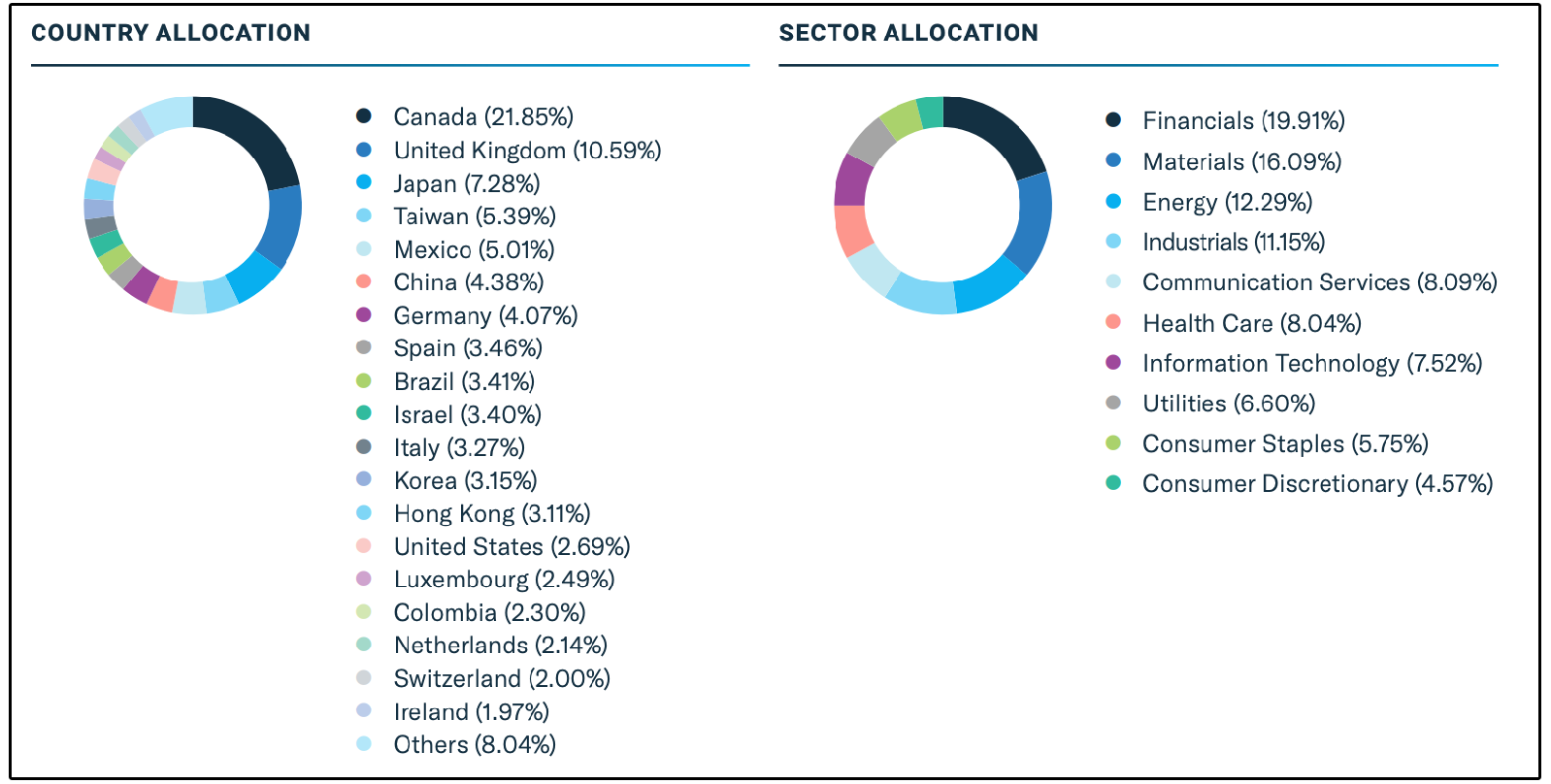
The fund holds high-quality international dividend-paying companies while implementing a covered call strategy to enhance income generation.
However, how they go about generating their 5.4% yield is incredibly important to understand.
The fund has portfolio options coverage of 30% - 60% at any given time, allowing for substantial NAV growth.
As a result, the NAV is up significantly in the last year and since inception.
And as a result of that, the growth in the distributions has been exceptional.
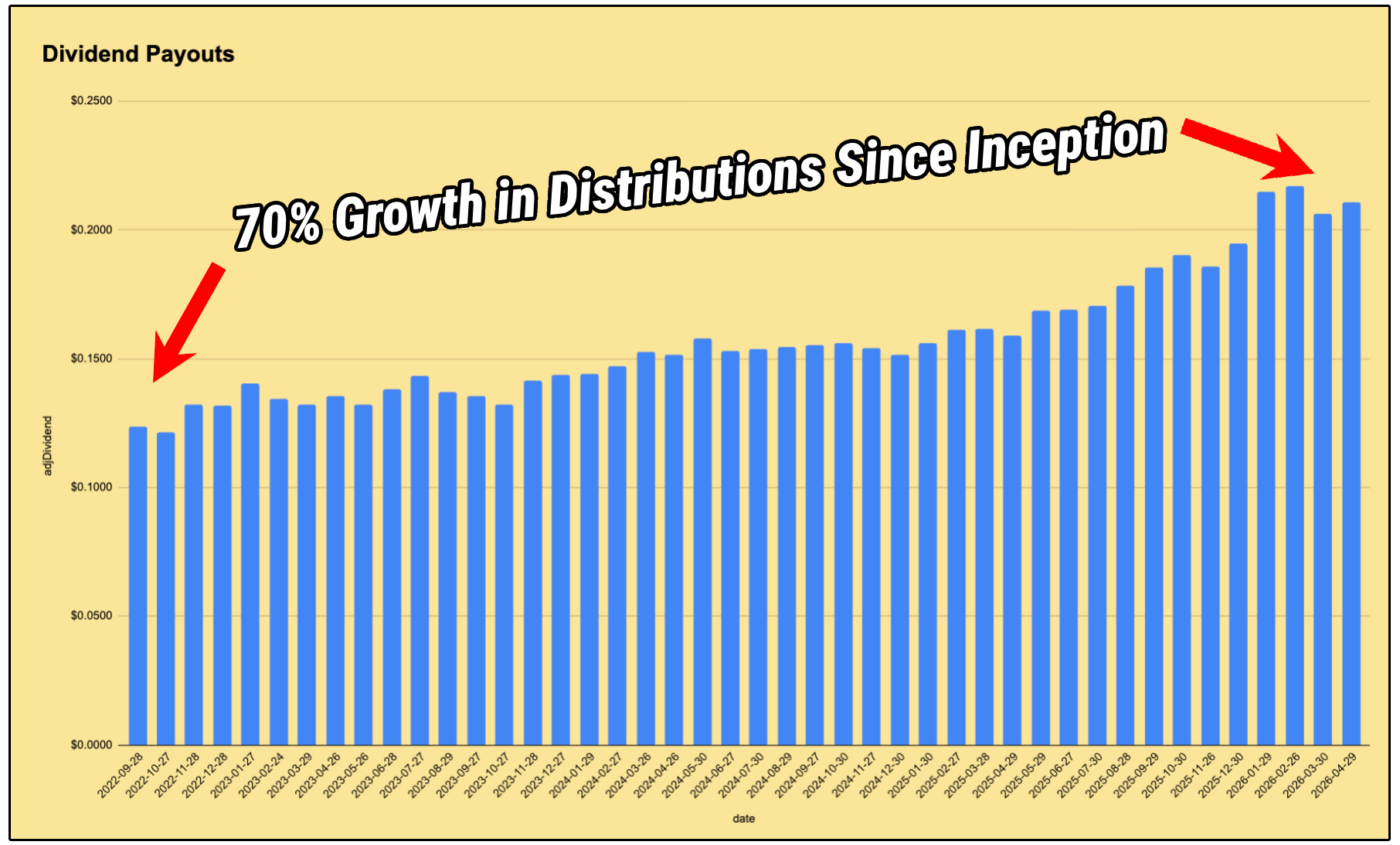
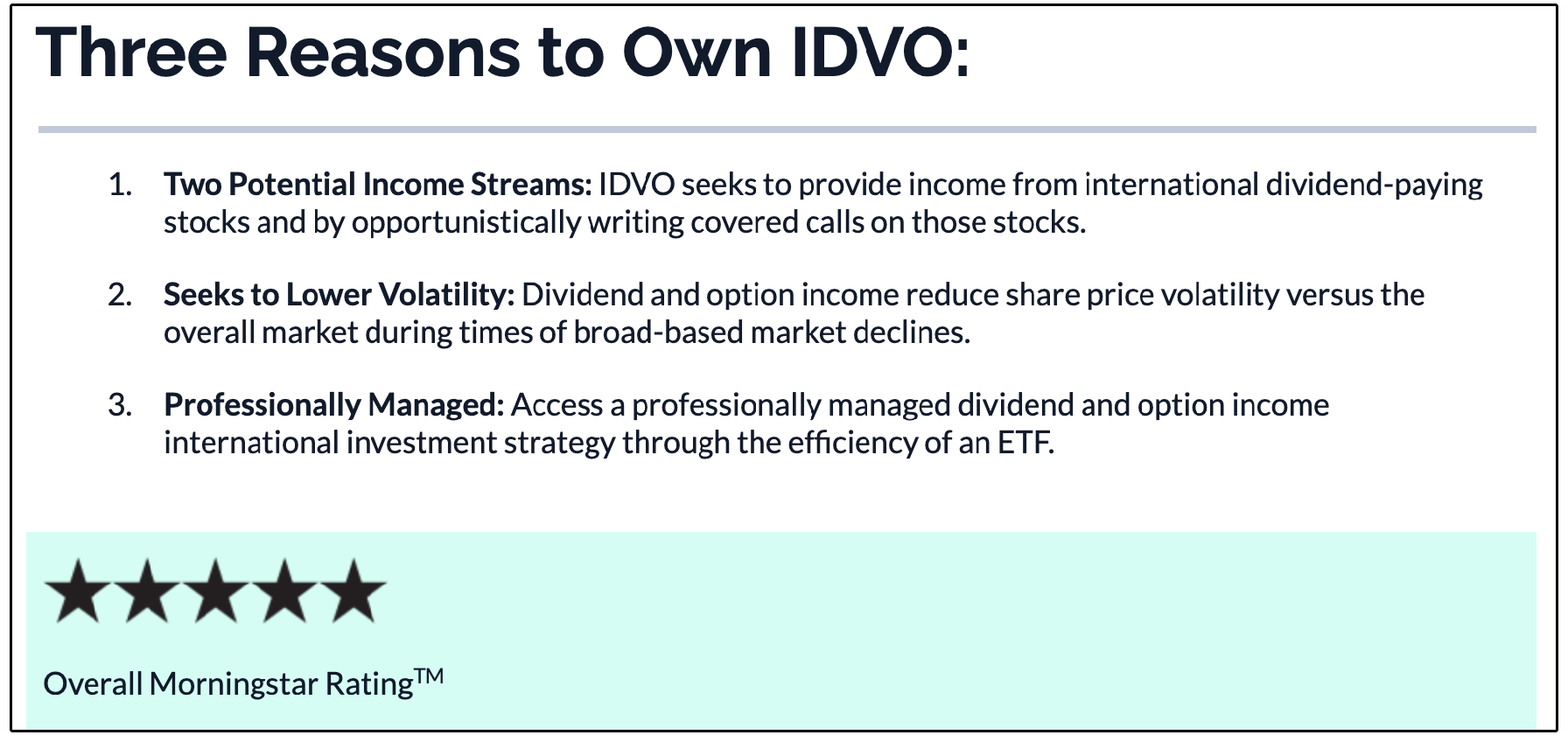
Keep in mind, IDVO seeks to provide gross annual income of approximately 3-4% from dividend income and 2-4% from option premium-
Making these distributions substantially more sustainable than traditional covered call ETFs.
⚖️ Why This Three-Fund Combination Works So Well
What I really like about this setup is how each ETF serves a completely different purpose.
SCHD - Acts as the long-term dividend growth engine
GPIQ -Enhances yield while maintaining more upside participation through active overwrite management and providing exposure to the tech sector
IDVO -Adds global diversification and another layer of enhanced sustainable income generation
The portfolio becomes much more balanced and sustainable than simply chasing the highest yielding covered call ETF possible.
Here’s what the allocation could look like:
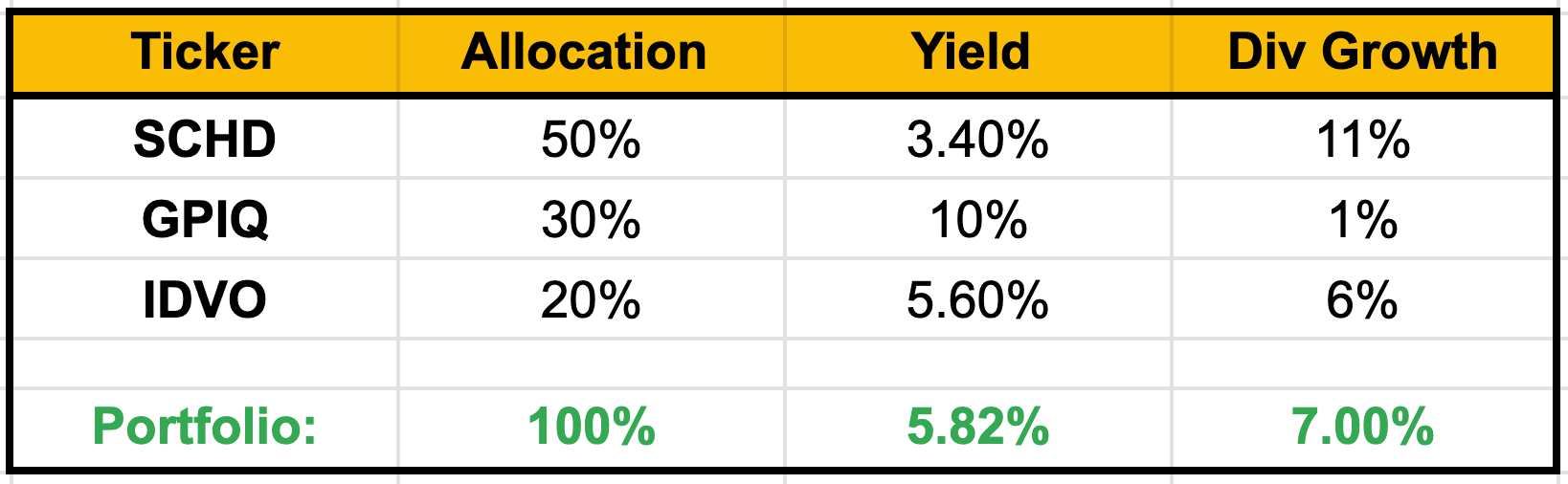
With this structure, the portfolio’s overall starting yield jumps materially higher than SCHD alone, while still providing above average levels of dividend growth.
But importantly, you’re increasing your diversification as well.
Here’s what an initial $1M investment into this portfolio would look like:
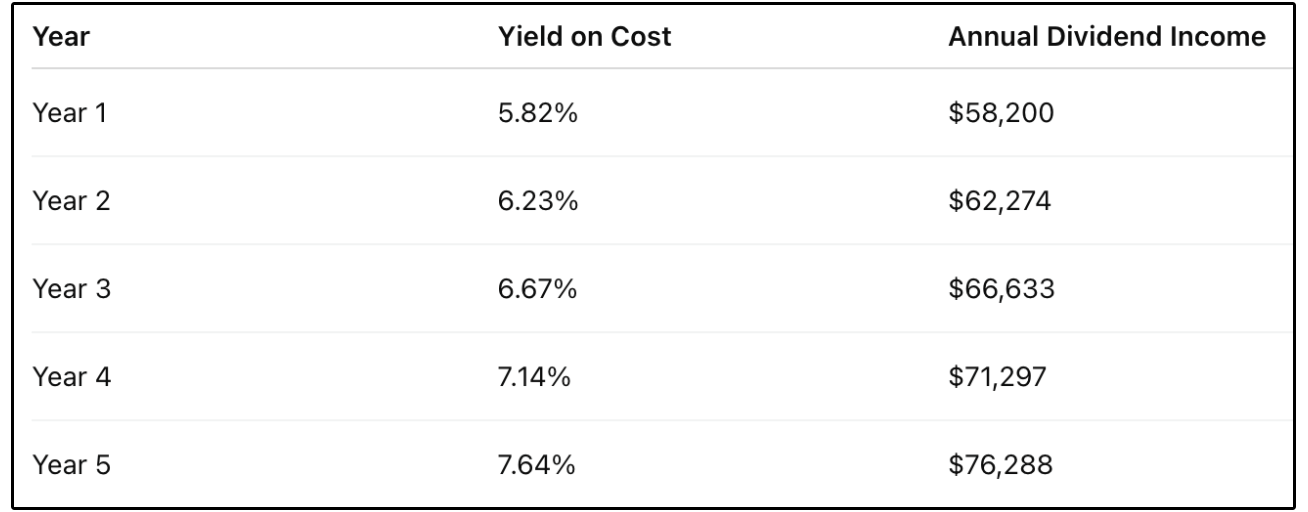
Your purchasing power would still be increasing substantially, as your yield on cost closes in on 8% by year 5!
📈 Final Thoughts
The goal should never simply be maximizing yield.
The goal should be maximizing sustainable income growth over very long periods of time.
And in my opinion, this combination creates one of the more interesting “sleep well at night” dividend ETF portfolios available today.
And over the next decade, I think investors are going to learn that sustainability matters far more than simply chasing the highest yield on the screen.
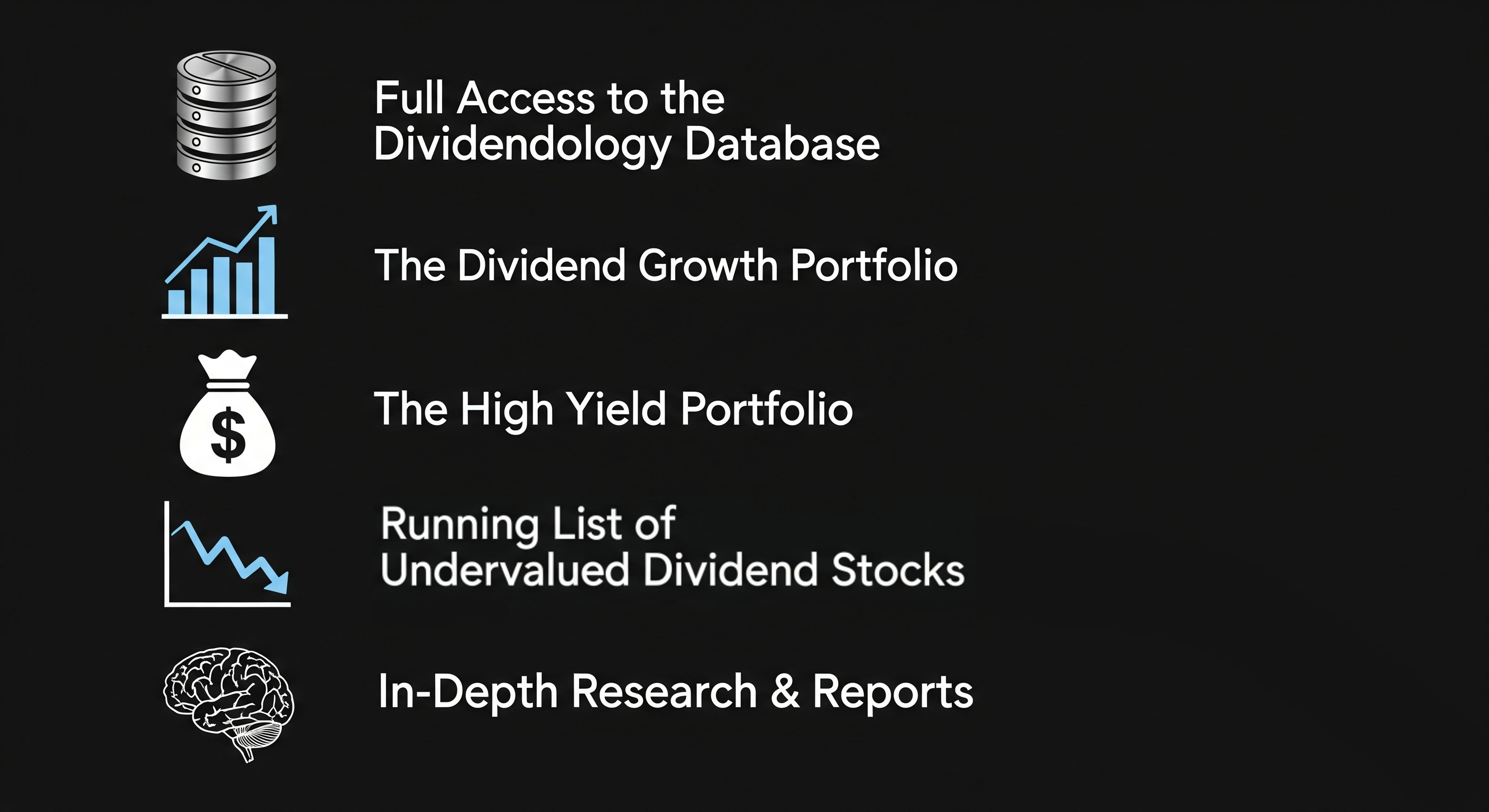
As a reminder, members can access the Covered Call ETF database at anytime to see in depth metric on these funds like:
Portfolio options coverage
Option moneyness
NAV changes
If you want to get access to it, as well as all other features mentioned below, then you can join here:
See you soon!
Dividendology
JEPQ might be another option
I would love to see the list of covered call ETFs that have successfully maintained long-term NAV growth. I am heavy into QQQI and XQQI, both of which have gained market value as well as paying very high dividends. Both are fairly new, and have never been exposed to a significant market downturn.