

Assets under management for covered call ETFs has grown rapidly in the last few years-
And there is a good reason for this.
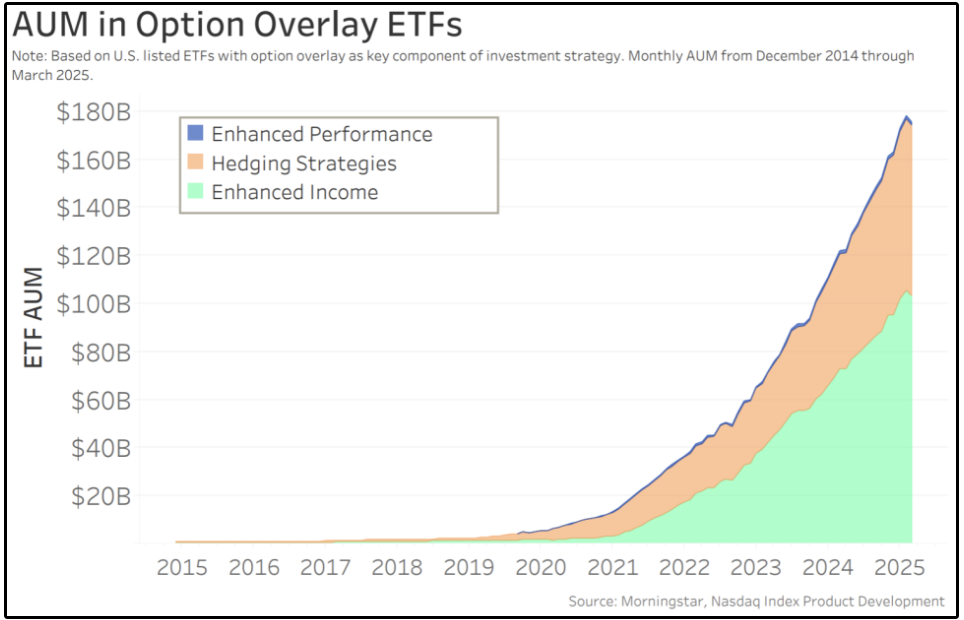
Investors are increasingly demanding income generation across a well-diversified portfolio.
The issue with this?
Historically it has been quite hard to generate income from a portfolio that seeks to have exposure to asset classes like:
Gold
Oil/Energy
Small Caps
That isn’t the case anymore.
Let’s look at 3 covered call ETFs that provide ways to generate income from these historically ‘low or non-yielding’ segments of the market.
1. 🥇 NEOS Gold High Income ETF (IAUI)
Gold is typically viewed as one of the most defensive assets in the world.
It’s a hedge against:
Inflation
Currency debasement
Economic uncertainty
And historically, it’s significantly outperformed the S&P 500 during market pullbacks.
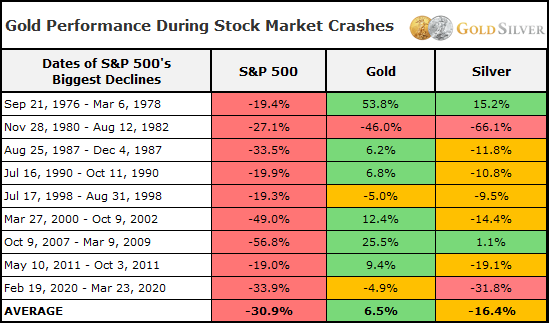
However, this of course is a ‘non-productive asset’, meaning it doesn’t produce earnings and thus doesn’t produce income for the investor.
IAUI from NEOS addresses this problem.
Instead of simply holding gold, it layers on an income strategy:
Maintains exposure to gold (via ETFs and synthetic positions)
Sells call options to generate premium income
Holds collateral (like Treasuries) to enhance returns
While the ETF was only launched in June of last year, this methodology has been so effective that IAUI was recently awarded the ‘Best New Options Income ETF’ award from ETF.com!

What is so interesting about IAUI is that gold is actually an ideal candidate for covered calls.
Why?
Because over long periods, gold tends to:
Trade sideways
Experience moderate volatility
That’s exactly the environment where covered call strategies have the capability to thrive.
Since inception, the fund has managed to grow net asset value, despite also offering a 12.2% distribution rate.
In fact, because of the growth of their NAV, the fund has also increased the amount they payout in dividends since inception.
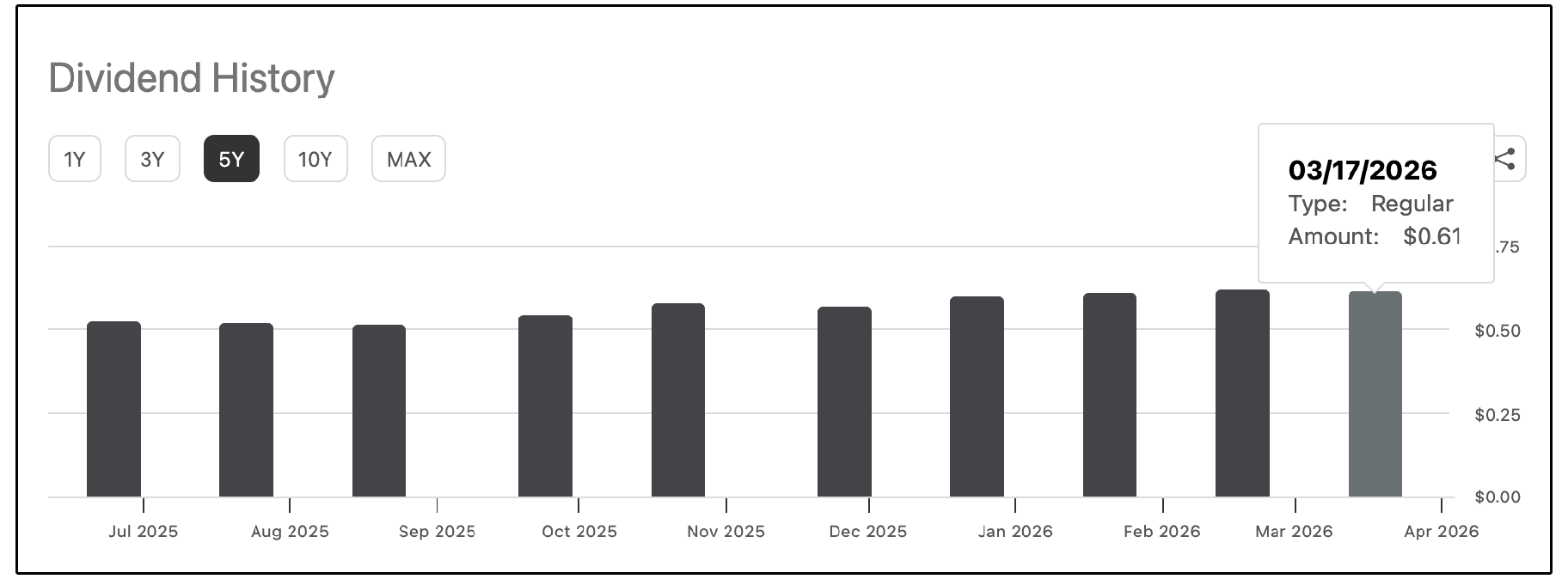
The dividend has gone from $0.52 per share to $0.61.
It’s important to remember that a growing NAV indicates sustainable distributions for covered call ETFs, and a declining NAV indicates the opposite-
Declining distributions.
As the fund’s fact sheet states:
“IAUI may be considered as an alternative income stream that’s less correlated to traditional income oriented investments.”
For the investor looking for exposure to an asset class that is less correlated to the market while also producing income, IAUI is an interesting option.
2. 🛢️ NEOS MLP & Energy Infrastructure High Income ETF (MLPI)
That’s right, another NEOS fund on the list.
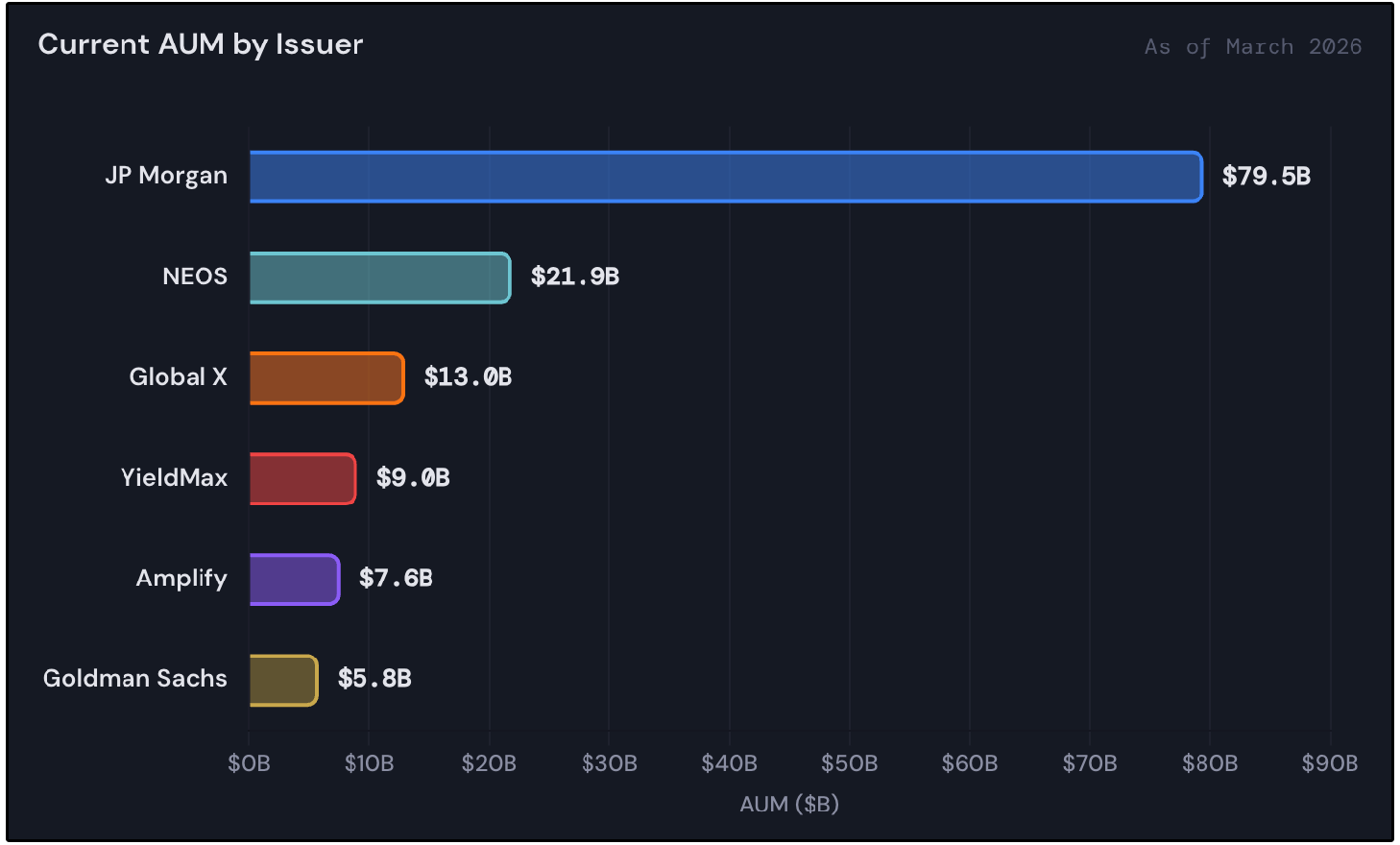
It’s pretty incredible how popular this ETF issuer has become in just a few short years.
Their AUM is now second only to JP Morgan.
Energy has always been one of the most cash-flow-rich sectors in the market-
Especially when it comes to midstream companies.
As of I’ve stated before, I’m not typically a big fan of energy stocks due to their reliance on commodity prices-
But midstream companies are different.
These businesses often generate stable, fee-based revenue (not reliant on commodities), with attractive starting yields.
MLPI capitalizes on this, while also seeking to enhance this sector in a few critical ways.
Instead of holding a single MLP, MLPI:
Owns a diversified basket of midstream and energy infrastructure companies
Focuses on “toll road”-like businesses with volume-based cash flows
Layers on a covered call strategy to generate additional income
The result is a fund that combines high underlying yields + option income into a single vehicle, giving MLPI a starting yield of 14.92%.
While this is also a new fund, the performance has been astounding since inception.
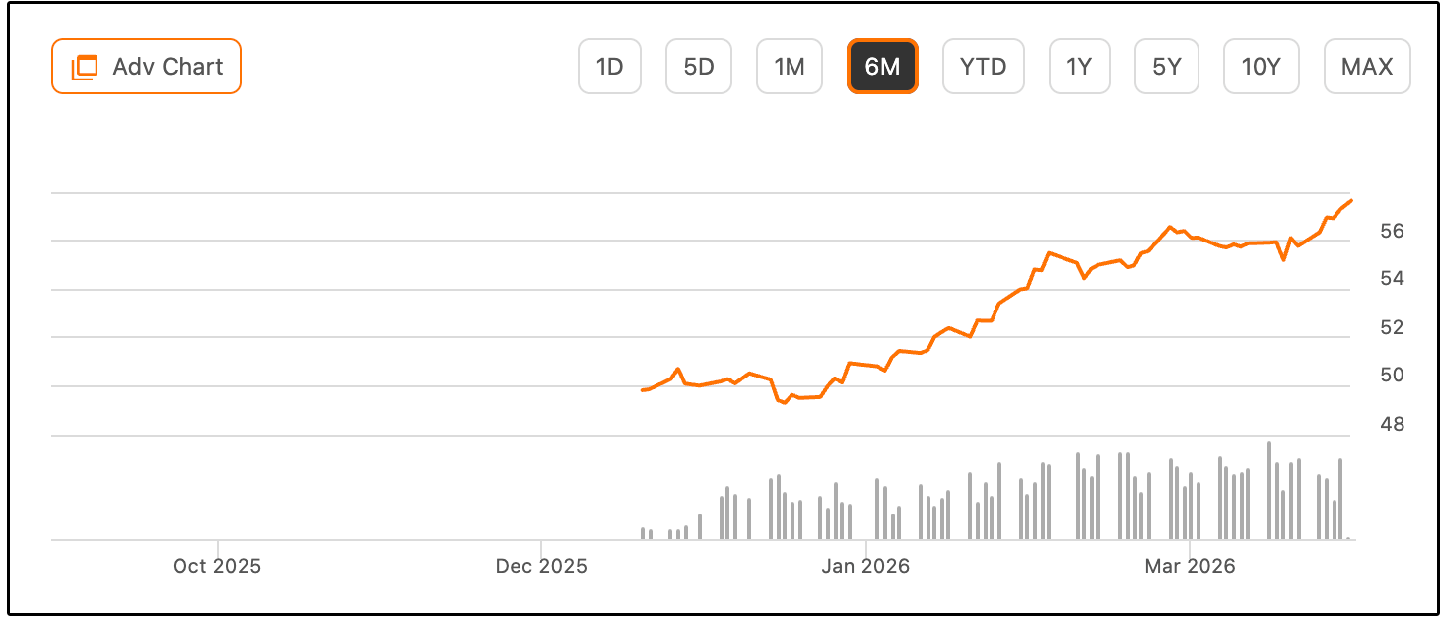
The NAV has grown by 15% in just around three months!
Of course, there is an obvious reason for this.
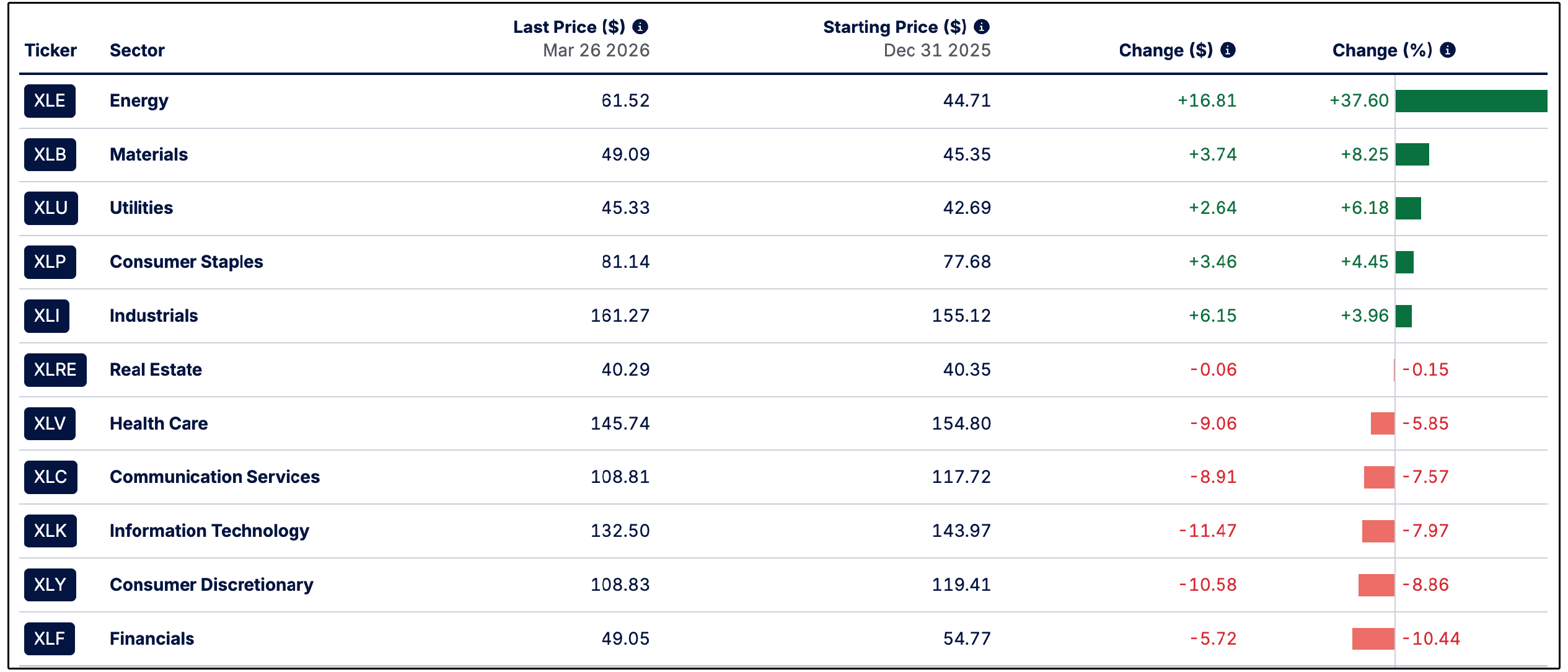
The energy sector has grown 37.6% year to date, while the S&P 500 is down by over 6%.
And perhaps one of the mist underrated benefits of MLPI:
No K-1 forms.
This ETF is even more tax friendly than simply owning the underlying holdings.
Of course, like most covered call ETFs, there are risks as well, such as the fact that MLPI:
Caps upside during strong energy rallies
Is heavily exposed to one sector
Relies on NAV stability to sustain distributions
But for someone looking to get exposure to the energy sector with an enhanced yield in a more tax efficient manner, MLPI is worth keeping on the watchlist.
3. 🚀 Infrastructure Capital Small Cap Income ETF (SCAP)
Did you know that since 1964, small cap stocks have actually been one of the best performing asset classes in the United States?
From 19664 to 2025-
Small cap total returns: 549,240%
S&P 500 returns: 51,520%
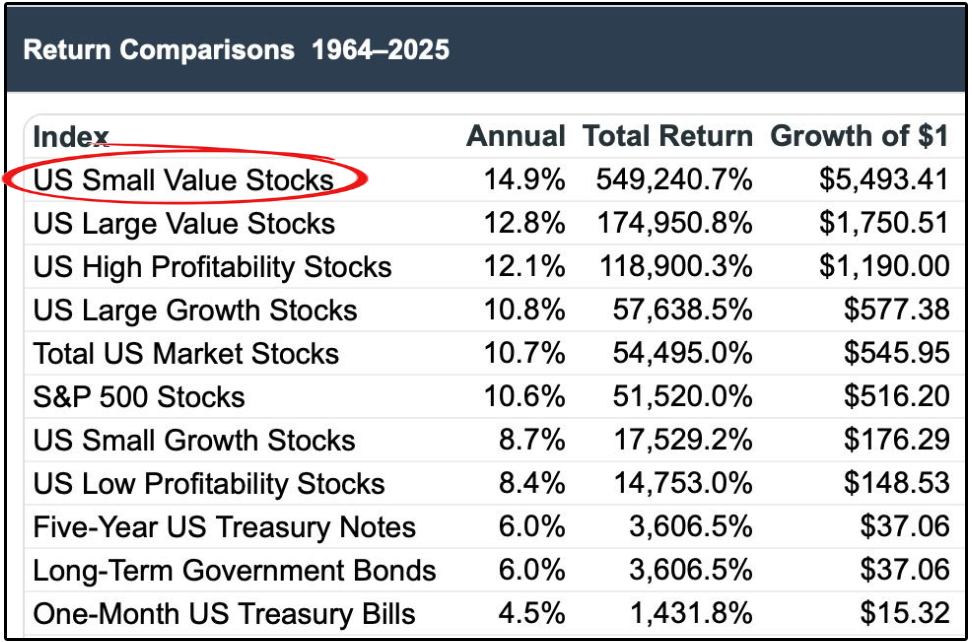
That’s pretty astounding returns.
Naturally, it might make sense to have some exposure to small cap stocks.
Most small caps are known for higher growth potential and greater volatility-
But typically don’t provide income.
SCAP flips that dynamic.
Instead of choosing between growth OR income, it combines both:
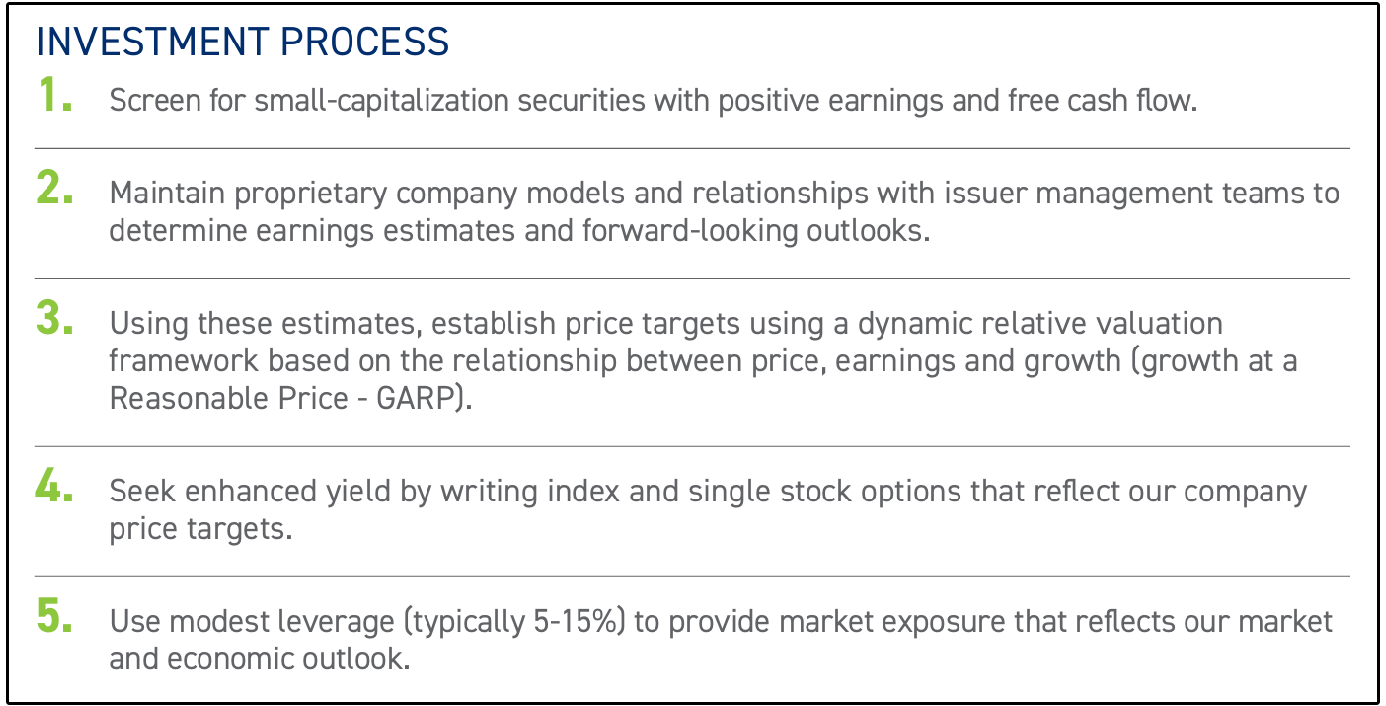
The goal is to deliver both capital appreciation + above-average income from small caps.
What’s most exciting about this fund in my opinion, it the fact it’s able to generate an over 7.25% trailing twelve month yield while only writing options of 5%-20% of the entire portfolio.
This leaves substantial room for SCAP to take part in the upside of their underlying holdings.
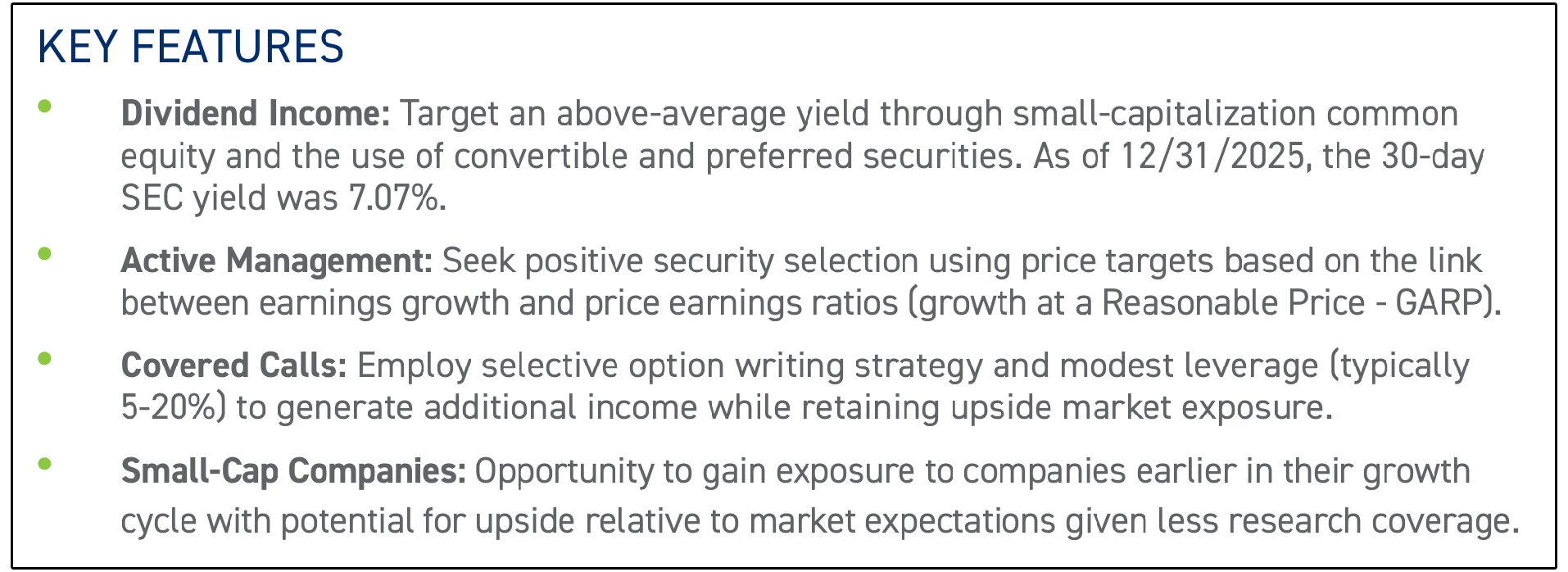
As a result of low portfolio options coverage, this ETF has been able to actually grow their distributions over time.
In fact, the dividend payments have grown nearly every quarter over the past few years!
💸 Covered Call ETFs
It’s important to be able to accurately assess what your goals are as an investor, and make decisions that reflect those goals.
Each of the funds mentioned today are designed to serve a very specific purpose.
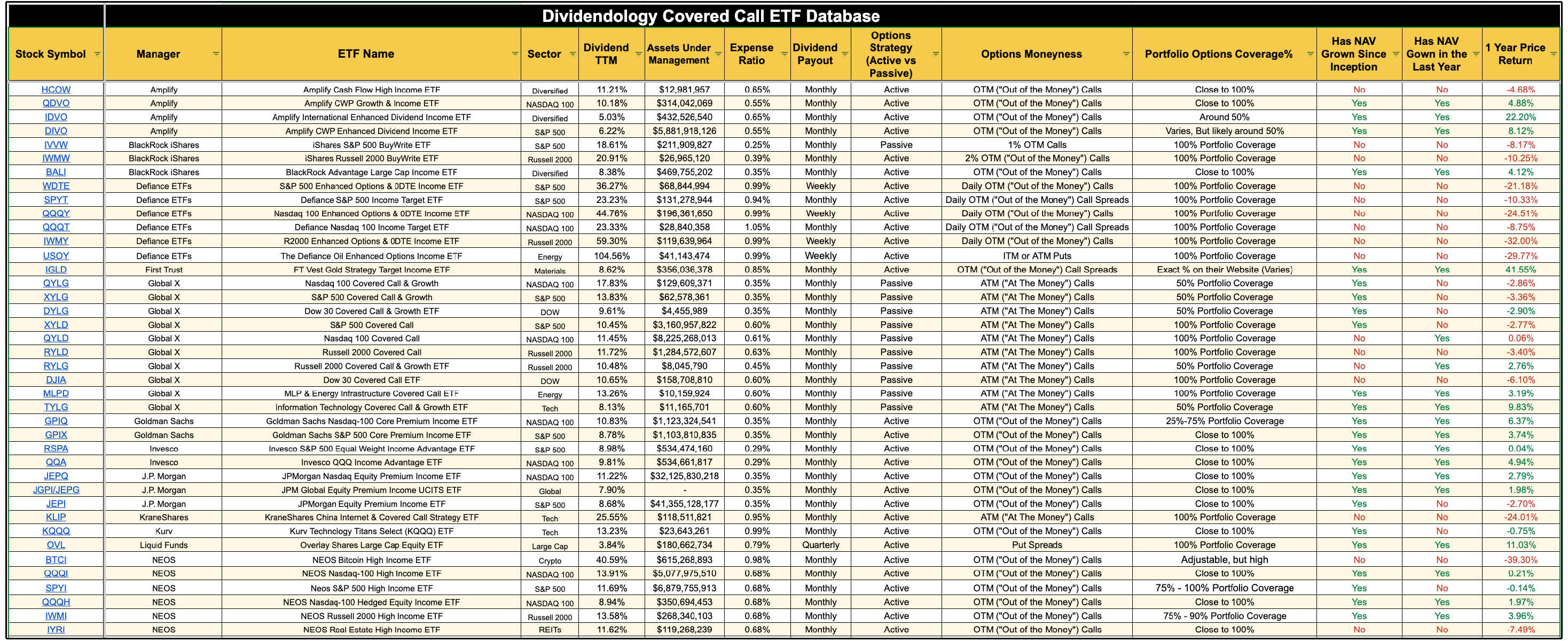
As a reminder, members of Dividendology can access the Dividendology Covered Call ETF database at anytime over on https://www.Dividendology.com/.
Here is a preview:
🎯 Something Big is Coming…
I’ve been conducting extensive interview with fund managers over the last 6 months, in an effort to identify the best income ETF opportunities.
I’m compiling these interviews into a massive database, which will be available to members of Dividendology soon.
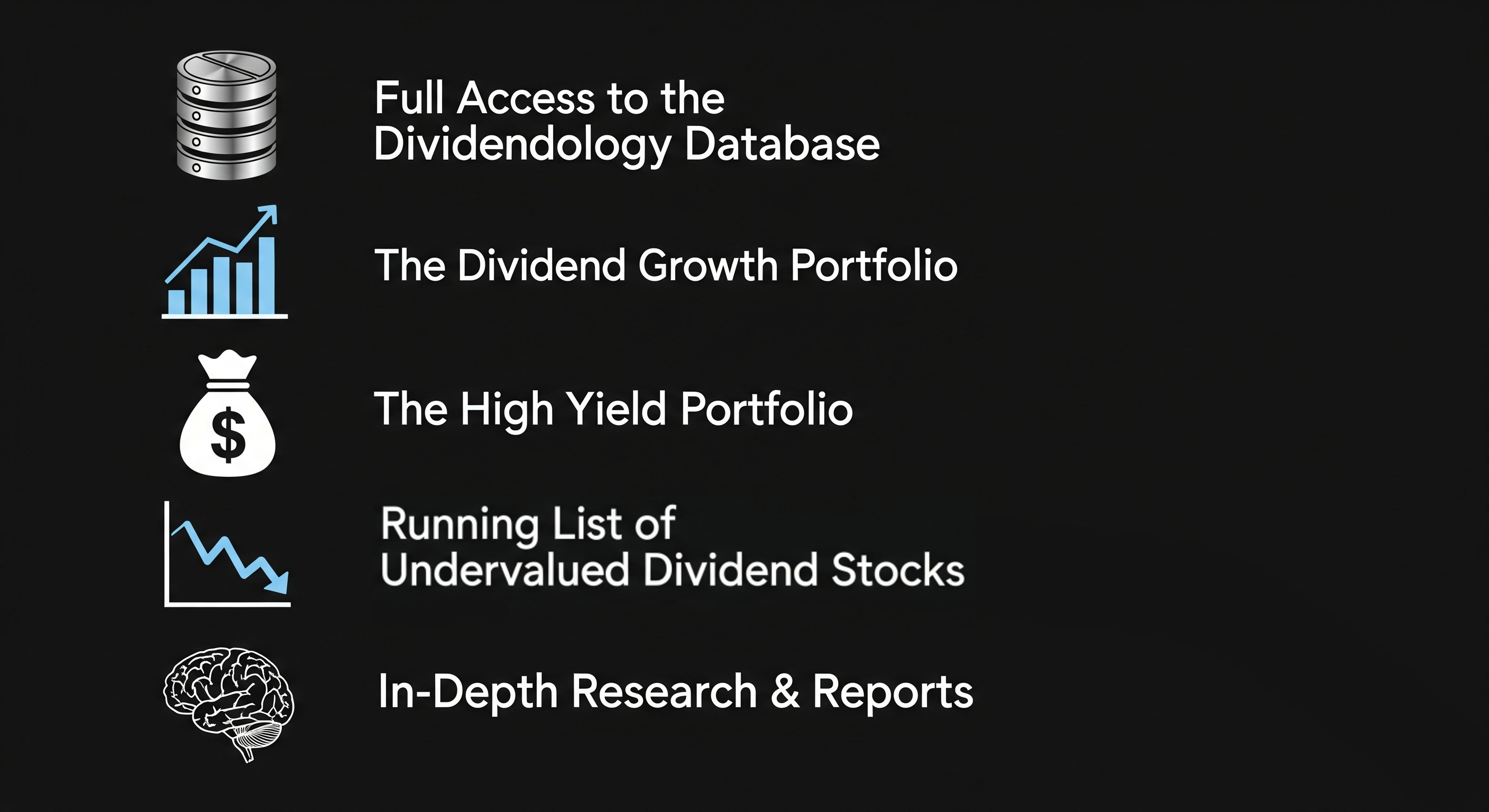
If you want to get access to it, as well as all other features mentioned below, then you can join here:
Stay tuned!
Dividendology
Check out these resources:
Tickerdata 🚀 (My automated spreadsheets and instant stock data for Google Sheets!)
Interactive Brokers 💰 (My favorite place to buy and sell stocks all around the world!)
Seeking Alpha 🔥 (Research stocks $30 off! + 7 day free trial)
HYSA 📊 (Get Access to the Best High Yield Savings Accounts!)
Really interesting to see how these compare to UK & Europe products that are available or might be launched. There is a gold income EPT (covered call strategy) available to UK and European investors - might be useful for people to know about and compare: https://incomeshares.com/en-eu/etps/incomeshares-gold-yield-etp
This was a great read. I have the same opinion on Gold/IAUI.