

At the beginning of 2026, I published an article highlighting my 10 favorite high-yield investments for the year.
It quickly became the most popular article I have ever released.

That makes sense.
With markets remaining volatile and retirement becoming increasingly expensive, investors are searching for dependable investments capable of producing meaningful income.
Now that we are more than halfway through 2026, it is time to revisit the original list.
For each investment, we need to answer three questions:
How has it performed?
Is the distribution still sustainable?
Does the investment remain attractive today?
Let’s dive in.
10. 🛢️ Energy Transfer (ET)
Current yield: Approximately 6.60%
2026 total return: Approximately 28.2%
Energy Transfer has been the strongest-performing investment on the list. Its unit price has increased approximately 24.2%, while distributions have lifted its total return to 28.2%.
Investors entered the year with an 8.08% yield, which appeared unusually high considering the strength of the underlying business.
Energy Transfer generated approximately $2.38 per unit of distributable cash flow in 2025 while paying around $1.34 per unit in distributions, providing substantial coverage.
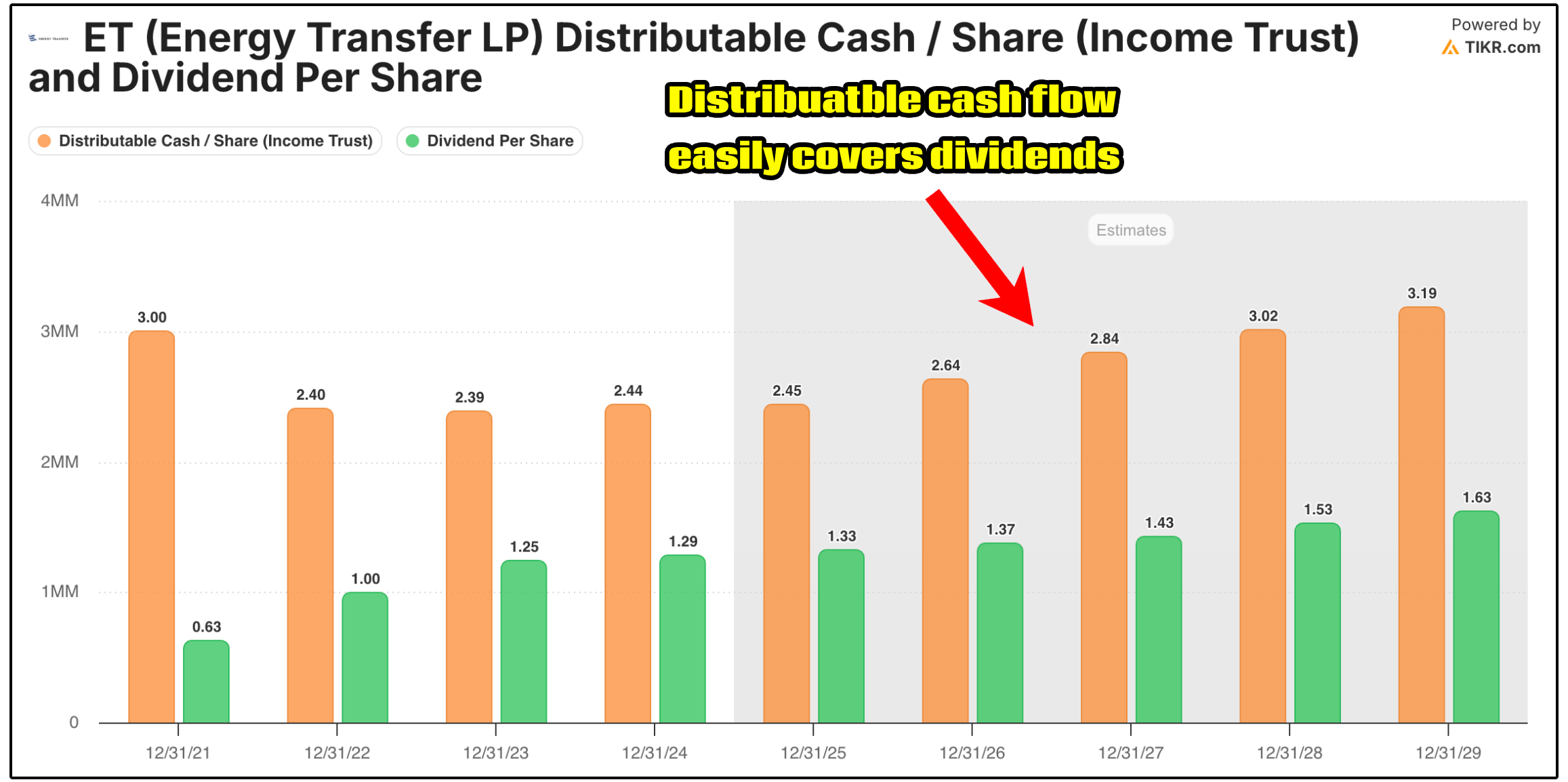
The partnership has also announced three quarterly increases during 2026. Its payout increased from $0.3325 per unit to $0.3350, then $0.3375, and most recently $0.3400.
That marked its 19th consecutive quarterly distribution increase.
Most of Energy Transfer’s earnings are generated through fee-based infrastructure operations rather than direct exposure to commodity prices, making its cash flows more stable than those of traditional energy producers.
The valuation is less attractive following the rally, but the distribution remains well covered and continues growing.
9. 🎰 VICI Properties (VICI)
Current yield: Approximately 6.74%
2026 total return: Approximately -2.0%
VICI Properties has been one of the weaker performers on the list, but is still only down by 2%.
The decline has increased VICI’s yield from 6.39% at the beginning of the year to approximately 6.74%.
Despite the weak share-price performance, the company’s underlying fundamentals remain relatively healthy.
Adjusted funds from operations per share, the primary earnings metric for REITs, has continued to grow.
VICI has historically generated roughly 7% annual AFFO-per-share growth across several multiyear periods, with slightly lower growth projected through 2029.
The quarterly dividend has remained at $0.45 per share during 2026.
However, VICI has historically announced its annual dividend increase in September, and its AFFO payout ratio remains reasonable.
The main risks include substantial exposure to Las Vegas, gaming operators, and elevated interest rates.
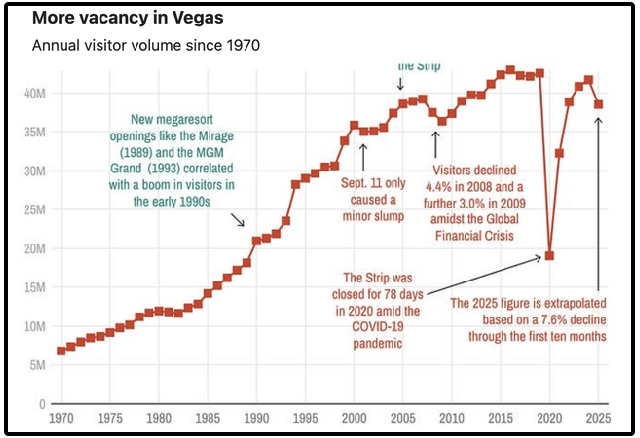
Still, VICI continues collecting contractual rent, and its valuation has fallen while cash flow has grown.
I’ll be interviewing VICI CEO Ed Pitoniak in the coming days to dive deeper into the situation.
8. 📈 Infrastructure Capital Equity Income ETF (ICAP)
Current yield: Approximately 10.30%
2026 total return: Approximately 9.6%
ICAP has generated a 9.6% total return while maintaining a double-digit distribution yield.
Unlike many covered-call ETFs, ICAP does not write options across its entire portfolio.
The fund generally maintains option coverage on approximately 30% to 40% of its holdings, leaving a meaningful portion of the portfolio’s upside uncapped which allows the fund to take part in the upside.
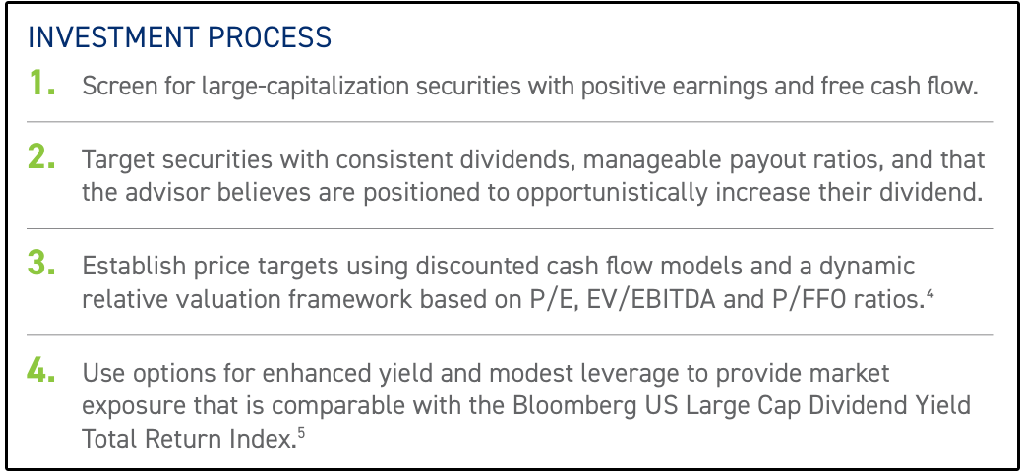
Management focuses on companies with growing earnings, strong free cash flow, sustainable dividends, manageable payout ratios, and reasonable valuations.
It can then write covered calls on positions it believes are approaching full value.
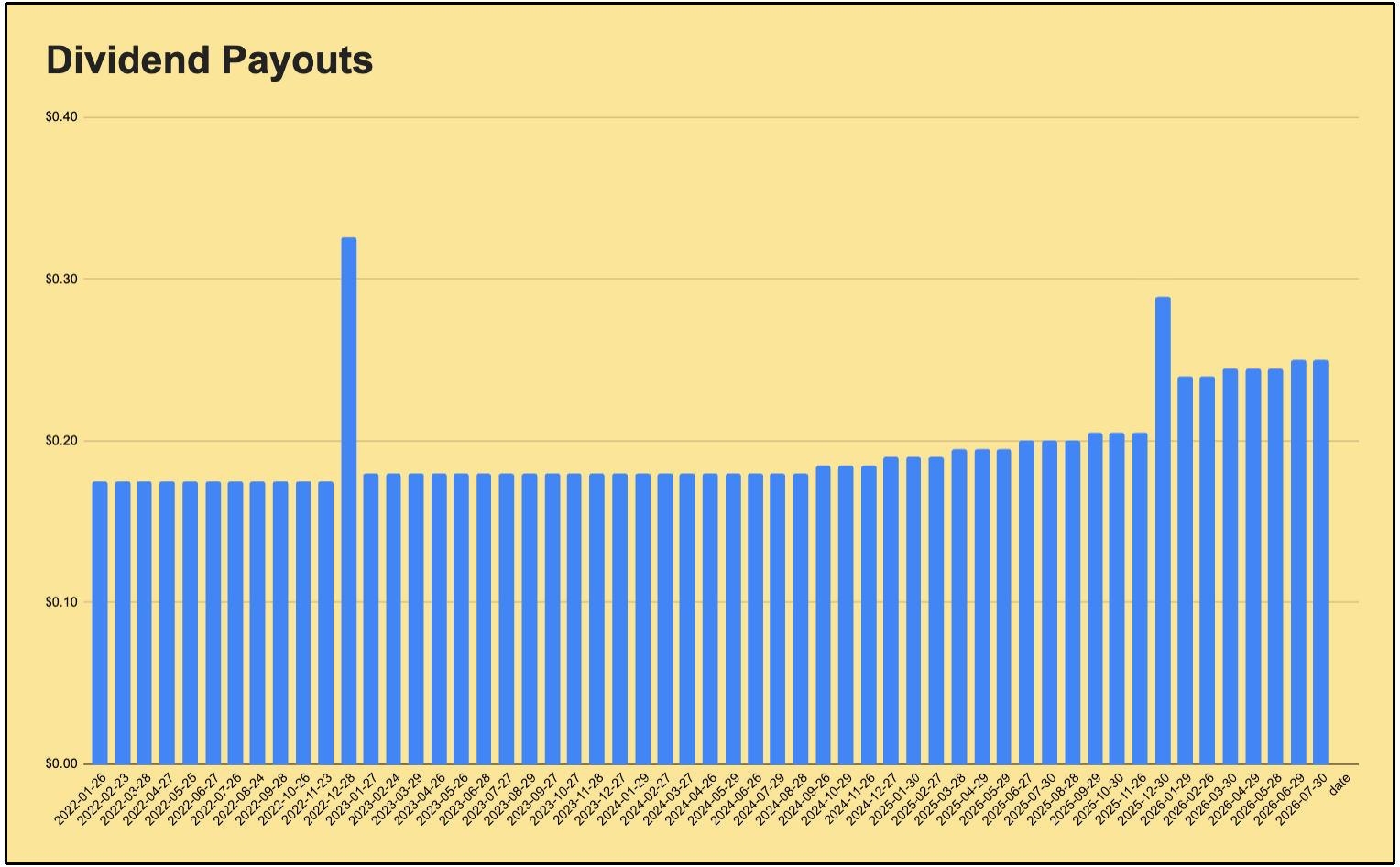
ICAP has also increased its monthly distribution during 2026.
The fund began the year paying $0.240 per share, raised the payment to $0.245 in March, and increased it again to $0.250 by June.
A fund that yields double-digits, takes part in the upside, and grows dividends over time is an incredible combination.
The fund’s reported expense ratio appears unusually high because it includes financing costs associated with leverage.
Its underlying management fee is closer to 0.8%.
Little leverage is used, but it does add risk during declines.
7. 🏦 Ares Capital Corporation (ARCC)
Current yield: Approximately 9.93%
2026 total return: Approximately -0.7%
ARCC has seen a small total loss of only 0.7% so far in 2026-
But the VanEck BDC Income ETF is down over 9% this year.
It’s outperforming it’s peers, but the BDC market has been hammered this year.
The decline has increased ARCC’s yield from 9.39% at the start of the year to approximately 9.93%.
Ares Capital has maintained its regular quarterly dividend at $0.48 per share for five consecutive quarters, with healthy dividend coverage for a BDC.
The stock has also traded near or slightly below tangible book value.
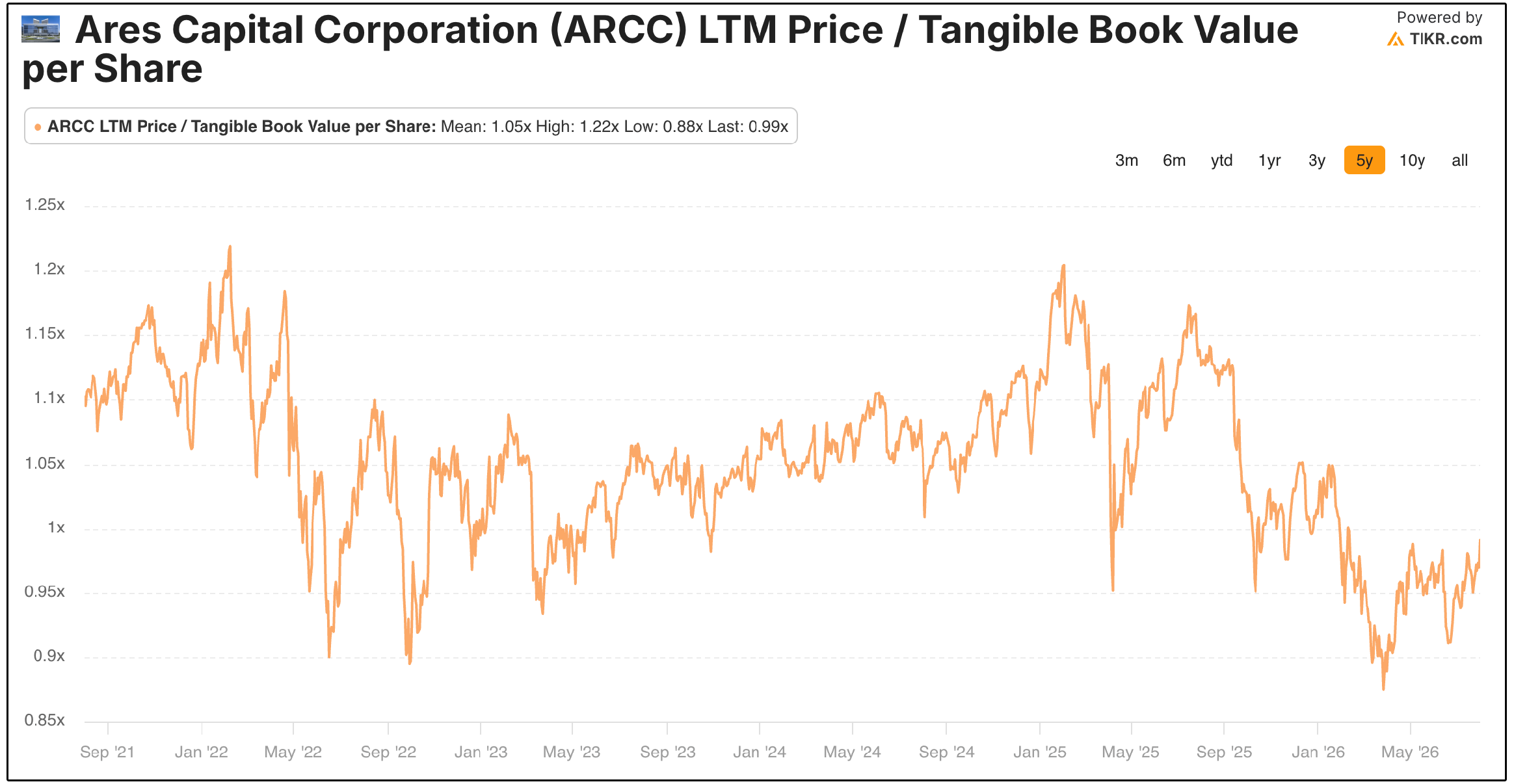
At approximately 0.99 times tangible book value, investors are paying about $0.99 for every dollar of tangible net assets.
Historically, ARCC has often commanded a premium because of its scale, management team, and track record.
The primary concern is its roughly 24% portfolio exposure to software companies, which could face disruption from artificial intelligence.
ARCC remains a high-quality BDC, but credit performance deserves close monitoring.
6. 🛢️ Western Midstream Partners (WES)
Current yield: Approximately 8.00%
2026 total return: Approximately 24.1%
Western Midstream has been another major winner. Its unit price has increased approximately 17.1%, while distributions have raised its total return to 24.1%.
The partnership entered 2026 yielding approximately 9.16%.
A yield that high suggested the market was pricing in considerable risk, potentially including a future distribution reduction.
However, Western Midstream entered the year with:
Investment-grade credit
Relatively low leverage
Healthy distribution coverage
Growing distributable cash flow
The partnership increased its quarterly distribution from $0.910 to $0.930 per unit, representing growth of approximately 2.2%.
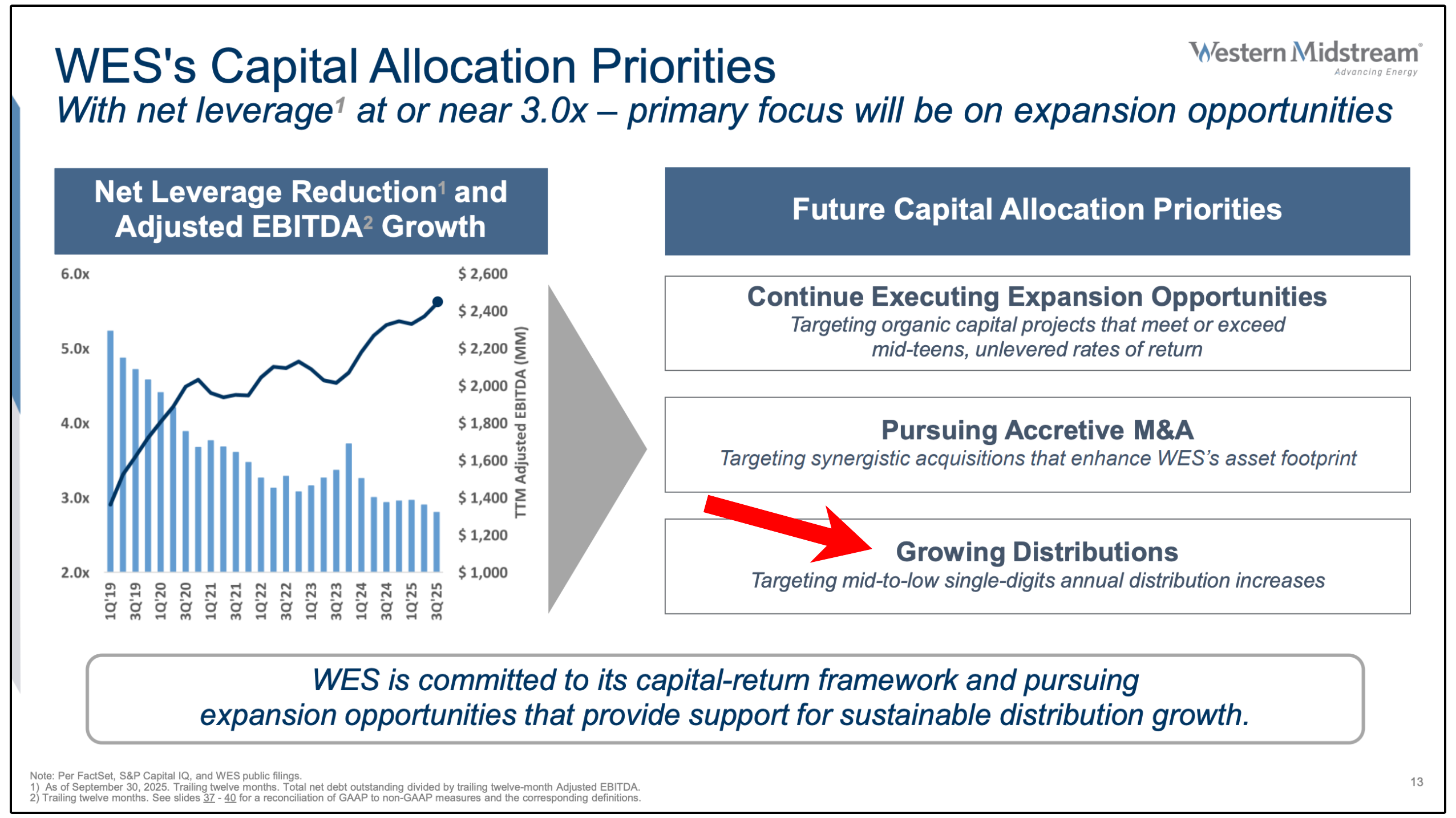
Management has also guided for at least $3.70 per unit in total distributions during 2026.
The market has now rerated the units (as we thought would be the case in 2026), reducing the yield to approximately 8%.
Although the valuation is no longer as inexpensive as it was at the beginning of the year, an 8% yield remains attractive for a partnership with investment-grade credit and a covered, growing payout.
Much of the undervaluation has disappeared, but Western Midstream remains fundamentally strong.
5. 🌿 NewLake Capital Partners (NLCP)
Current yield: Approximately 10.96%
2026 total return: Approximately 5.1%
NewLake Capital Partners has produced almost no share-price appreciation during 2026, but its substantial dividend has lifted its total return to 5.1%.
NewLake is a specialized REIT that owns properties leased to licensed cannabis operators.
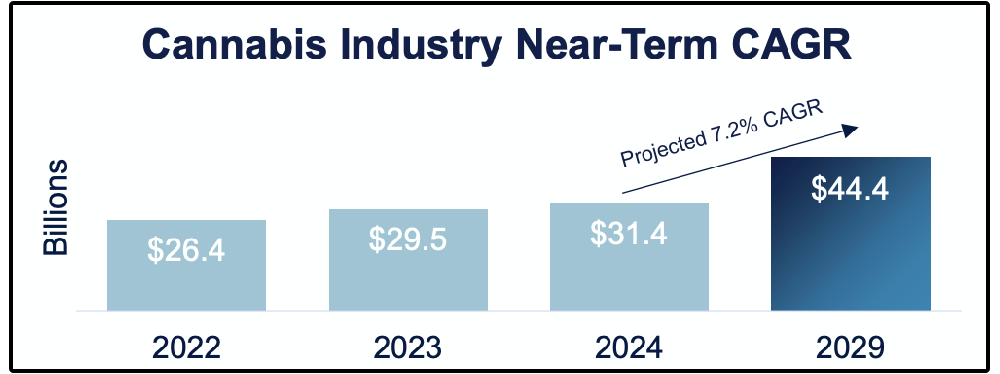
Its largest risk has historically been tenant credit quality, as federal tax restrictions have prevented cannabis businesses from deducting many ordinary operating expenses.
A transition of cannabis to Schedule III could improve tenant profitability, free cash flow, and rent coverage.
That would reduce one of the most significant risks facing NewLake.
The company has maintained its quarterly dividend at $0.43 per share since the third quarter of 2024.
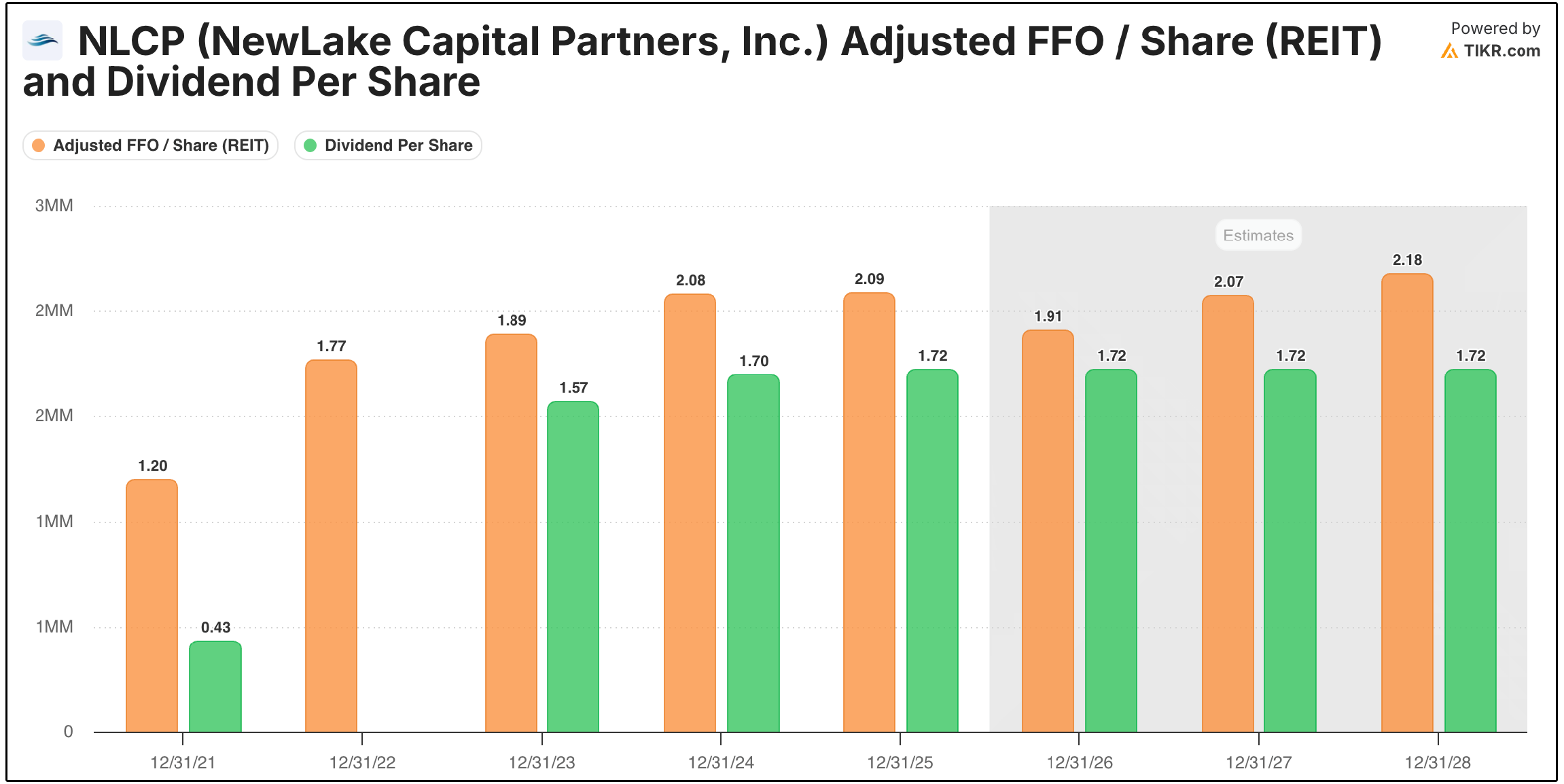
The dividend remains covered by adjusted funds from operations, and the company maintains a rare net cash position.
NewLake remains speculative, but its covered dividend, low valuation, and strong balance sheet create meaningful upside potential.
4. 💵 NEOS S&P 500 High Income ETF (SPYI)
Current yield: Approximately 11.81%
2026 total return: Approximately 9.4%
SPYI has generated a 9.4% total return while continuing to distribute income at an annualized rate near 12%.
The fund owns exposure to the S&P 500 and writes call options to generate additional income.
SPYI generally maintains options exposure close to 100% of the portfolio, so investors do sacrifice some upside in exchange for larger monthly distributions.
However, the fund typically writes out-of-the-money calls.
This allows the underlying portfolio to appreciate by a certain amount before the options begin limiting gains.
Monthly distributions have ranged from approximately $0.5104 to $0.5353 per share during 2026.
These payments naturally fluctuate based on the option income generated by the strategy, but fluctuate much less than its peers.
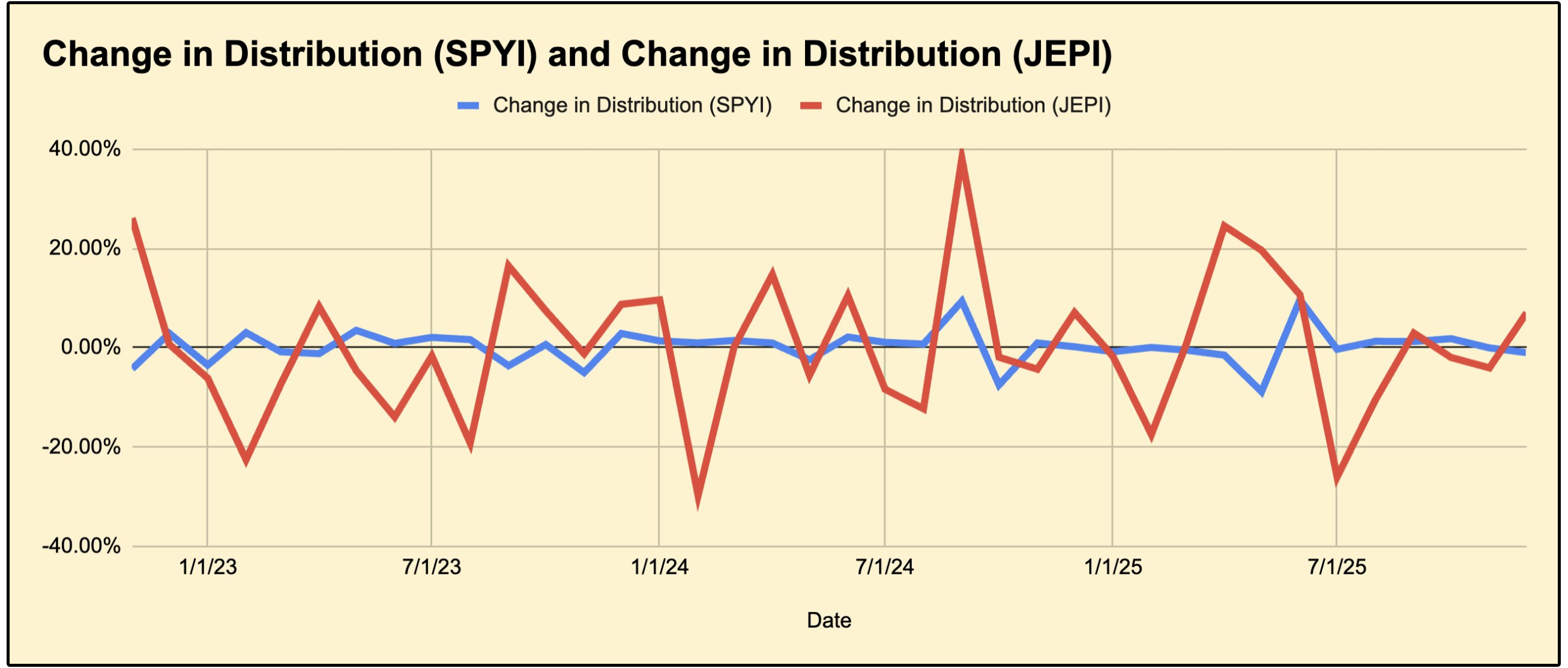
SPYI’s primary long-term risk is net asset value erosion. So far, however, the fund has participated in market recoveries while maintaining substantial monthly income.
3. 🏢 AH Realty Trust (AHRT)
Current yield: Approximately 7.85%
2026 total return: Approximately 11.6%
AH Realty Trust has been one of the most interesting winners on the list, with a strong total return to 11.6%.
The company was previously known as Armada Hoffler Properties and traded under the ticker AHH.
It officially became AH Realty Trust and began trading under the ticker AHRT on March 2, 2026.
The name change accompanied a broader strategic transformation.
The former business relied heavily on development and fee-based construction income.
After becoming over leveraged and reducing its dividend, management shifted it’s strategy dramatically.
Under new CEO Shawn Tibbetts, the company is:
Moving away from volatile fee-based construction income
Prioritizing recurring property-level cash flows
Deleveraging the balance sheet and targeting higher-quality financing
Focusing on fewer, better assets rather than growth for growth’s sake
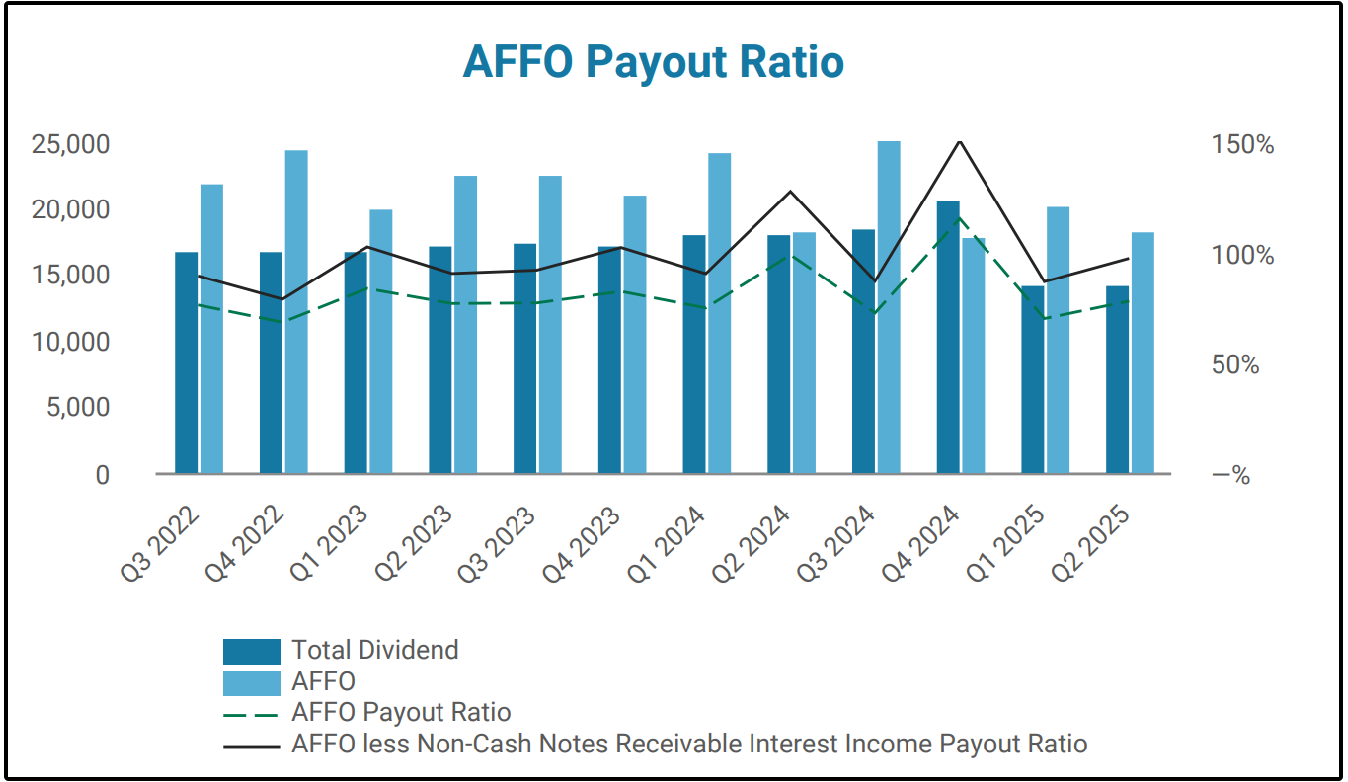
AHRT has maintained its quarterly dividend at $0.14 per share throughout 2026.
Management has also indicated that the payout is now supported by recurring rental income rather than development fees.
The company also just released their latest quarters earnings, where they increased 2026 FFO guidance.
The turnaround is certainly taking place, but investors must continue monitoring leverage, AFFO coverage, property performance, and asset sales.
2. 🥈 Virtus InfraCap U.S. Preferred Stock ETF (PFFA)
Current yield: Approximately 9.92%
2026 total return: Approximately 1.6%
PFFA’s share price has a total return of 1.6% in 2026 so far.
The fund has maintained its monthly distribution at $0.1725 per share throughout the year.
PFFA is an actively managed preferred-stock ETF.
Preferred securities sit above common equity in the capital structure, meaning preferred dividends generally must be paid before dividends can be distributed to common shareholders.
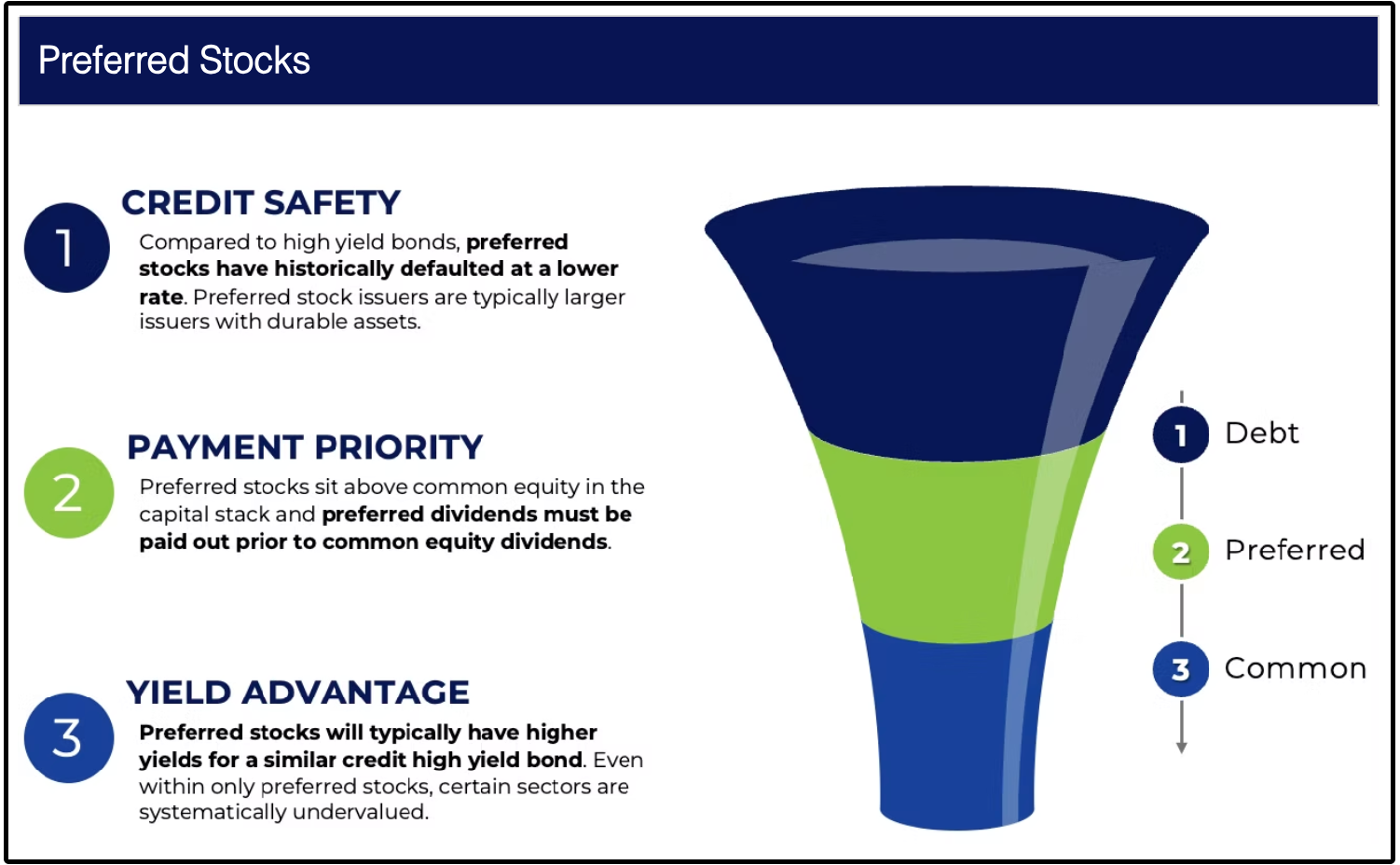
Preferred stocks can also offer higher yields than bonds issued by companies with similar credit quality.
Active management is particularly useful because many preferred securities are callable.
Issuers can redeem higher-yielding securities when doing so becomes financially advantageous, forcing passive investors to reinvest at lower rates.
An active manager can evaluate call risk (this is a big one), credit quality, interest-rate sensitivity, and relative valuation.
Keep in mind, this fund is a lower volatility income vehicle rather than a source of major capital appreciation.
1. 🥇 MPLX (MPLX)
Current yield: Approximately 7.25%
2026 total return: Approximately 14.4%
MPLX was my number-one high-yield opportunity entering 2026, and it has delivered very strong returns.
Its unit price has appreciated approximately 10.4%, while distributions have increased its total return to 14.4%.
Investors began the year with an 8% yield, and MPLX still yields approximately 7.25% after the rally.
MPLX recently reported Q2 GAAP earnings of $1.06 per unit, in line with expectations, while revenue increased 10.3% year over year to $3.31 billion and exceeded estimates by $170 million.
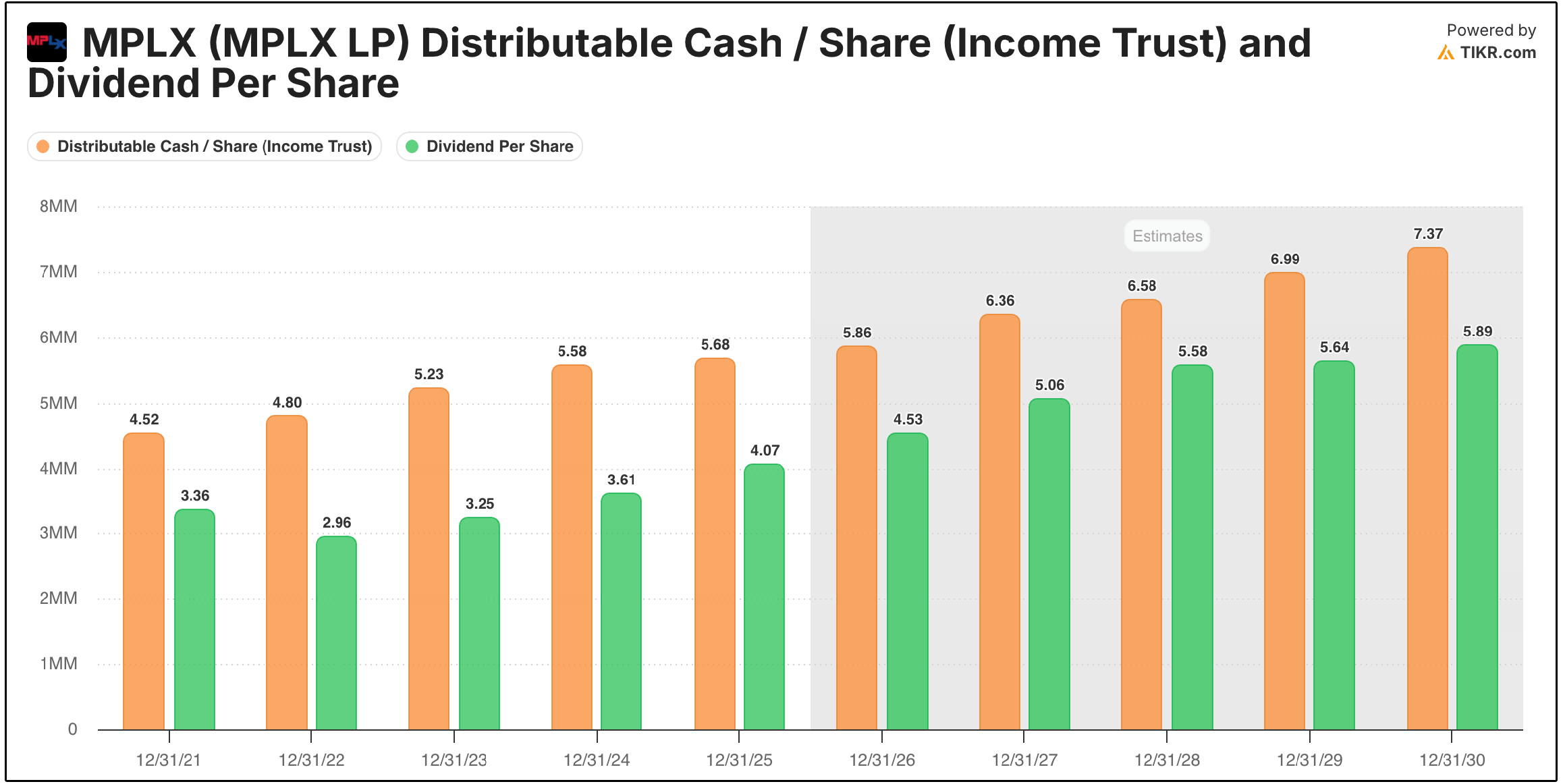
Management also reaffirmed its expectation for 12.5% distribution growth in both 2026 and 2027.
12.5% distribution growth for a company yielding above 7% is incredible.
With a yield above 7%, strong distributable cash flow, fee-based earnings, and double-digit distribution growth potential, MPLX remains one of the strongest income opportunities on the list.
📊 The Results
These 10 investments were selected independently and were not designed to represent a complete portfolio.
Even so, the group has produced results that I’m incredibly happy with.
Going into the year, the average yield of these picks was 9.23%
Despite this, no position saw a decline in distributions, with some even increasing their payouts (and more increases on the way).
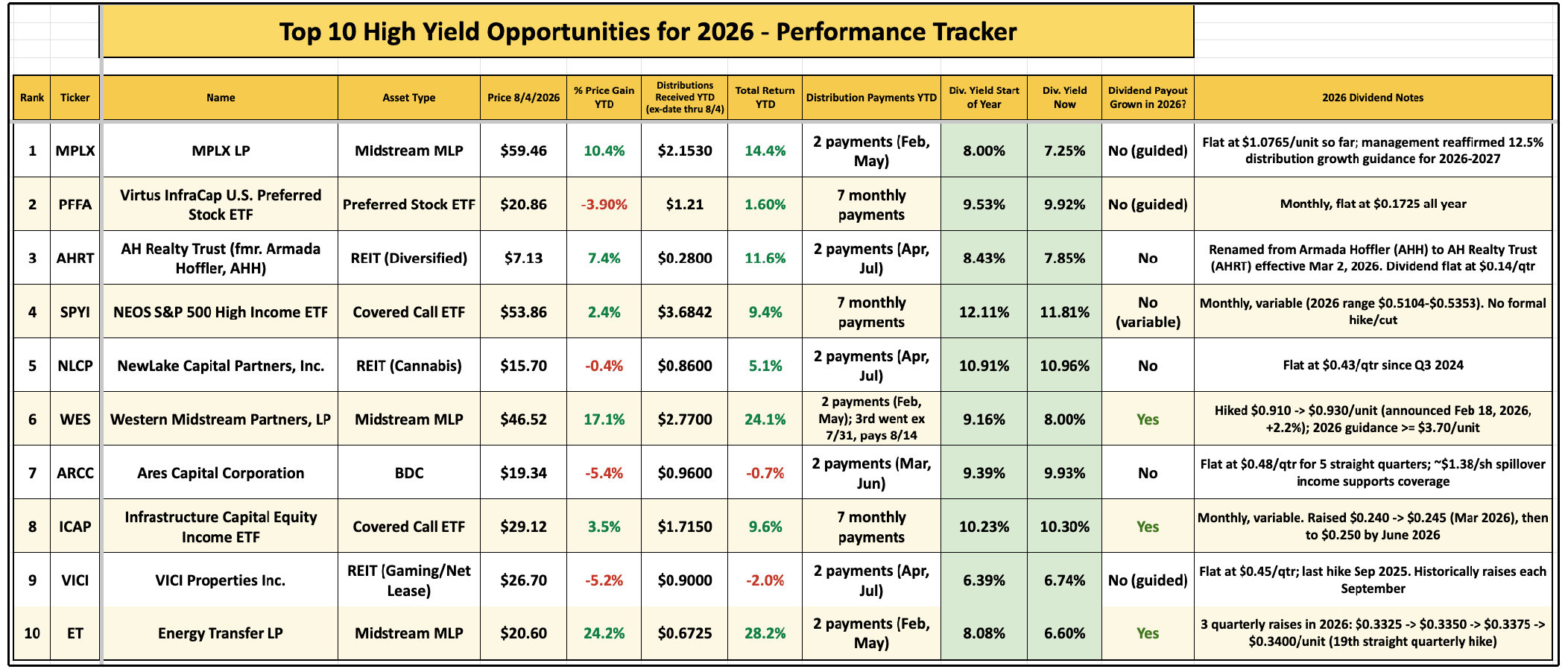
We also saw total returns, inline with the returns of the tech heavy S&P 500!
Absolutely incredible.
We also avoided any of our positions seeing massive drawdowns, which is quite the accomplishment in the high yield space.
While this performance is incredible, our High Yield Portfolio that we run at Dividendology.com has performed even better.
Our High Yield Portfolio is outperforming the market!
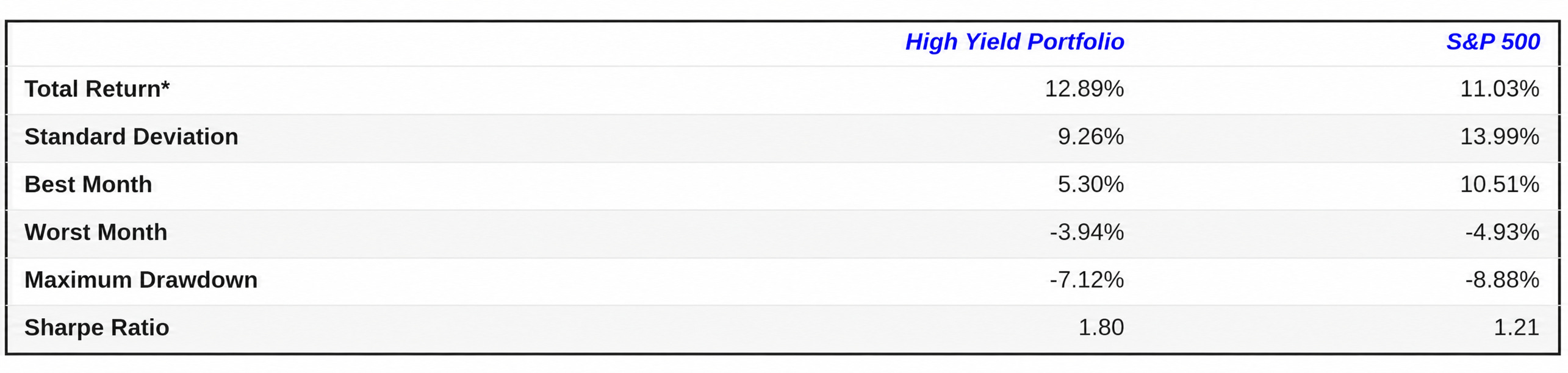
But the performance doesn’t tell the whole story.
Not only did this portfolio outperform by a wide margin, but it:
Had lower volatility (standard deviation)
Had a lower maximum drawdown
Had a stronger Sharpe Ratio
The Sharpe Ratio is an important one.
The Sharpe Ratio is a way of measuring how much return you’re getting for every unit of risk you take.
Basically, this portfolio took on less risk than the S&P 500, while still experiencing better returns.
We are incredibly happy with this performance, and are currently investing considerable amount of time and capital on research to continue to unlock the best opportunities in this space.
Let’s review the positions currently in the portfolio: