

Dividend Kings are companies that have increased their dividends for 50 consecutive years or more.
And right now, there are only 59 in the world.

Today, we will be looking at the top Dividend Kings, based on different criteria.
Let’s dive in!
👑 The True Dividend Kings
Growing dividends for 50+ consecutive years is impressive.
It means earnings growth has supported dividend growth, and that management is committed to rewarding shareholders.
But did you know that the 10 year “breakeven inflation rate” is 2.23%?
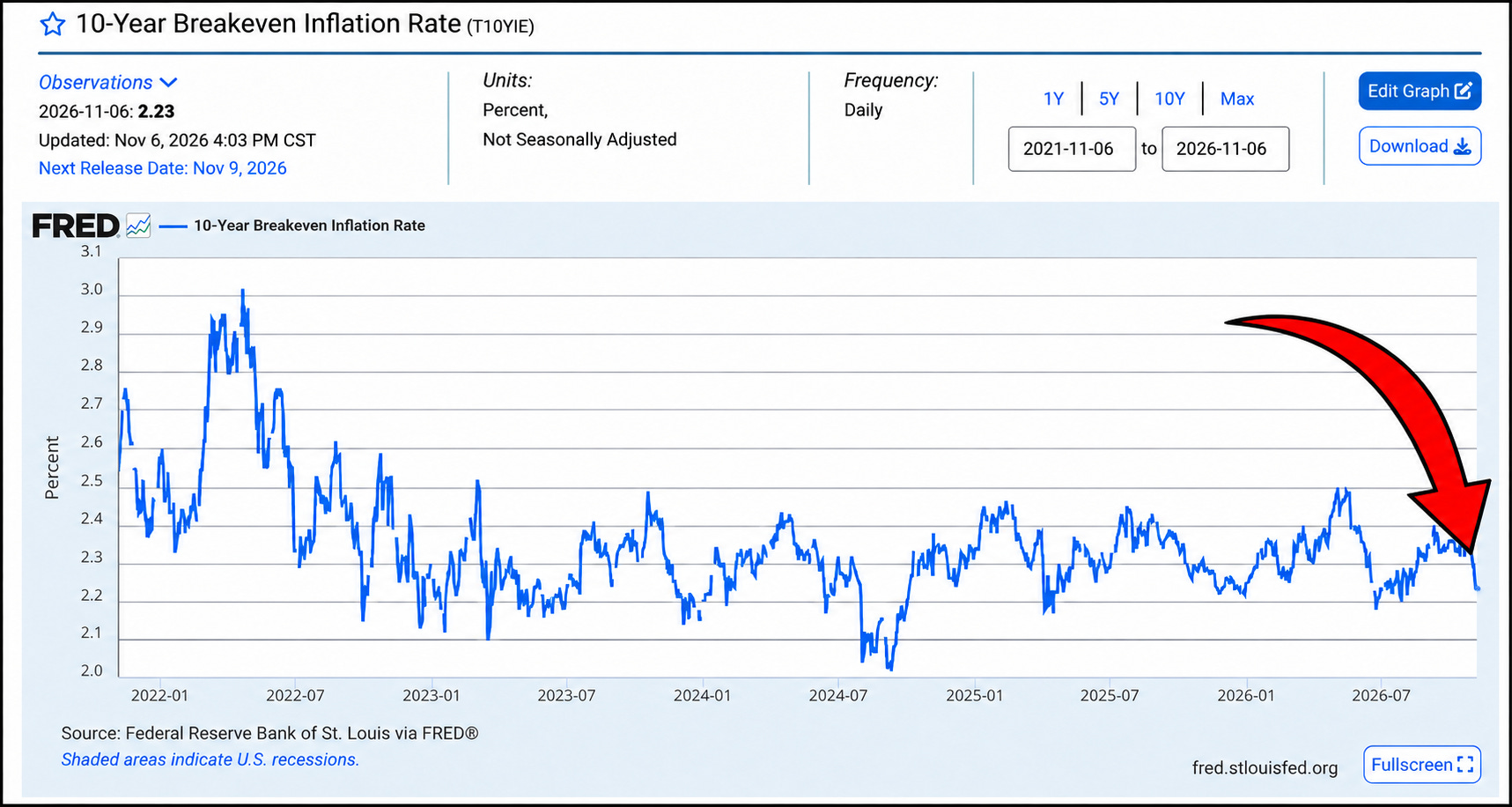
This means any stock that has grown their dividend at a compounded growth rate of at least 2.23% over the past decade is technically paying less in dividends in real terms.
So if we filter out the stocks with 10 year dividend growth rates below inflation, here are the stocks that get removed:
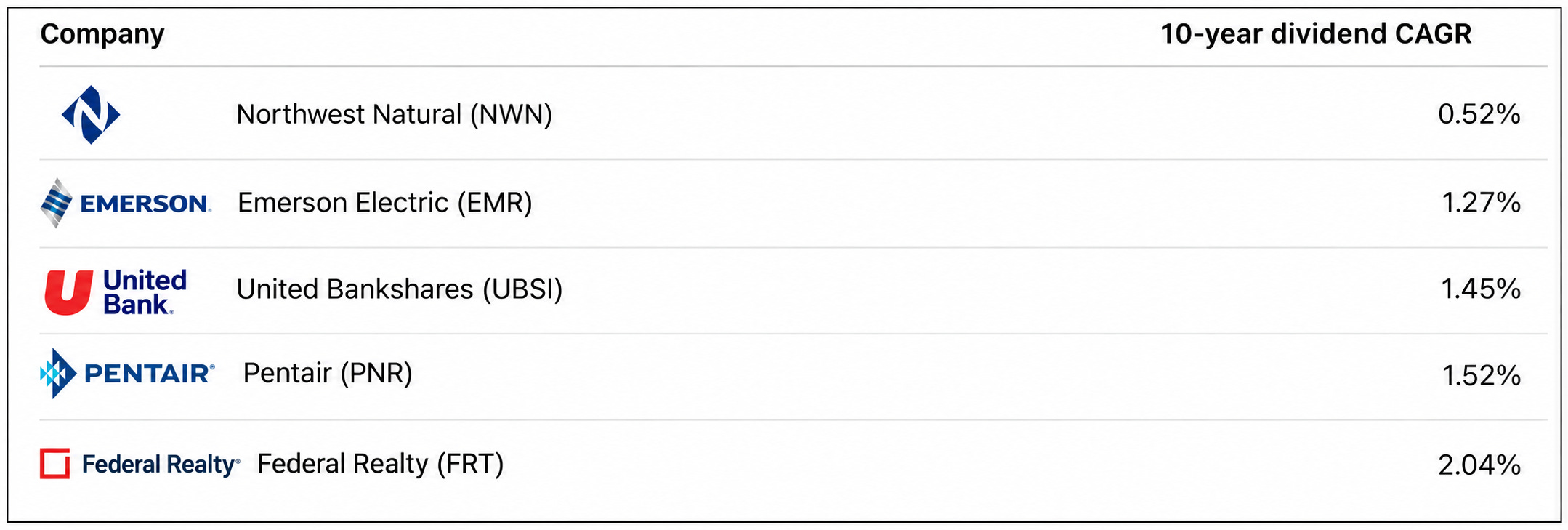
Are these companies truly Dividend Kings?
I’ll let you decide that one.
📊 The Outperformers
The market has done quite well overall in 2026.
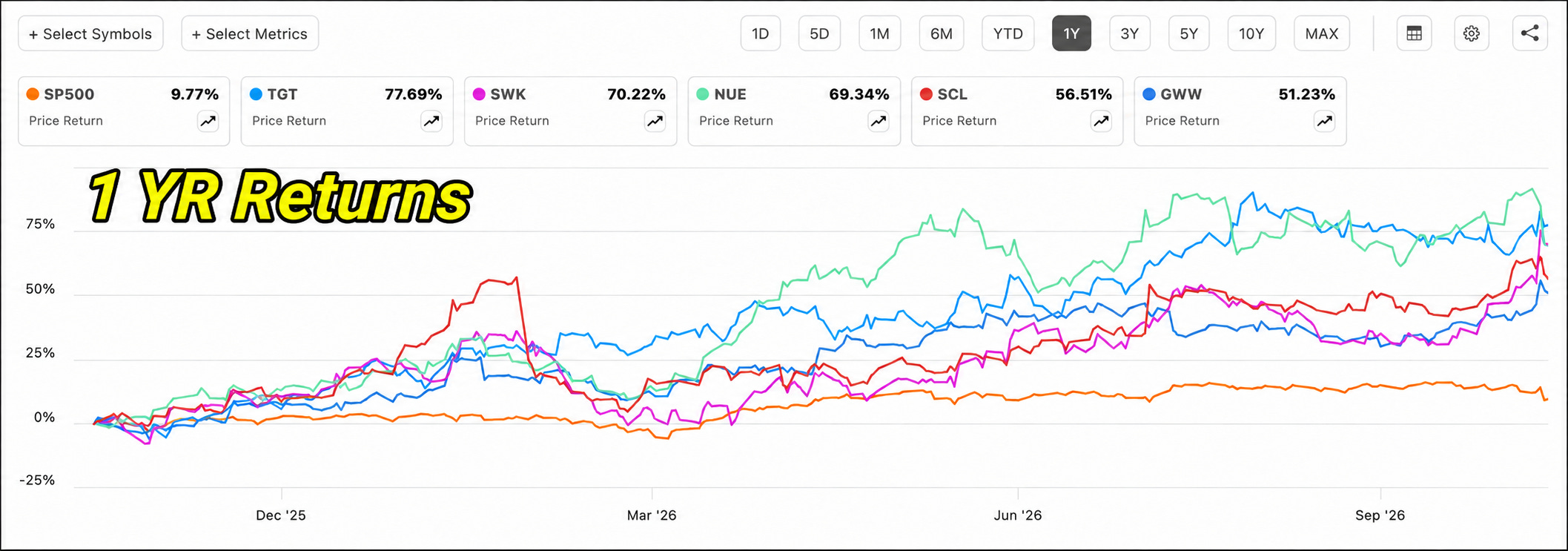
The S&P 500 has a total return of nearly 9.77% in the last year.
The average return for a Dividend King over the last year is 21.7%!
An incredible accomplishment for Dividend Kings-
And 40 of the 59 Dividend King stocks actually outperformed the S&P 500 this year.
Here are the 5 biggest winners vs the S&P 500:
🏰 Longest Dividend Hike Streak
Which Dividend Kings have grown dividend the longest?
Here’s the full list of Dividend Kings by sector with their years of dividend growth:
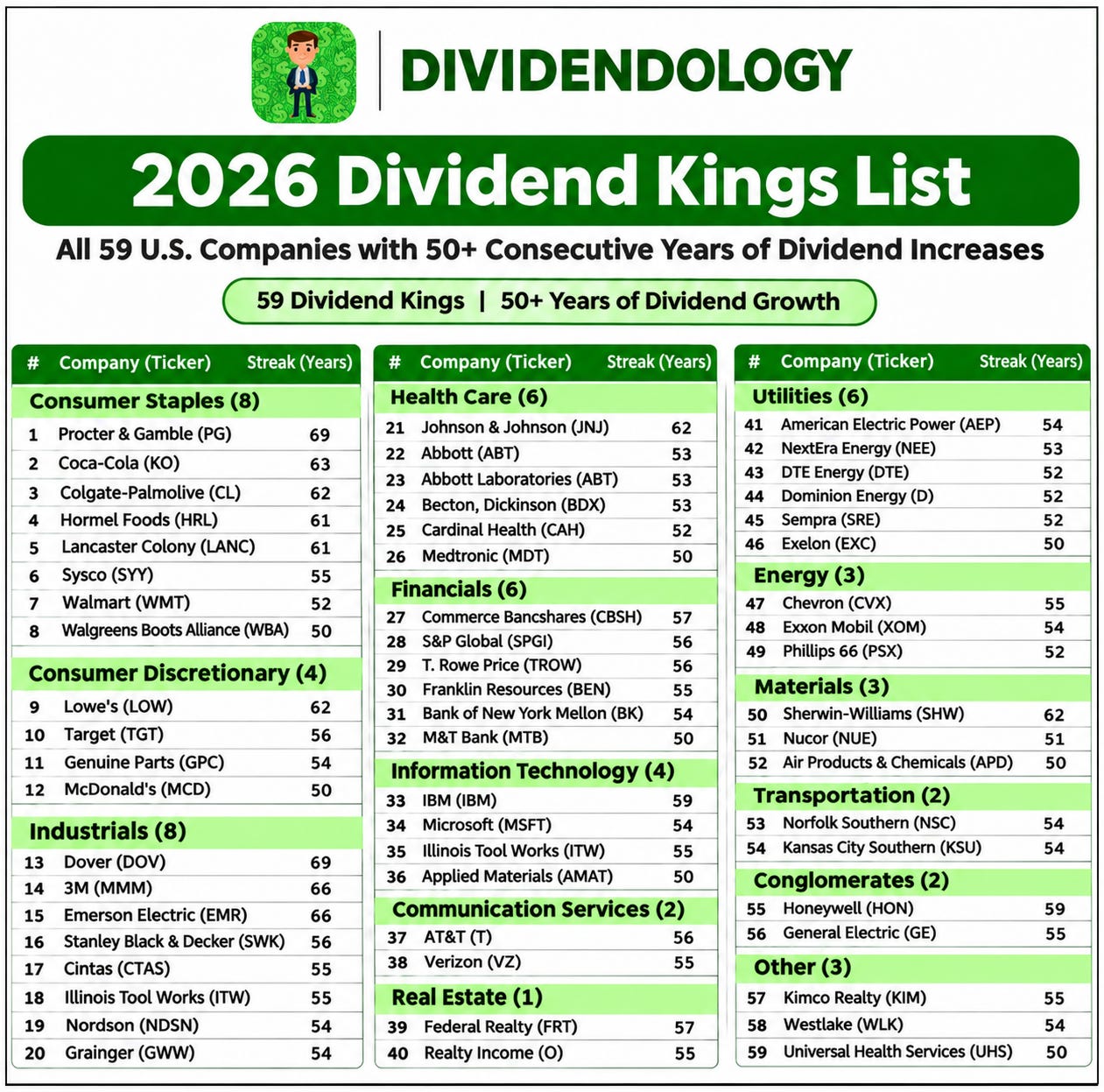
Dividend Kings with the longest track record of growing dividends:
AWR - American States Water (72 years)
DOV - Dover (71 years)
NWN - Northwest Natural (71 years)
EMR - Emerson Electric (70 years)
PH - Parker-Hannifin (70 years)
GPC - Genuine Parts Company (70 years)
PG - Procter & Gamble (70 years)
💰 Highest Yield
High Yield does not always mean good investment…
But High Yield also does not always equal high risk-
Although, that is a common misconception.
This is one of the reasons we are currently in the midst of building out a real-money High Yield portfolio.

Our High Yield Portfolio is currently yielding around 9.3%, and has still seen dividend growth throughout 2026!
Did you know that one of the highest yielding Dividend King stocks is also one of the best performing stocks of all time?
If you had invested $1 in Altria Group in 1925, that single dollar would have grown to $2,655,290 by the end of 2023, a total cumulative return of 265,529,000%.

That’s the equivalent of compounding at 16.29% per year for 98 years straight.
Here are the highest yielding Dividend Kings:
UVV - Universal (8.37%)
MO - Altria (5.64%)
HRL - Hormel Foods (5.33%)
KMB - Kimberly-Clark (4.70%)
PEP - PepsiCo (4.11%)
🥇 Highest Dividend Growth
Dividend Growth is what really causes the snowball effect to take place.

Here are the Dividend Kings growing dividends the fastest over the last 10 years:
LOW - Lowe’s (16.51% CAGR)
CSL - Carlisle Companies (14.34% CAGR)
NDSN - Nordson (13.38% CAGR)
ABBV - AbbVie (12.50% CAGR)
ADP - Automatic Data Processing (12.19% CAGR)
ITW - Illinois Tool Works (11.63% CAGR)
If you look at the ten year returns for these stocks, you’ll see most of them outperform the market.
High levels of dividend growth (if backed by free cash flow) is almost always a sign of outperformance.

🧾 The Chowder Rule
Have you heard of the Chowder Rule?
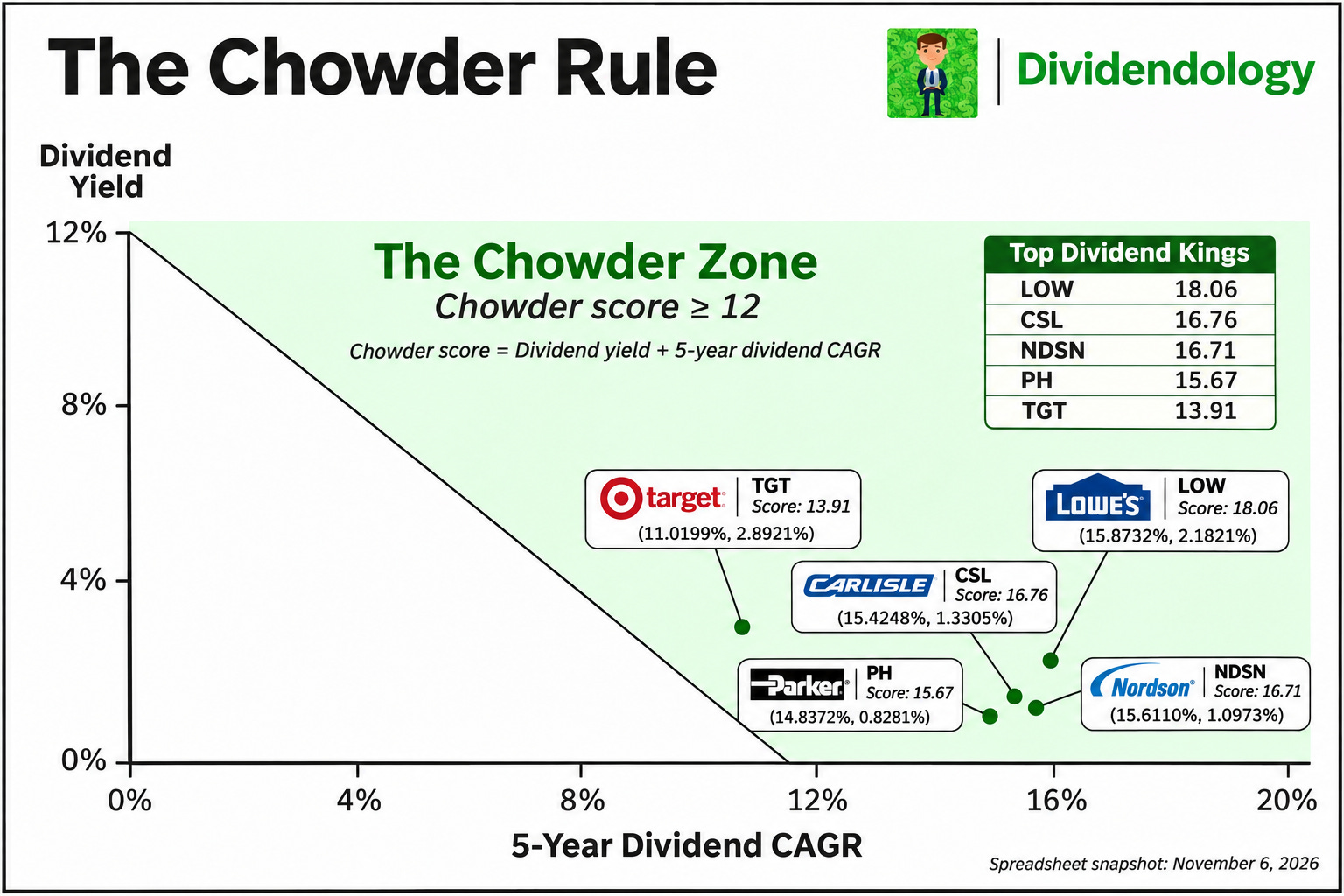
The Chowder Rule adds a stock’s current dividend yield to its five-year dividend growth rate to get a more complete view of the dividend metrics.
Chowder Number = Dividend Yield + 5 Year Dividend Growth RateHere are the top Dividend Kings by Chowder Rule:
LOW - Lowe’s: 18.06
CSL - Carlisle Companies: 16.76
NDSN - Nordson: 16.71
PH - Parker-Hannifin: 15.67
TGT - Target: 13.91
💡 The Entire List
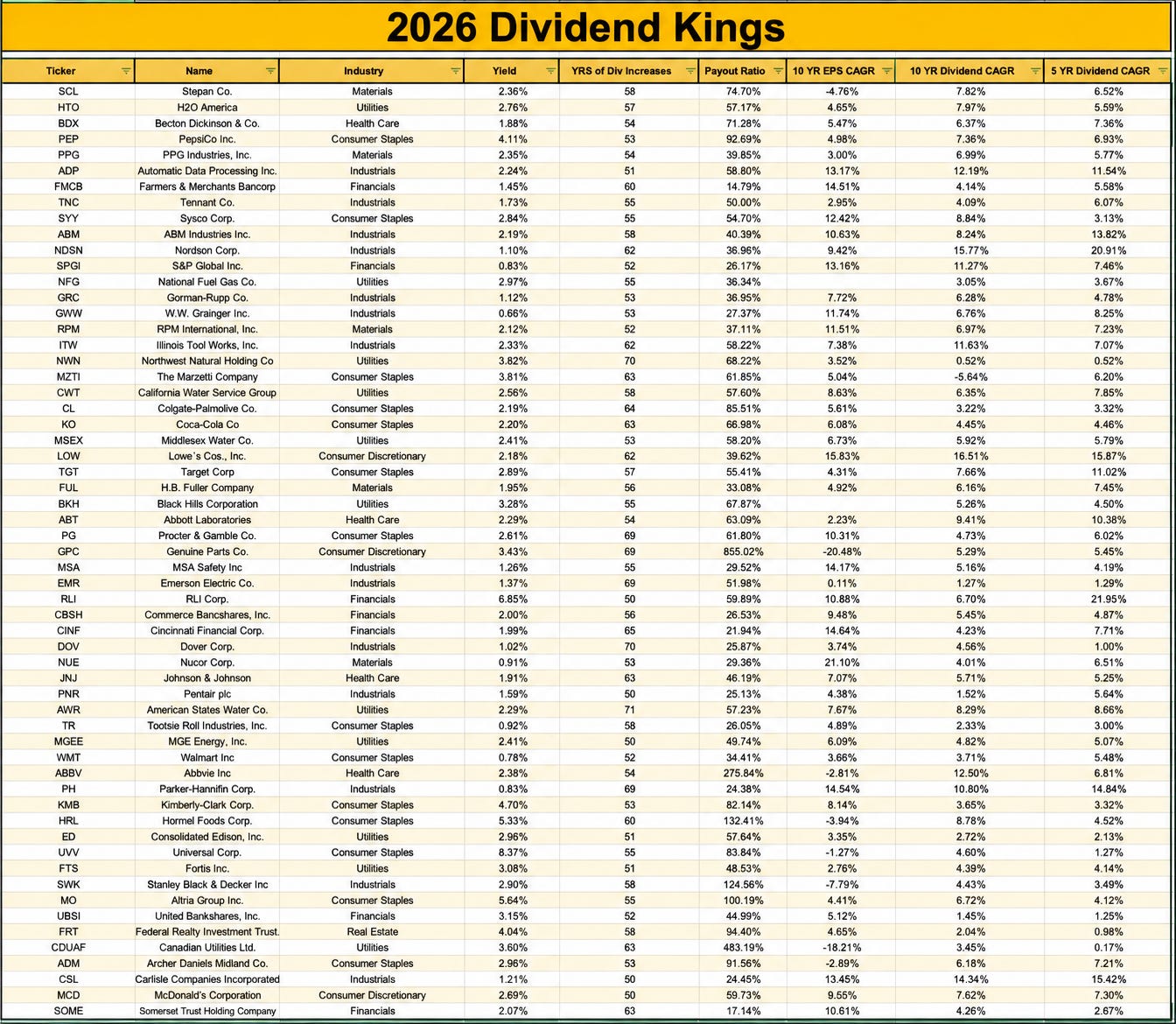
Want to get the entire list of 2026 Dividend Kings?
You can download the sheet below:
You can also see the full list below:
🪞Final Thoughts
Being a Dividend King doesn’t necessarily make a stock ‘great’.
But it does mean:
Management is committed to growing dividends
The company has grown dividends during turbulent market periods
The business model has proven durable across economic cycles
Use the above sheet to find the Dividend Kings that best fit your needs.
We’ve added a Dividend King to our portfolio earlier this year that has vastly outperformed the market.
It’s part of the reason we’ve more the doubled the performance of the S&P 500 over the last 6 months.
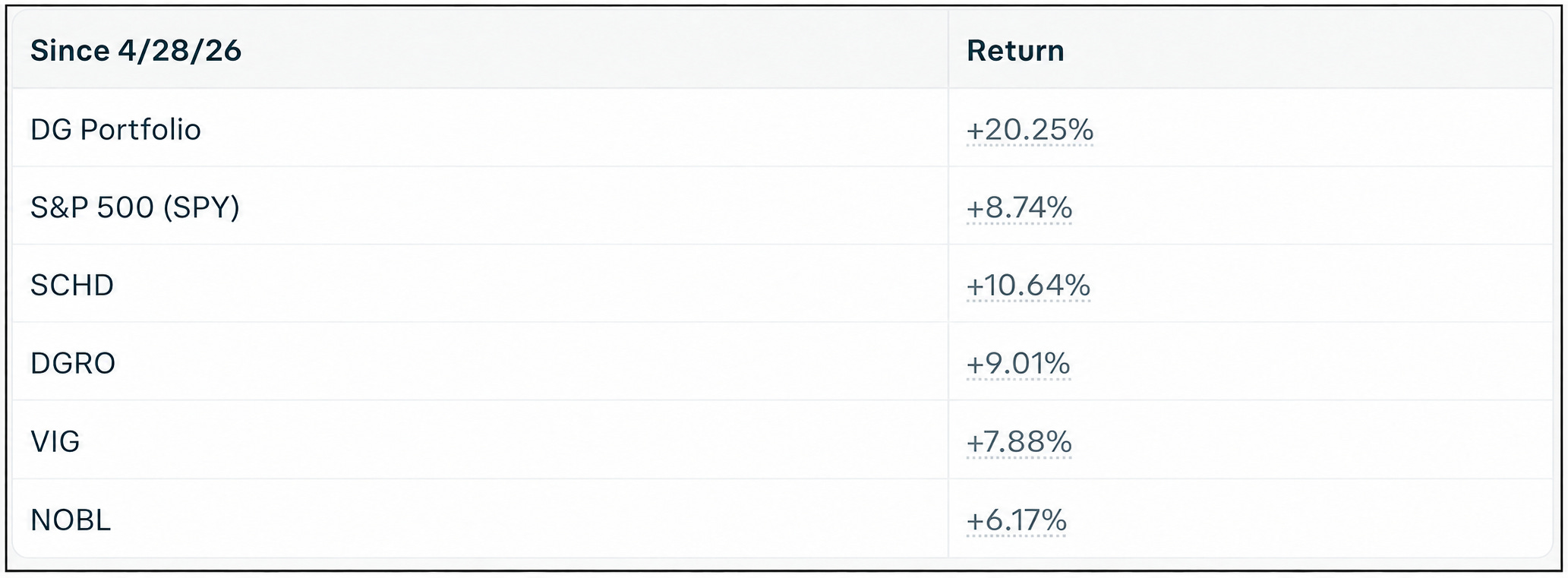
If you’d like to get access to the Portfolios and all the features below, you can do so here:
Here’s everything you’ll get as a paid Dividendology member 👇
📊 Full Access to the Dividendology Database
Built with over $10,000 invested in tools and research, this powerful database tracks dividend stocks and alternative income assets like Covered Call ETFs, REITs, and BDCs.📈 The Dividend Growth Portfolio
A real-money portfolio built from scratch, focused on long-term wealth creation and building a rapidly growing stream of dividend income💸 The High Yield Portfolio
A real-money portfolio, designed to generate massive sustainable income with an average yield of 8%+📉 Running List of Undervalued Dividend Stocks
Updated regularly — stay ahead with a curated list of the most attractively valued dividend opportunities in the market🧠 In-Depth Research & Reports
Deep dives into dividend stocks and income strategies you won’t find on mainstream platforms
Check out these resources:
Tickerdata 🚀 (My automated spreadsheets and instant stock data for Google Sheets!)
Interactive Brokers 💰 (My favorite place to buy and sell stocks all around the world!)
Seeking Alpha 🔥 ($30 off! + 7 day free trial)
Really enjoyed this one. Only 59 companies have raised their dividends for 50 years straight, and that filter for growth above 2.23% inflation makes the list feel so much more honest. The Kings averaging 21.7% against 9.77% for the S&P says a lot.
A long dividend growth record demonstrates resilience, but history alone doesn't guarantee attractive returns.
Valuation still matters. Even the strongest businesses can become poor investments when expectations are too high.
The real question is whether future cash flow can sustain dividend growth without compromising reinvestment and balance sheet strength.