

Dividend investing is an incredibly powerful way to build wealth.
But I still see many people misunderstanding the true power behind dividend investing.

Hartford Funds recently conducted one of the most in-depth research studies on dividend stocks over the last 94 years.
What they found reveals the truth about dividend stocks.
1. 💥 Power of Compounding Dividends
Since 1960, a staggering 85% of the S&P 500’s cumulative return has come from reinvested dividends.

$10,000 invested in the S&P 500 in 1960 without reinvesting dividends?
Turned into $982,072.
$10,000 invested in the S&P 500 in 1960 while reinvesting dividends?
Turned into $6,399,429.
2. 📈 Dividend Growth Outperforms
From 1973 to 2024, companies that grew or initiated dividends produced the highest total returns (10.2%/year).

Why would this be the case?
Think about what a stock growing its dividend often means:
Cash flow can cover the dividend
Management is confident earnings will continue to grow in the future
It forces management to focus on the highest ROI projects
Management is focused on long term objectives
Remember: Dividend growth and share price appreciation are both byproducts of free cash flow growth.
If free cash flow is growing, the dividend can keep growing.
3. 🧘 Dividend Growth Stocks Are Less Volatile
Not only have dividend stocks provided better historical returns-
They have also been less volatile. (Lower beta and lower standard deviation)

This is even more evident with dividend growth stocks.
So if we total returns are higher, while simultaneously experiencing less volatility-
That makes risk-adjusted returns extremely attractive.
4. 🏦 Institutional Investors Are Turning to Dividends
Since the Global Financial Crisis, there’s been a striking divergence between institutional and retail investors when it comes to income strategies.
Institutional investors have poured nearly $47 billion into equity-income funds since 2008.

Meanwhile, retail investors have pulled out nearly $123 billion from those same funds over that same time frame.
Are institutions ahead of the curve?
5. 📊 Dividends’ Contribution to Total Return
From 1940–2024, dividend’s contribution to the total return of the S&P 500 Index averaged 34%.
In the 1940s and 1970s, dividends accounted for over 60% of the total returns.

And in the 2000’s… The S&P 500 had negative returns.
Dividends were the only source of positive return that decade.
That’s exactly why living off dividends can help protect retirees from sequence of return risk, which is one of the biggest risks for retirees, and it’s the reason that I hate the 4% rule.
Any time the CAPE valuation of the S&P 500 has climbed above 20, the failure rate of the 4% rule has been over 25%.
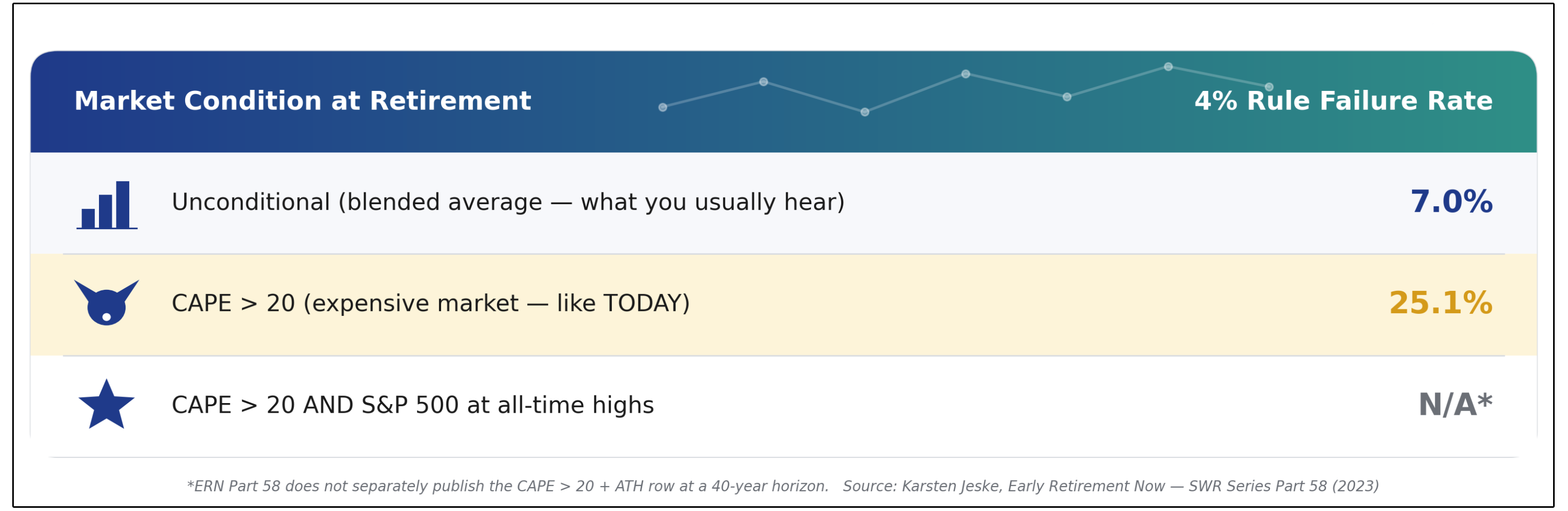
So what is the CAPE valuation right now?
41.63.
Now is one of the riskiest times in history to retire off the 4% rule.
Dividends are more important than ever.
🏰 A Dividend Kingdom
The data is clear.
Dividend-paying stocks have some undeniable, data-backed advantages over non-dividend payers.
Buying stocks that have the ability to consistently grow dividends can turn your portfolio into a dividend kingdom.

This is exactly what we aim to do over the long term with our model Dividend Growth Portfolio on Dividendology.com-
And you can see 10 steps were taking to do exactly that here.
🌅 Want Access to More?
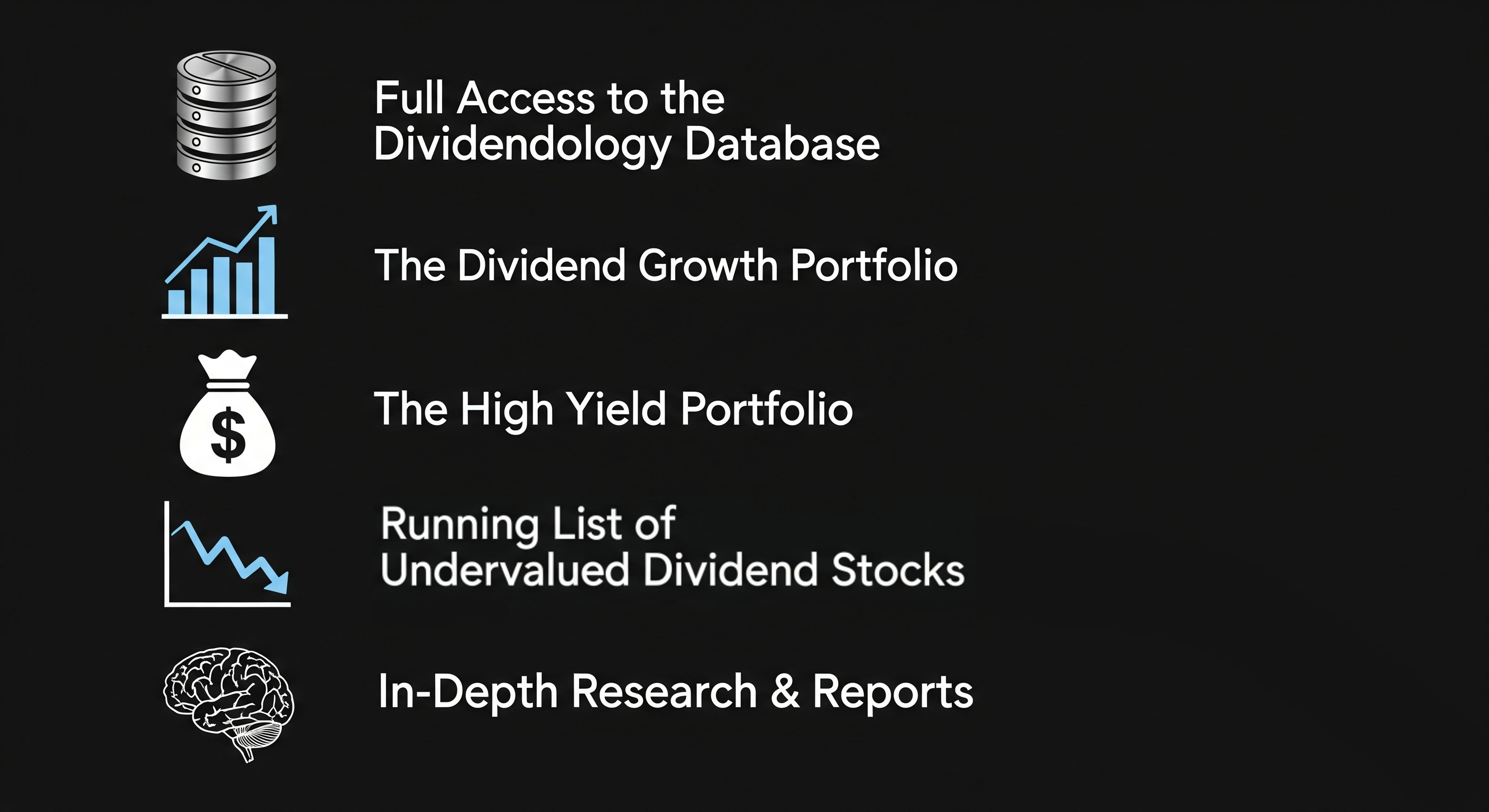
We are currently still in the beginning stages of building out our Dividend Growth and High Yield Portfolio on Dividendology.com.
You can get access to them and everything else mentioned below here:
Check out these resources:
Tickerdata 🚀 (My automated spreadsheets and instant stock data for Google Sheets!)
Interactive Brokers 💰 (My favorite place to buy and sell stocks all around the world!)
Seeking Alpha 🔥 (Research stocks $30 off! + 7 day free trial)
HYSA 📊 (Get Access to the Best High Yield Savings Accounts!)