

The end goal for most dividend investors is typically to live off dividends.
This means:
You get paid whether the market goes up or down
You get paid without stressing about short-term price moves
You aren’t forced to sell assets
It’s truly the ultimate sleep-well-at-night strategy.

But if you’re in the early to mid-stages of building your dividend snowball, it’s important to not solely focus on the dividend yield of your investments.
You need to focus on buying stocks with high dividend growth potential.
What gives stocks the ability to grow dividends at a high rate?
Growing free cash flow.
And ironically enough, growing free cash flow at a high rate not only leads to high levels of dividend growth, but it often leads to market outperformance as well.

But did you know there is another group of stocks that have historically outperformed?
📊 The ‘Other’ Outperforming Group
Dividend growth isn’t the only historical indicator of outperformance.
The other category of outperforming stocks?
Founder-Led Companies, also known as owner-operator stocks.

Over a 14-year period, family-owned businesses consistently outperformed their non-family counterparts.
The family-owned universe grew to nearly 2.5x (250%) the original value.
The non-family universe only reached about 1.5x (150%).
The reason for this outperformance is straightforward:
Owners think and act differently from management.
Management thinks about maximizing their next quarterly earnings.
Owners think in decades.
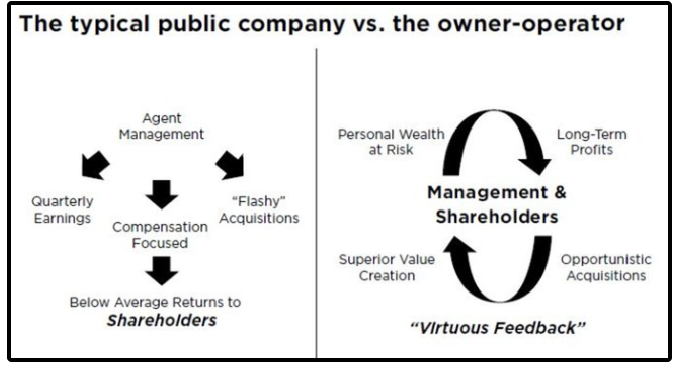
Think of it this way:
The Typical Public Company
Run by agents, not owners
Focused on quarterly earnings
Compensation tied to short term incentives
The Owner-Operator Model
Management = Shareholders
Personal wealth is at risk
Focus on long-term profits and value creation
Basically, skin in the game matters.
📑 56 Owner Operator Dividend Growth Stocks
Many of the companies that are founder led also happen to be dividend growth stocks.
This shouldn’t come as a surprise.
Why?
Because free cash flow growth ultimately leads to dividend growth.
I’ve identified 56 different owner operator dividend growth stocks. 👇
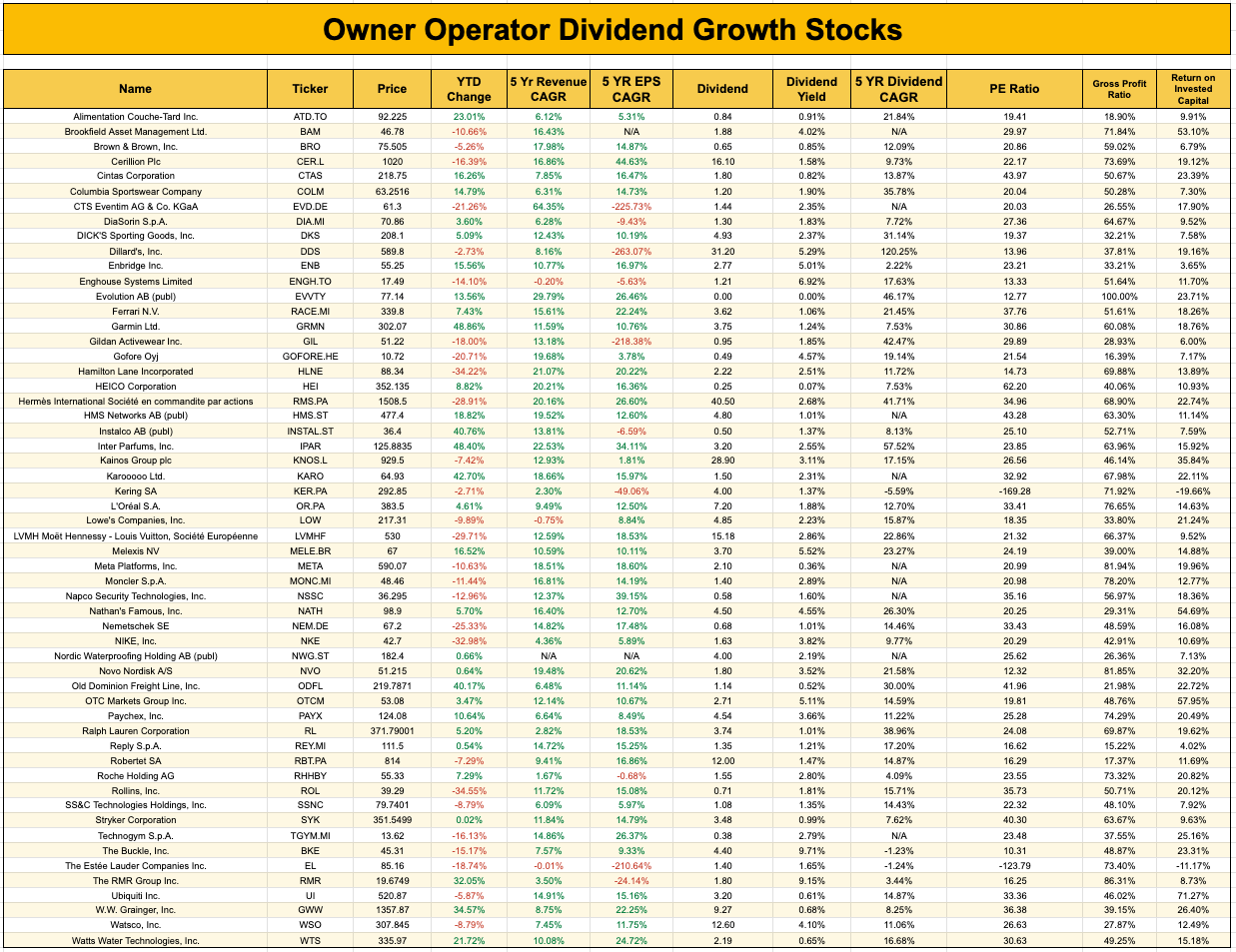
You can download the above spreadsheet of 56 Owner Operator Dividend Growth Stocks here:
The median 5 YR EPS CAGR on this list is a strong 13.44%, while the median return on invested capital sits at 15.55%.
Let’s look at a couple case studies.
🧼 Case Study No. 1: Cintas Corporation
Cintas is a great example of how a simple, recurring-service business can become a long-term compounding machine.
The company rents, cleans, and delivers uniforms while also providing products and services such as:
Floor mats
Restroom supplies
First-aid products
Safety training
Fire-protection services
None of these services are particularly exciting, but the economics are attractive.
Many customers rely on Cintas every week to collect uniforms, clean them, replace supplies, and maintain workplace-safety equipment.
Once these services are integrated into a company’s daily operations, switching providers can be inconvenient and disruptive.
A business may need to replace uniforms, resize employees, coordinate new pickup and delivery schedules, transfer service records, and retrain staff on a new system.
This creates recurring revenue, strong customer retention, and opportunities to sell additional services to existing customers.
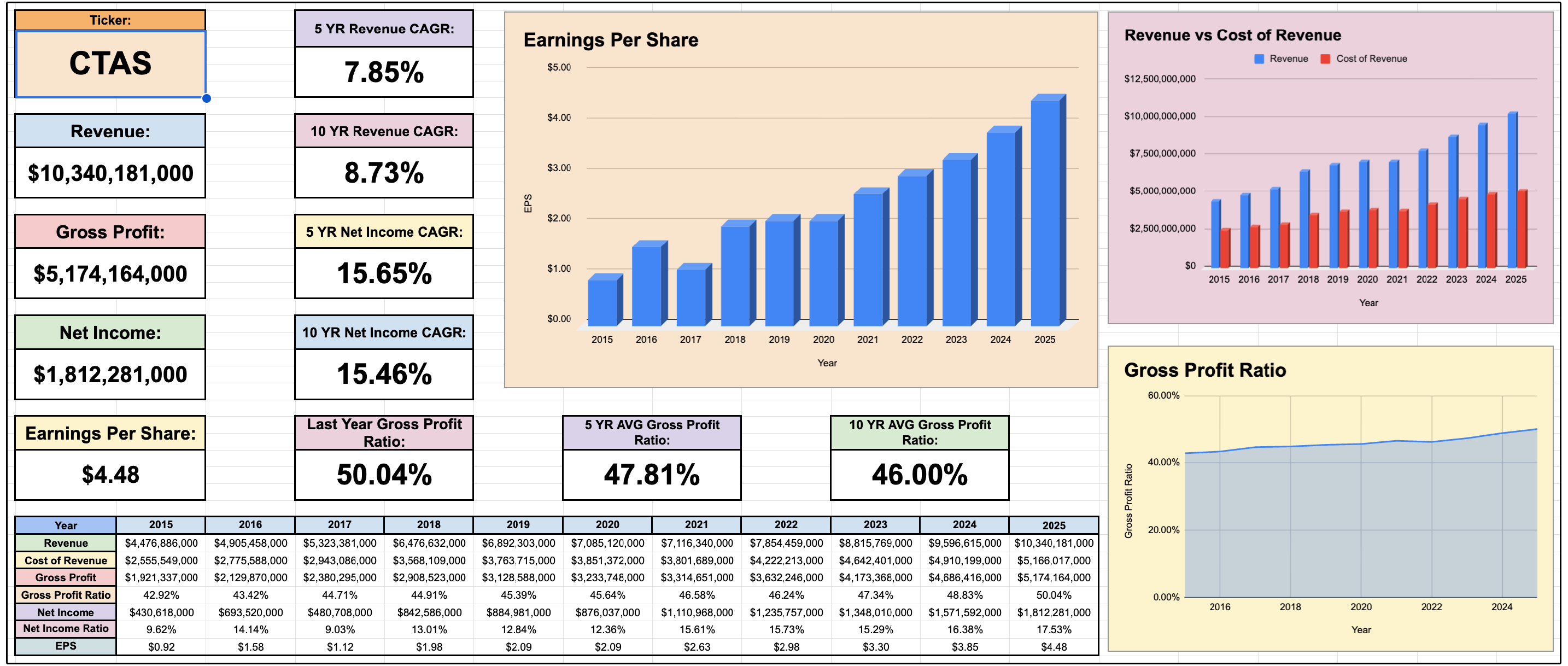
This is largely why their revenue and EPS growth has been so stable-
While simultaneously expanding their margins.
Richard “Dick” Farmer built the modern company, and his son Scott Farmer later served as CEO from 2003 through 2021.
Scott Farmer now serves as executive chairman and beneficially owns approximately 14.4% of the company.
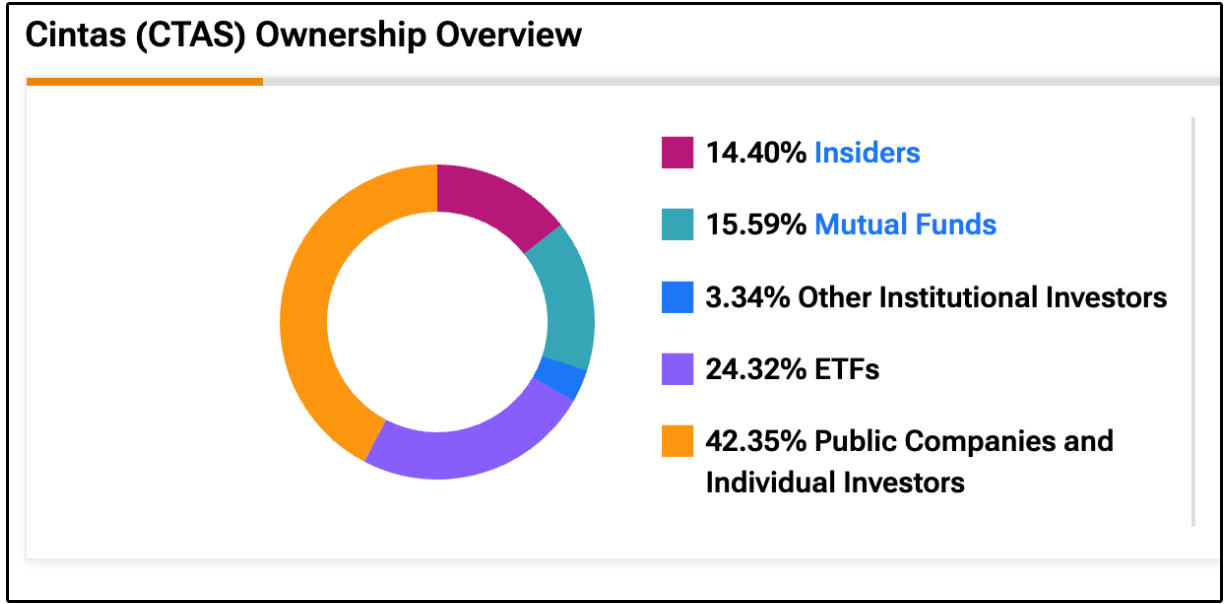
Although Cintas is no longer run by a Farmer family member on a daily basis, the company still has many owner-operator characteristics:
Significant family ownership
Family involvement at the board level
Leadership developed internally
A long-term corporate culture
Disciplined capital allocation
Current CEO Todd Schneider joined Cintas in 1989 and spent more than three decades inside the organization before taking the top position.
Over the last decade, Cintas had a free cash flow compounded annual growth rate of over 17%-
Which ultimately led to market outperformance as well as explosive dividend growth of over 18% annually.
Cintas generated approximately $11.3 billion in revenue during fiscal 2026 and produced nearly $1.9 billion in free cash flow.
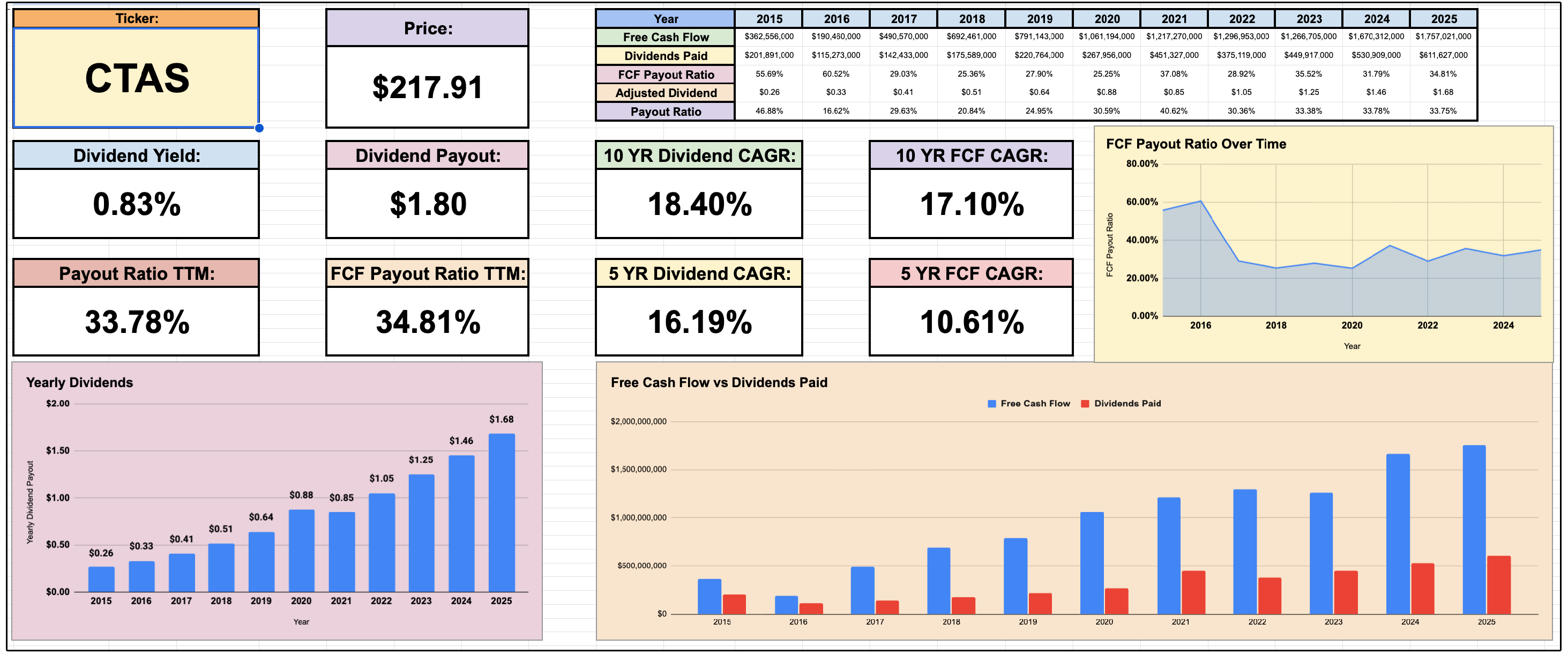
As a result of a decade of exceptional fundamental performance, the market is currently valuing Cintas at a premium.
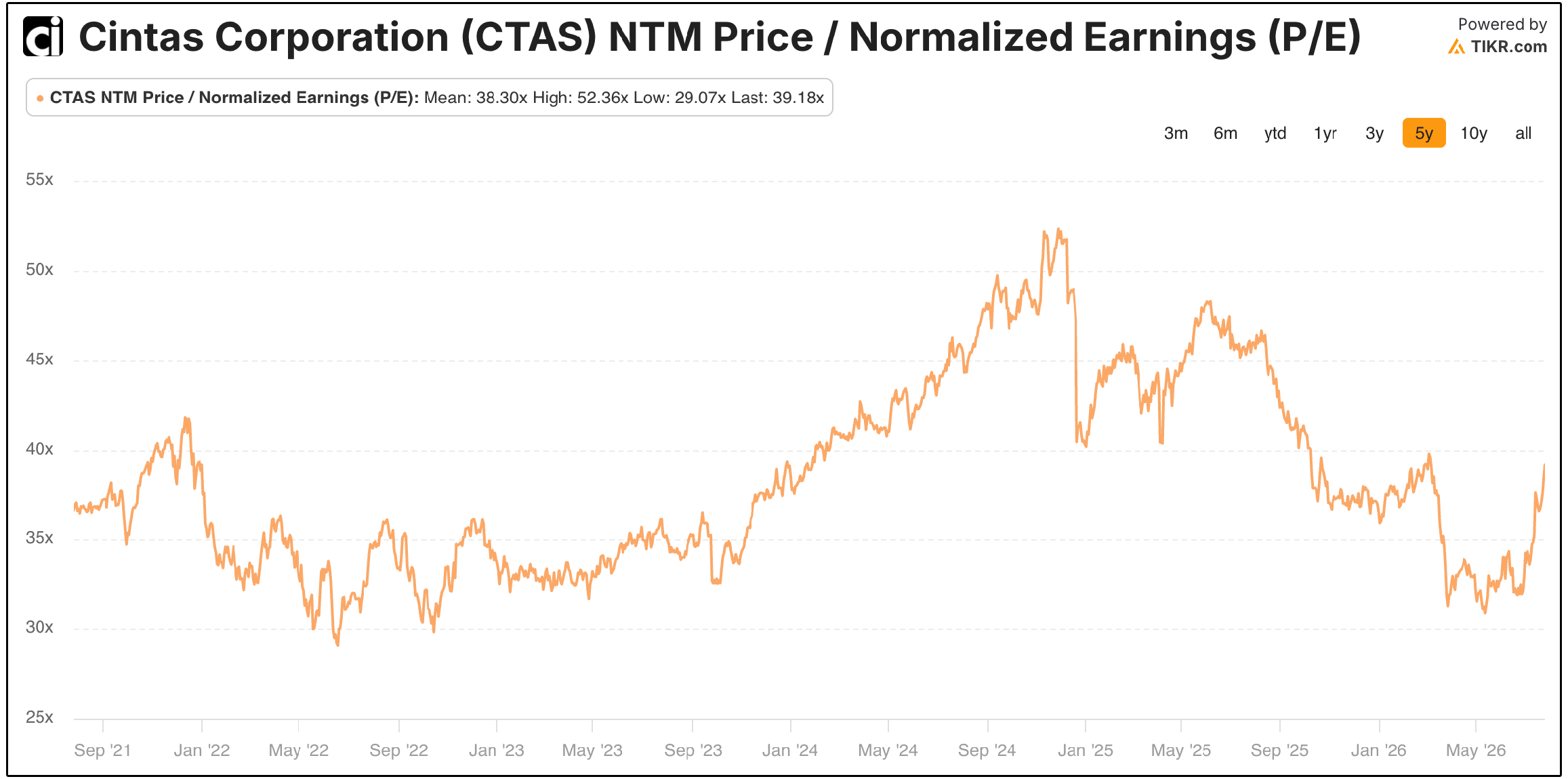
Earnings growth is projected to remain in the low double-digits over the next few years, but investors would still have to pay 39 times earnings to buy shares at its current valuation.
However, this is essentially in line with their 5 year average P/E multiple.
🚛 Case Study No. 2: Old Dominion Freight Line
Old Dominion Freight Line is another deceptively simple business.
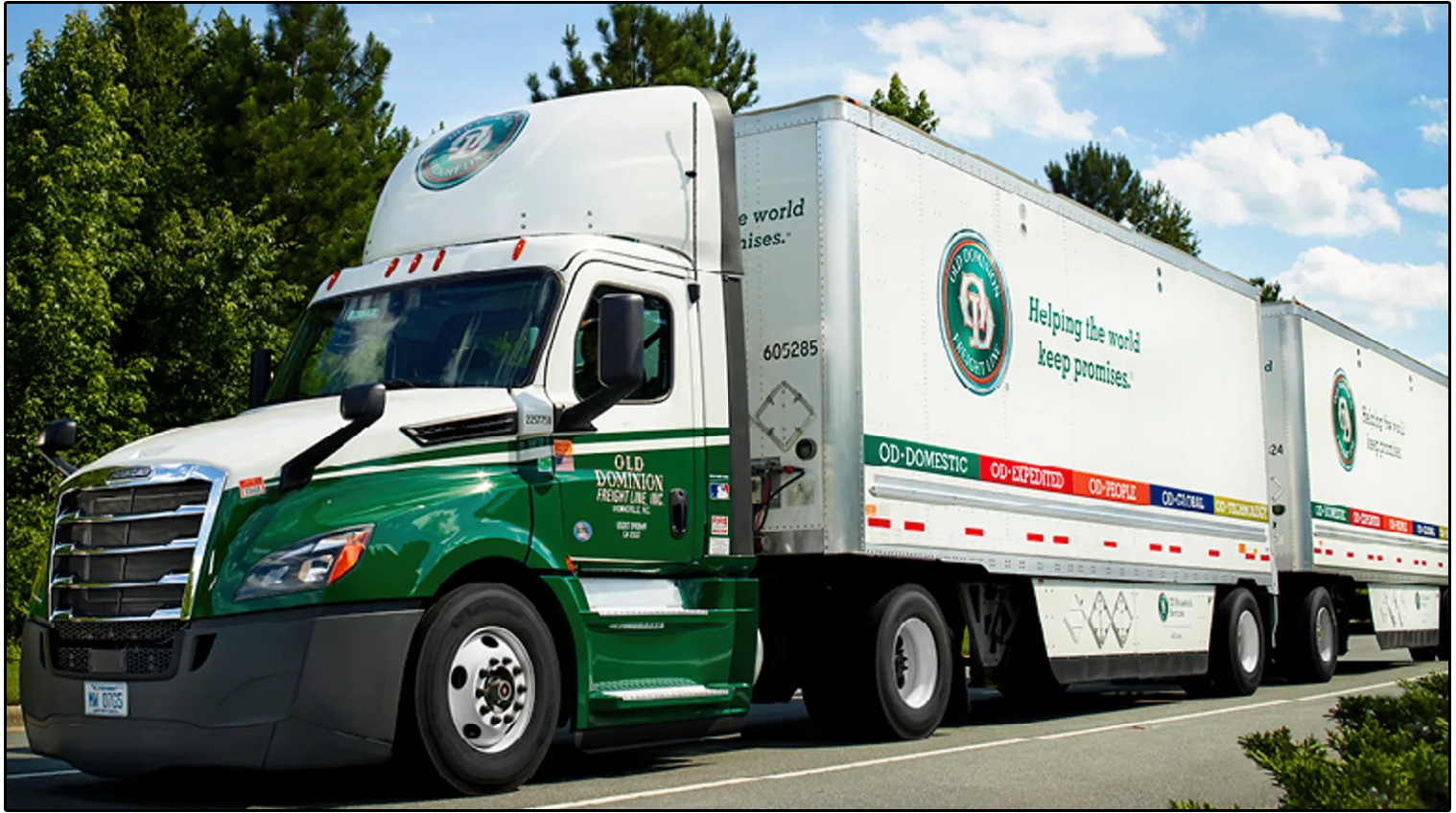
The company transports less-than-truckload freight, combining shipments from multiple customers inside the same trailer and moving them through a nationwide network of service centers.
Executing this well is extremely difficult.
Freight must be collected, routed, transferred, and delivered without significant delays or damage.
Old Dominion’s competitive advantage is the reliability of its network.
The company regularly reports on-time service near 99% and one of the lowest cargo-claims ratios in the industry.
For customers transporting valuable or time-sensitive goods, reliability undoubtedly matters more than choosing the lowest-priced carrier.
Old Dominion was founded in 1934 by Earl and Lillian Congdon.
The Congdon family remains meaningfully involved in the business more than 90 years later.
David Congdon, the founder’s grandson, previously served as CEO and now serves as executive chairman. Members of the Congdon family collectively continue to own a significant percentage of the company.
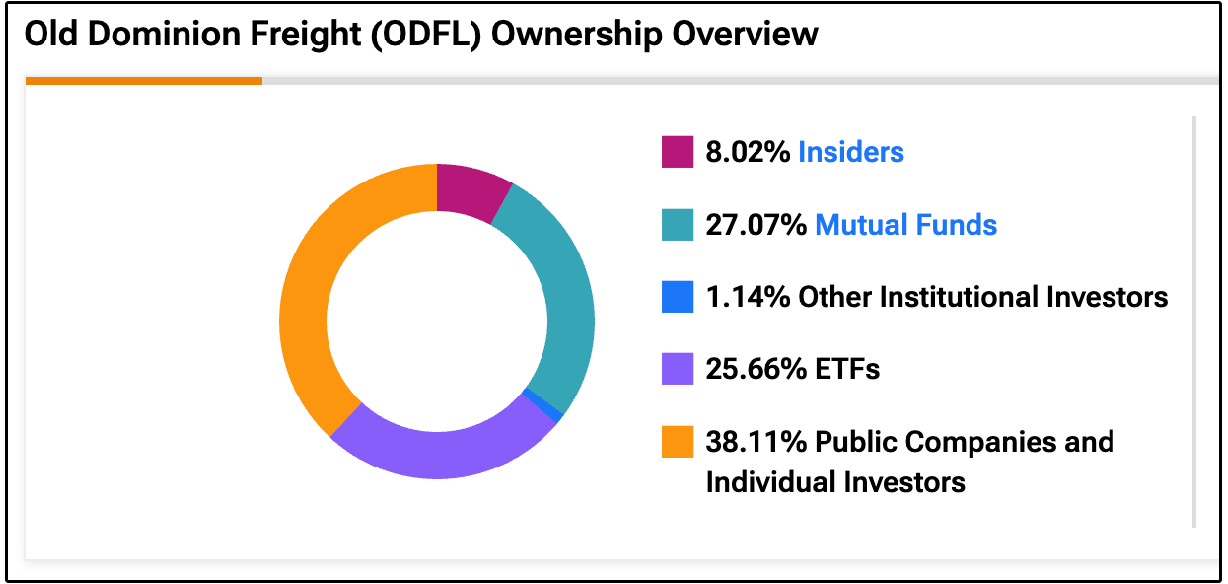
Like Cintas, Old Dominion’s current CEO is not a member of the founding family.
However, CEO Marty Freeman spent decades inside the company before taking the role.
The company therefore retains several owner-operator characteristics:
Meaningful family ownership
Family representation on the board
Internally developed leadership
Conservative financial management
Old Dominion operates in a highly cyclical industry.
During freight downturns, many carriers reduce capital spending to protect short-term earnings.
Old Dominion has historically continued investing in:
Service centers
Tractors and trailers
Technology
Employees
Network capacity
Those investments may reduce free cash flow in the short term, but they allow the company to improve service, handle more freight, and capture market share when demand recovers.
However, revenue per share as well as earnings per share have stalled in the last 3 years.
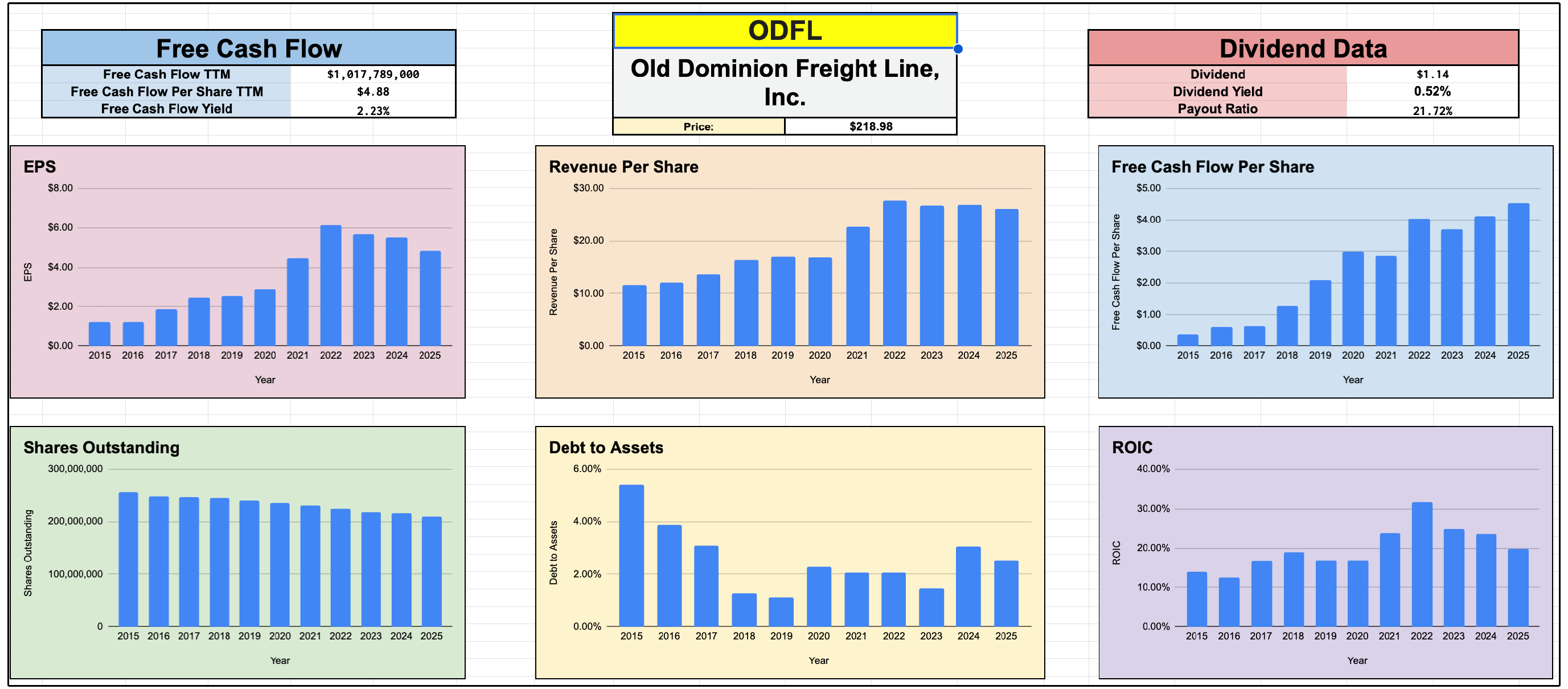
ODFL’s recent revenue decline has primarily been caused by a prolonged downturn in the freight market.
Manufacturers and retailers have been shipping fewer goods, leading to lower shipment volumes and less freight moving through the company’s network.
ODFL has maintained strong pricing, but higher revenue per shipment has not been enough to fully offset the decline in total volume.
Lower network utilization has also pressured earnings because the company must continue operating its service centers, equipment, and workforce even when fewer shipments are moving through the system.
Despite weaker current results, ODFL’s stock has risen because investors are focused on what earnings could look like when the freight market eventually recovers.
Several factors are driving that optimism:
The freight downturn may be approaching a bottom.
Investors expect shipment volumes and demand to eventually normalize after an unusually long slowdown.
ODFL has significant operating leverage.
Because much of its network is already in place, additional freight can produce revenue without expenses rising at the same rate.
The company continues gaining long-term market share.
Its reliable service and low cargo-claims rate make it one of the strongest operators in the industry.
All of the above are evident in analyst EPS projects, which are currently sitting at over 15% growth annually over the next few years.

In other words, the market is largely looking past today’s weak freight environment and pricing the stock based on an expected recovery in future earnings.
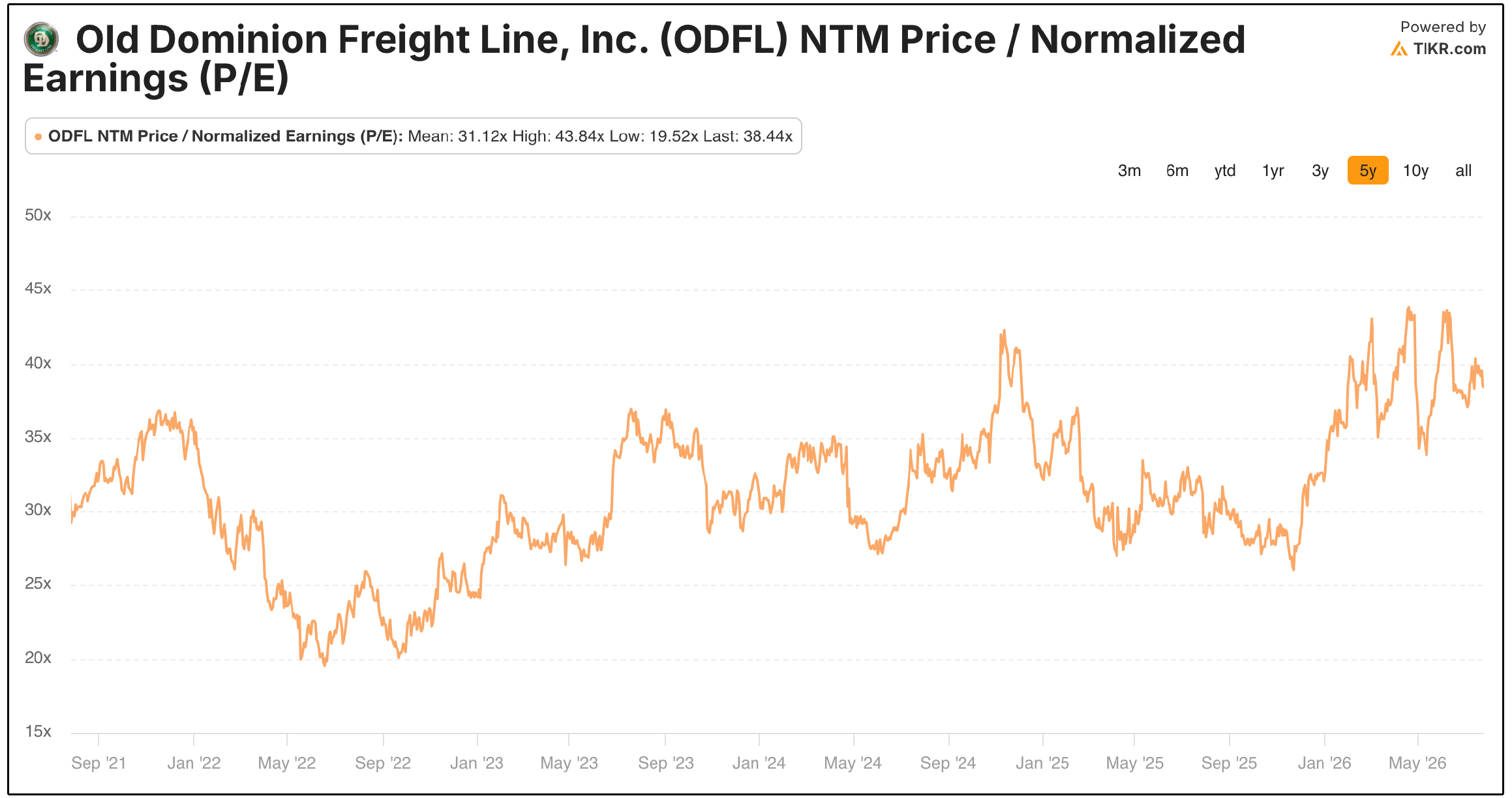
Of course, the risk now is that ODFL’s premium valuation already reflects much of that recovery.
🏁 The Bottom Line
There is significant crossover with Owner Operator stocks and Dividend Growth stocks-
Which makes sense, as long term free cash flow growth eventually leads to dividend growth.
When founders, families, and executives have meaningful personal wealth invested alongside shareholders, they are often more willing to prioritize sustainable growth over short-term results.
Like always if you want to join the largest community of dividend growth and high yield investors, and get access to all the features mentioned below, you can do so here:
Dividendology
Check out these resources:
Tickerdata 🚀 (TICKERDATA SUMMER SALE (CODE: ‘HEAT’ FOR 30% OFF)
Interactive Brokers 💰 (My favorite place to buy and sell stocks all around the world!)
Seeking Alpha 🔥 (Research stocks $30 off! + 7 day free trial)
HYSA 📊 (Get Access to the Best High Yield Savings Accounts!)
Only 4% of stocks account for nearly all net wealth creation in the market.