

Over the last year, we’ve been in the midst of building out our Dividend Growth Portfolio.
The goal is simple:
To achieve dividend income growth of 7–10%+ annually, while maintaining capital appreciation in line with or better than the S&P 500 over a full market cycle.
This of course is exactly what dividend growers have done over the last 50+ years-
And have done so with lower levels of volatility than the market.

So far, I’ve been exceptionally pleased with the way our portfolio is shaping up.
While the portfolio slightly lagged the market to start the year-
It has come roaring back over the last 6 months.
In fact, our Dividend Growth Portfolio has more than doubled the performance of the S&P 500 since the end of April.
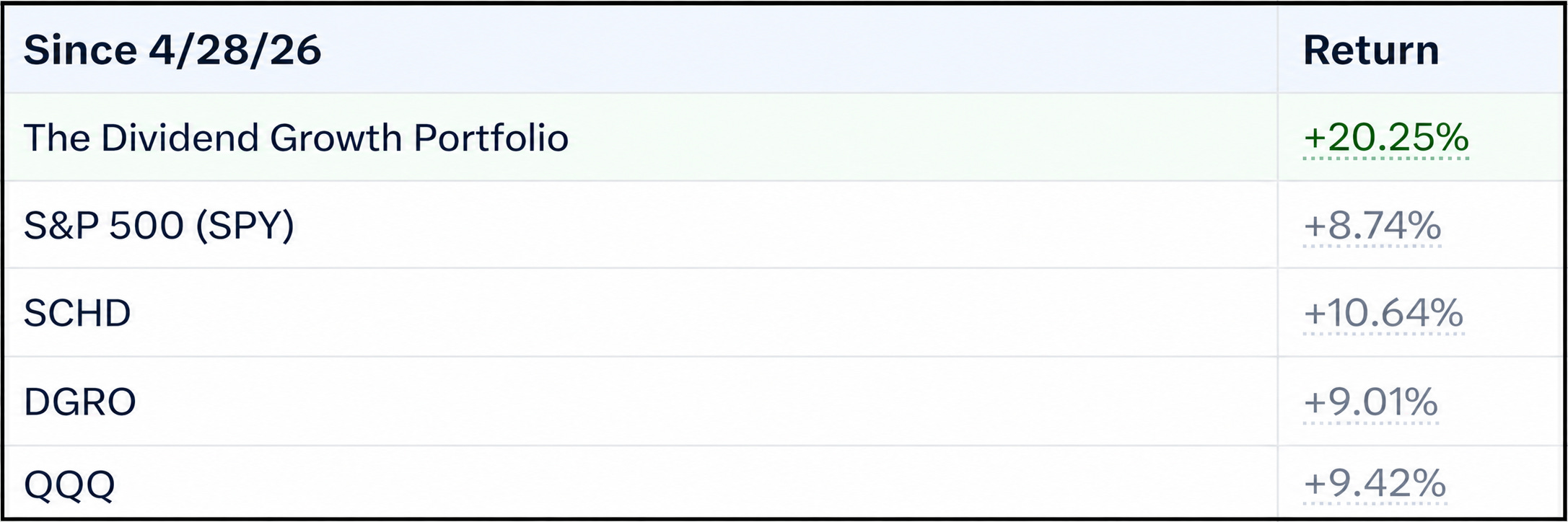
While this is exciting to see-
The reality is that our portfolio is not being built for short term performance.
This becomes abundantly clear when looking at the underlying fundamentals of the portfolio.
Our holdings are growing revenue and earnings at a much faster rate than the S&P 500-
With far better capital allocation and capital intensity.

Not to mention, our holdings are growing dividends twice as fast as the S&P 500 is, while also maintaining a higher yield.
Ultimately, dividend growers ability to outperform boils down to the most important task of management:
Capital Allocation.
Today, we will look at a case study I would venture to say 95%+ of investors don’t understand surrounding capital allocation.
🎯 Capital Allocation
We talk about capital allocation frequently on Dividendology.
Why?
Because the ultimate goal of managment is to maximize long term returns…
And they do that by properly allocating capital.

Every profitable company generates free cash flow.
There are 5 ways to use free cash flow:
Reinvest into the business
Mergers & Acquisitions
Pay Down Debt
Share Buybacks
Dividends
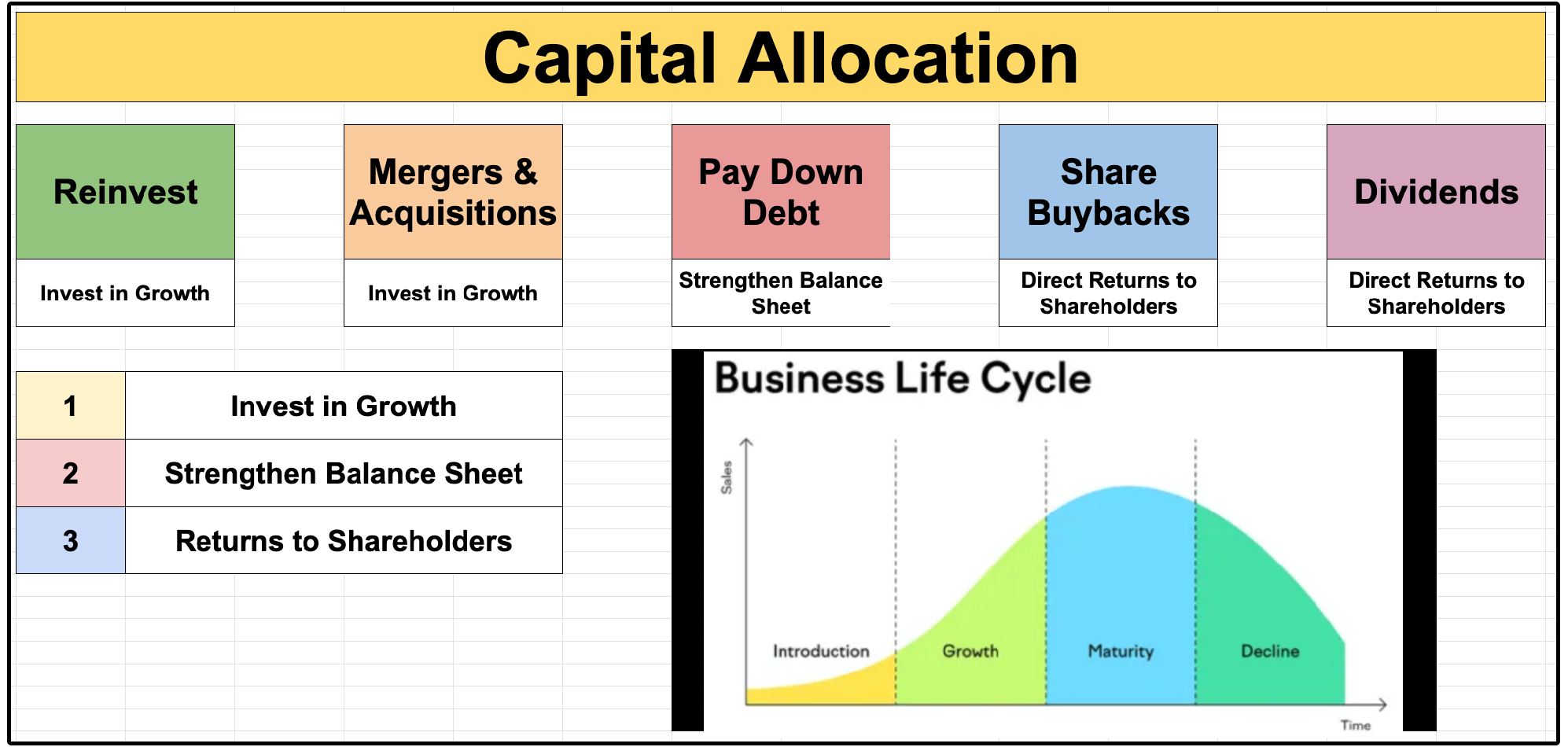
Each capital allocation decision has the potential to benefit shareholders in a different way.
🌱 What Makes a ‘Growth’ Stock?
What does it mean for a stock to be a ‘growth stock’?
From a capital allocation stand point, most would assume that means they reinvest a large percentage of their free cash flow back into the business.
That’s how companies achieve double digit EPS growth, right?
Maybe sometimes…
But look at Mastercard.
In 2025, Mastercard returned 88.1% of its free cash flow to shareholders:
$11.73 billion in buybacks: 71.4% of FCF
$2.76 billion in dividends: 16.8% of FCF
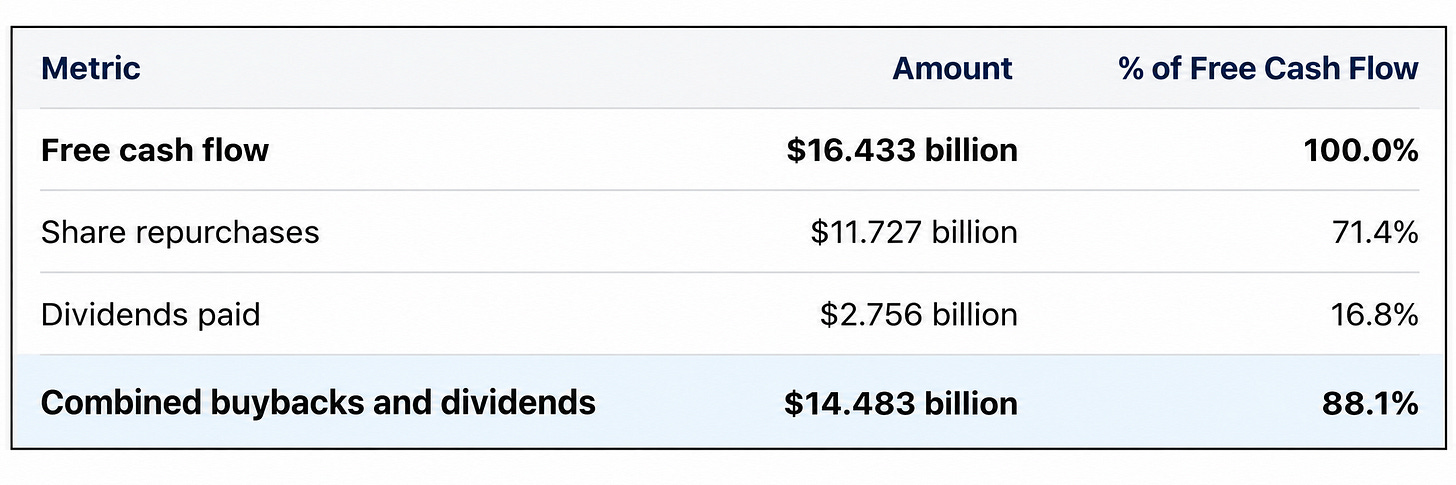
How can a ‘growth’ company return so much cash while still growing EPS at a double digit rate?
Secular growth.
Growth the company can achieve without the need for reinvestment.
Mastercard can process more payments through its existing network without needing a proportional increase in capital investment.

It doesn’t need to build factories, carry inventory, or fund the loans behind those transactions.
This entirely explains how they achieve such a high return on invested capital.
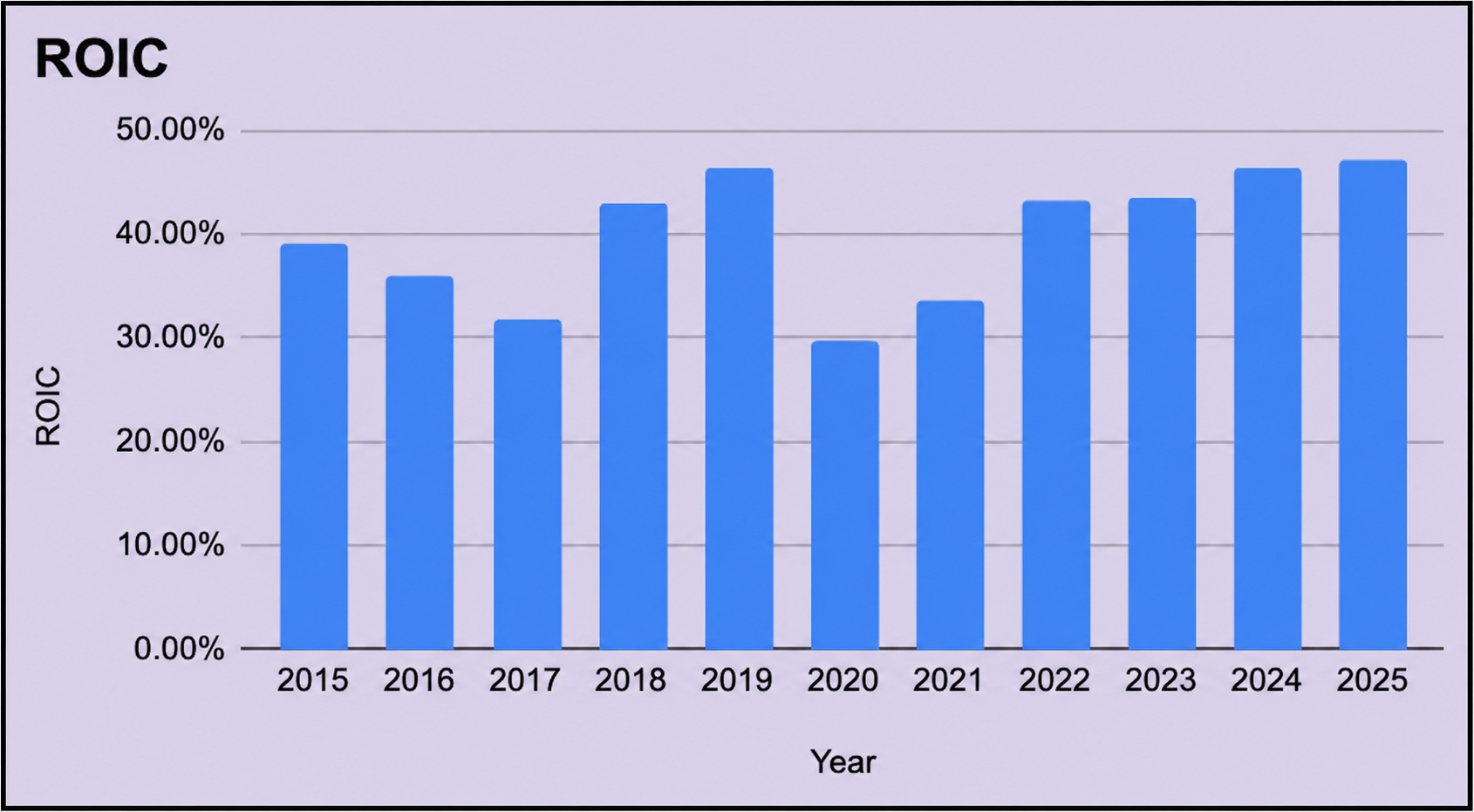
Its network supports growing profits with relatively little additional capital.
And those buybacks further support EPS growth by reducing the number of shares dividing up its earnings-
And ironically enough, a reduced share count also increases the rate at which they can grow dividends on a ‘per share’ basis.
When evaluating a stock, ask how much reinvestment it needs to produce that growth, and what return it earns on that investment.
The irony is that Mastercard is widely viewed as a growth stock, but its capital allocation looks much more like a shareholder return stock.
Its business requires so little capital to expand that it can pursue growth while returning most of its free cash flow through buybacks and dividends.
Let’s dive deeper into what this actually looks like.
🧮 The Compounding Formula
Here’s perhaps one of the most important formulas to understand:
Earnings Growth = ROIC x Reinvestment Rate
This framework helps explain how much additional capital a business needs to support its growth.
Reinvestment is measured relative to after-tax operating profit, and the return earned on that new investment is what matters.
The higher the return, the less capital a company needs to reinvest to achieve a given growth rate.
To illustrate Mastercard’s advantage, suppose it could earn a 50% return on new invested capital and reinvest 20% of its after-tax operating profit:
50% × 20% = 10% earnings growth
A company earning a 10% return would need to reinvest 100% of its after-tax operating profit to achieve that same growth rate.
Both companies achieve 10% growth…
But one requires five times as much reinvestment.
That difference creates room for dividends, buybacks, and other uses of capital.
You can also flip the formula around:
Required Reinvestment Rate ≈ Desired Earnings Growth ÷ Return on New Invested Capital
For Mastercard, the appeal is that additional payment activity can generate more profit without requiring a proportional expansion of its capital base.
It can fund growth while leaving substantial cash available for shareholders.
Buybacks can then support additional growth in earnings per share by reducing the share count.
A business that needs relatively little additional capital to grow has more flexibility to increase dividends while continuing to expand.
⚙️ Capital Efficiency
So remember how we highlighted how the capital efficiency of our Dividend Growth Portfolio was substantially stronger than the S&P 500?
Now you can see why this is so important to me.
We are generating a yield above the S&P 500, with dividend growth at TWICE the rate-
Without our holdings sacrificing growth.
Let’s now analyze the ROIC for each of the stocks in our Dividend Growth Portfolio.