

Last week, we discussed the key differences in High Yield stocks vs Dividend Growth stocks-
The message was obvious:
High yield stocks payout more in dividends…
In the short term.
But we also mentioned we would dive deeper into a High Yield asset class that is currently being completely overlooked.
In fact, overlooking High yield stocks happens frequently-
And that’s what leads to opportunity.
Today, we will be unveiling some of those opportunities.
🏆 Buying High Yield Stocks
I see this quote all the time:
‘High yield means high risk’
While that can certainly be the case, I can assure you it is NOT always true.
Most people approach high yield investing the same way they play the old game minesweeper.
They start going around randomly clicking on squares, and maybe make a few lucky guesses-
But they are basically guaranteed to hit a mine eventually, ending their game.

Of course, if you know what to look for, you can strategically avoid the mines, and win the game.
This is a perfect metaphor for high yield investing.
There are two major advantages to high yield investing most don’t take the time to acknowledge:
📝 Limited analyst coverage & market inefficiencies
Unlike the mega-cap S&P 500 names that have Wall Street analysts dissecting every detail, many high-yield alternatives trade with less attention. This lack of coverage often results in pricing inefficiencies and misvaluations, both on the upside and downside.🔍 Greater opportunity for diligent investors
For those willing to roll up their sleeves and learn the nuances of high yield asset classes (things like AFFO for REITs, NAV growth for BDCs, or option coverage ratios for Covered Call ETFs), there are chances to capture both yield and capital appreciation where the broader market overlooks it.
Today, we will be looking at opportunities in the preferred share space.
Preferred shares can become particularly attractive when a company’s common stock gets hit hard, dragging its preferred shares lower-
Even though cash flow still comfortably covers the preferred dividend.
That creates an opportunity to earn a high yield from a payout that remains well protected.
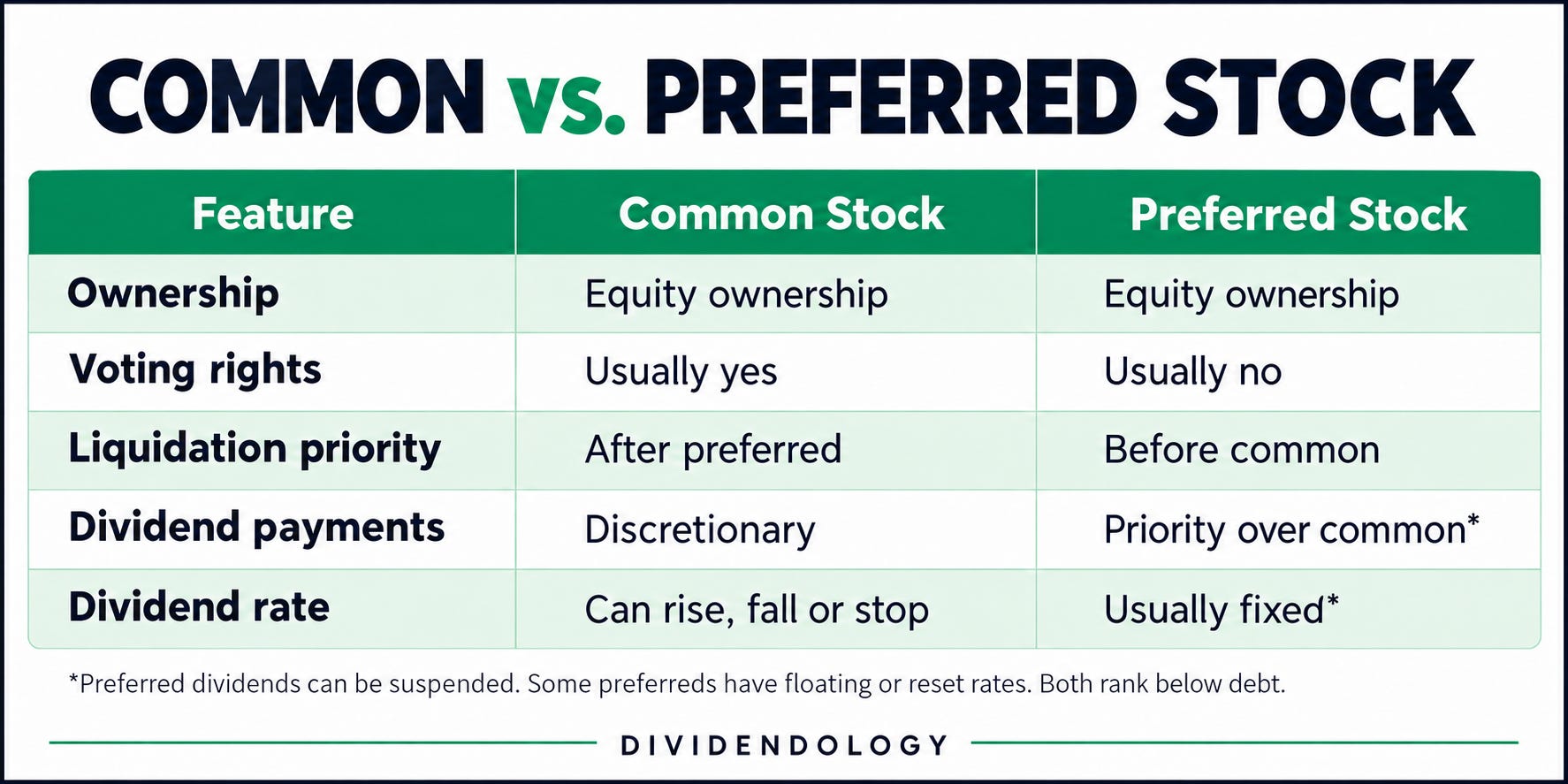
When the business and balance sheet remain healthy, that trade offers a compelling risk to reward for income investors.
Let’s review some of the top opportunities in the preferred space right now.
1.📱 AT&T
One concern weighing on AT&T’s common shares is the threat of SpaceX becoming a more meaningful competitor.
Investors are questioning what that competition could mean for AT&T’s growth and future cash flows years from now.
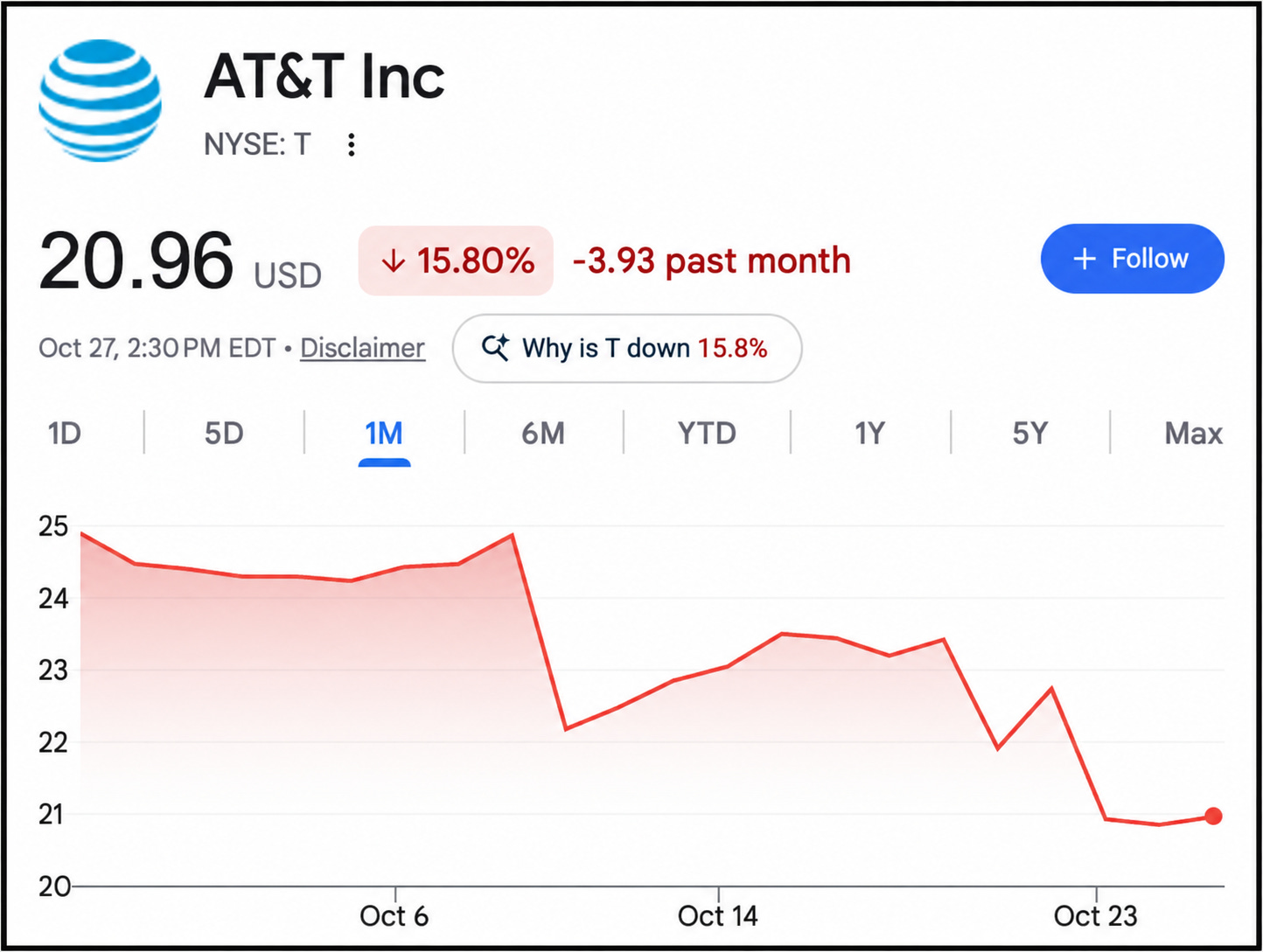
The predictability of the growth rate of future cash flows has been drawn into question.
That is exactly the type of situation where preferred shares become interesting.
A weaker outlook for cash-flow growth five to ten years from now can materially affect what investors will pay for the common stock.
However, the preferred dividend requires only a small portion of AT&T’s existing cash generation.
During the third quarter, AT&T generated approximately $5 billion in free cash flow against approximately $36 million in parent preferred dividends.
That represents roughly 139 times preferred dividend coverage, compared with approximately 2.6 times coverage for the common dividend after preferred payments.
Meanwhile:
Series C preferred shares: 7.83% yield
Series A preferred shares: 7.76% yield
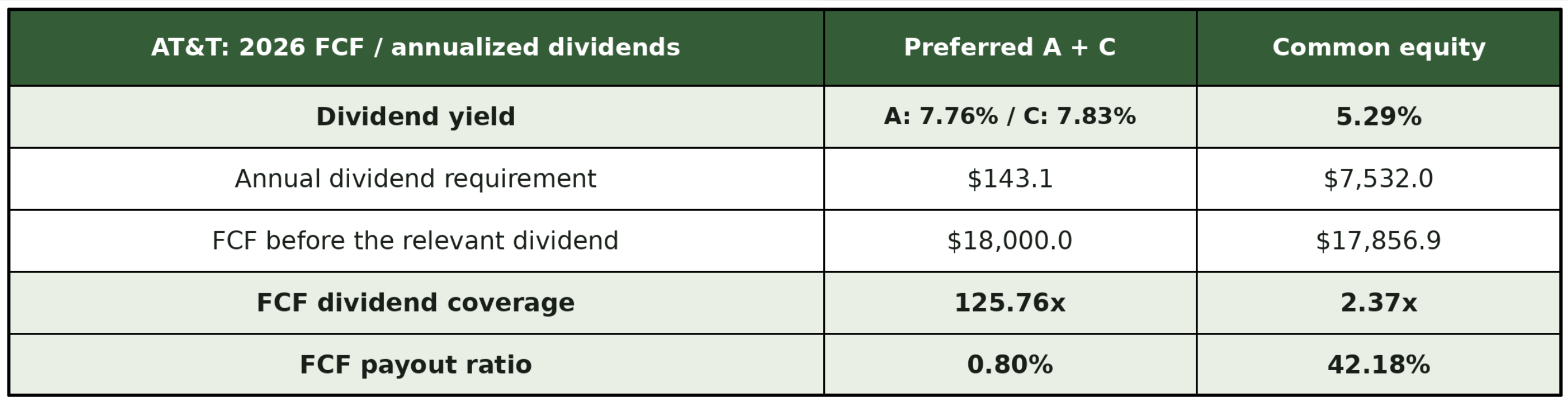
We certainly give up some potential upside compared with the common shares, but we don’t need AT&T to deliver substantial growth to support this payout.
SpaceX could eventually affect the business, but I don’t consider it a threat for the preferred shares.
The main concern (really for all preferred shares) would be treasury yields climbing higher.
But the competitive uncertainty weighing on the common stock has not undermined current preferred dividend coverage.
That combination of negative sentiment, substantial coverage, and a high starting yield is what makes the opportunity compelling.
2. 🏗️ Brookfield Infrastructure
Brookfield Infrastructure’s Series 13 preferred units, BIP-PA, offer another interesting opportunity for income investors.

The common equity yields roughly 4.98%-
But the preferred shares now sit at 8.12%.
But again, what makes this worth examining is how little of Brookfield’s reported cash flow is needed to support its preferred distributions.
During the second quarter, Brookfield generated $702 million in funds from operations, compared with approximately $14 million in combined preferred distributions and perpetual-note payments.
That represents approximately 50 times coverage, with those payments consuming just 1.99% of FFO.
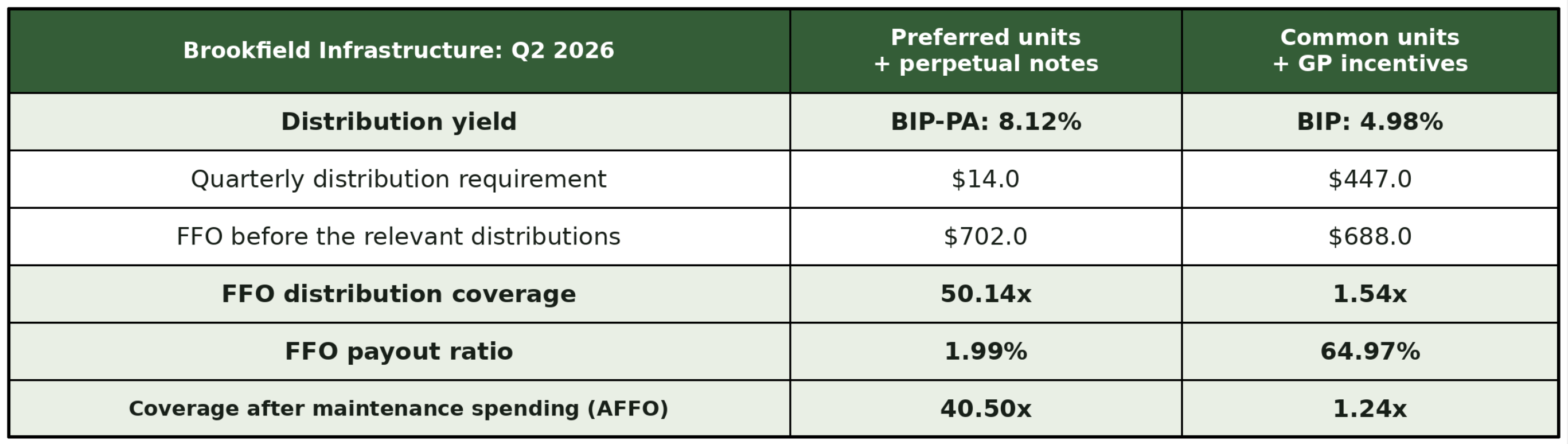
Even after subtracting maintenance capital spending, coverage remained approximately 40.5 times.
Meanwhile, common distributions and general-partner incentives were covered approximately 1.54 times by FFO, or 1.24 times after maintenance spending, after accounting for preferred and perpetual-note payments.
Again, the coverage makes preferred shares interesting.
We do give up the common units’ potential distribution growth and some upside-
But for someone looking to maximize income potential while reducing risk…
The preferred shares are compelling.
3. 🏢 REIT Preferred Shares
Not all REIT preferred are created equal.
But with this being an asset class that has historically delivered strong yields plus strong total returns-
Combined with the fact REITs are currently in one of their worst five year stretches in recent history-
Some REIT preferred shares have become compelling.
But REITs have come under pressure again, with the broad equity REIT index falling 5.7% in September alone.
Rising Treasury yields have been a major headwind.
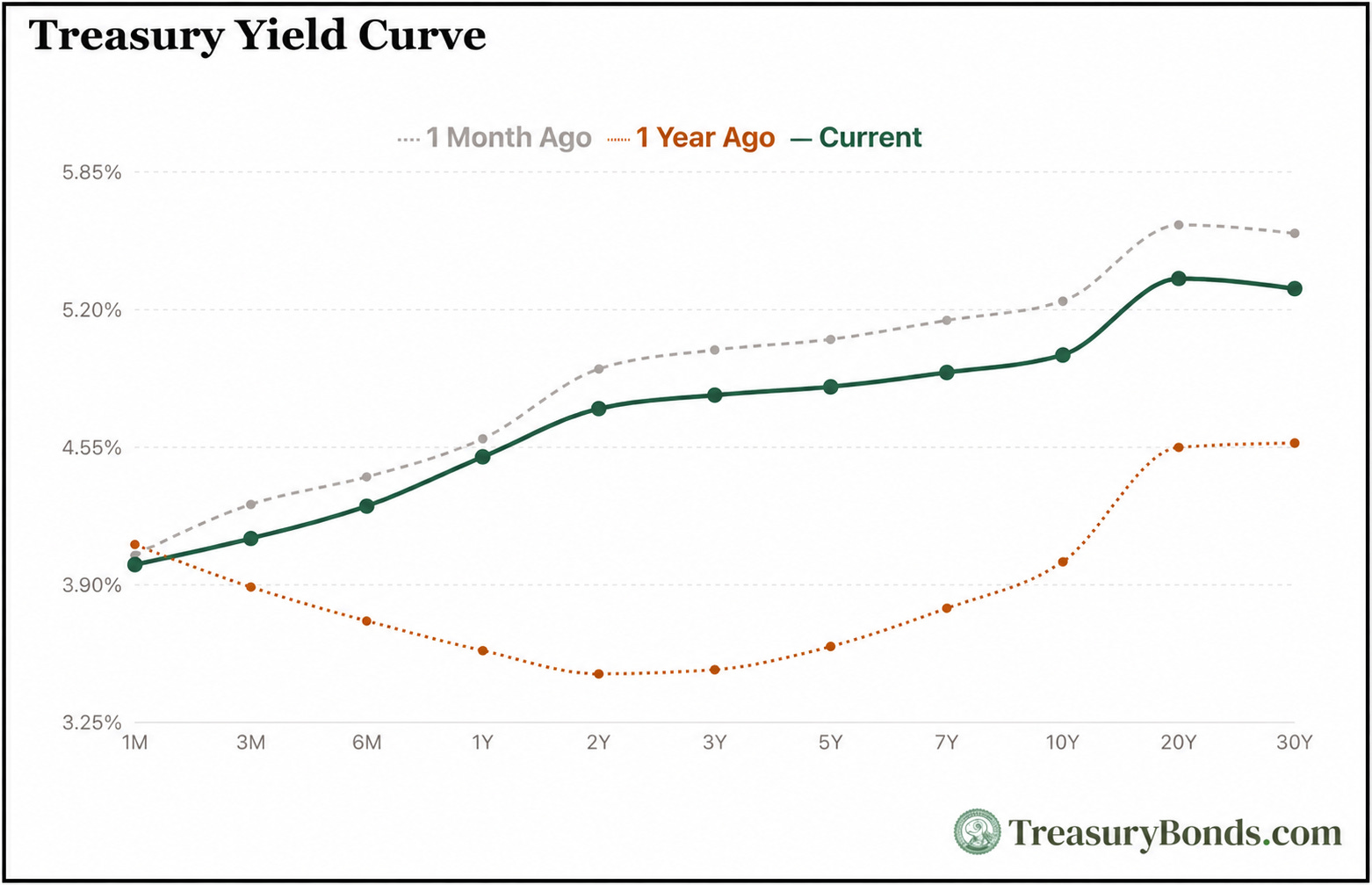
And this follows an already inexpensive starting point.
Higher Treasury yields have been the primary headwind as fundamentals are improving for the most part.
But while interest rates obviously matter, they don’t tell the whole story.
Research from Cohen & Steers shows that the relationship between REIT returns and Treasury yields has repeatedly changed.
There have been periods when REITs rose alongside yields, and others when they moved in opposite directions.
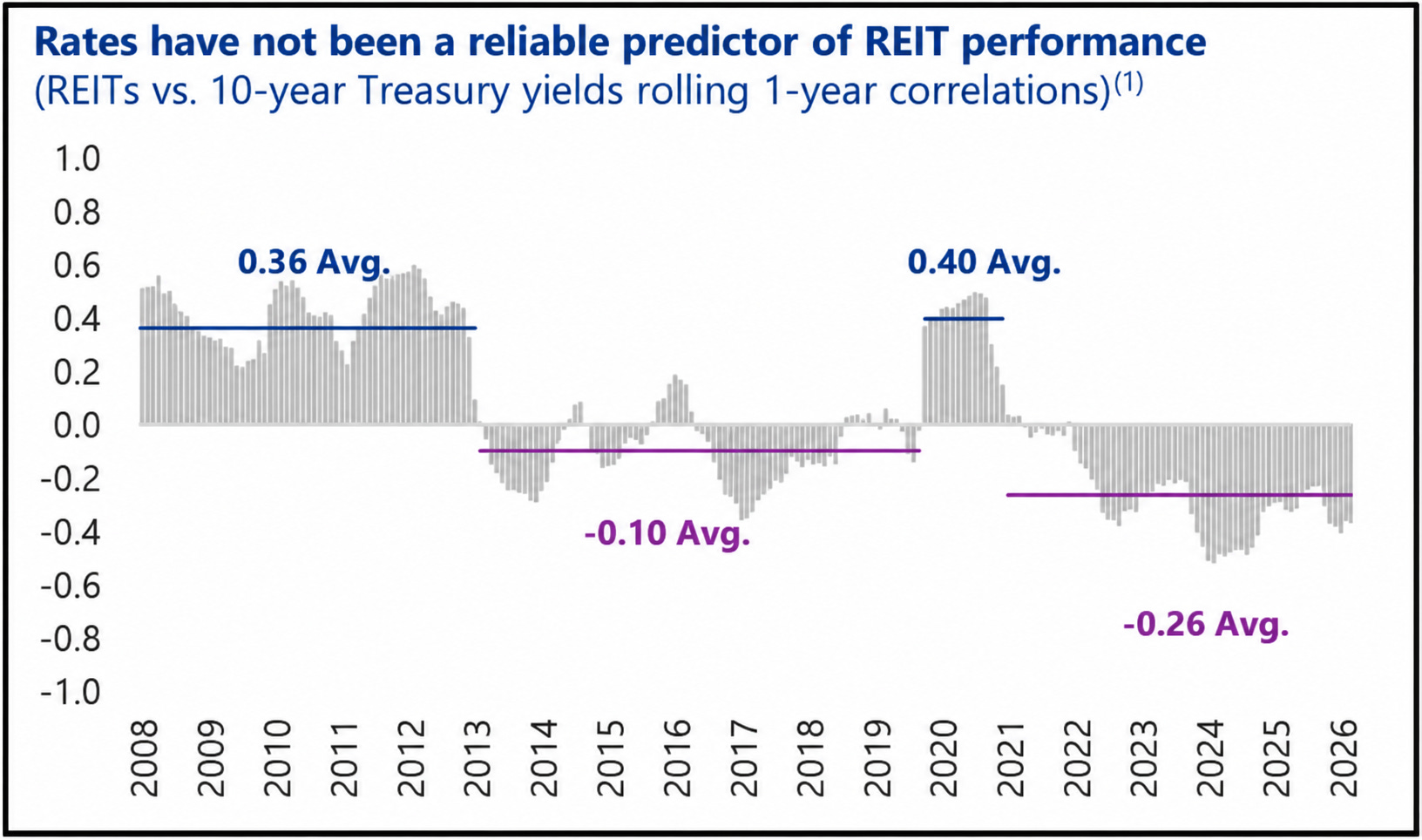
So this means that the underlying business still matters.
Rental growth, occupancy, new property supply, and the valuation investors pay all help determine returns.
From 2022–2024, rising yields coincided with slowing REIT cash flow growth and falling valuation multiples.
In 2026, Cohen & Steers found something quite interesting:
Strengthening estimated cash flow growth alongside higher Treasury yields.
Through September 21, REITs had returned 11.6%, despite the 10-year Treasury yield increasing from approximately 4.2% to 5.0%!
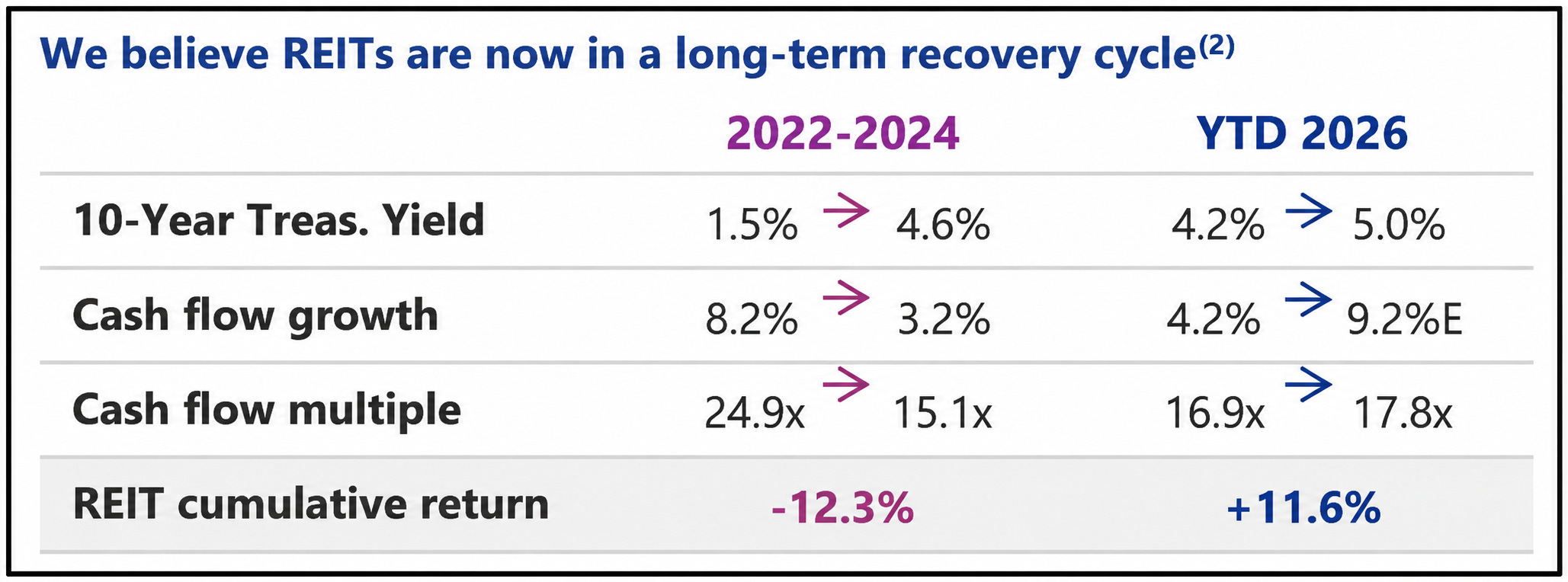
Keep in mind that these charts cover REIT common stocks.
But for preferred shareholders, stronger cash generation will provide a larger cushion supporting their dividends.
Preferred dividends generally don’t grow alongside the business, and fixed-rate preferred prices remain sensitive to rising yields.
That’s why we focus on dividend coverage and leverage.
The three REIT preferred shares highlighted below offer approximately 6.6%–7.4% yields:
ADC-A: Agree Realty
DLR-J: Digital Realty
REXR-C: Rexford Industrial
They also provide substantial preferred dividend coverage and lower leverage than several higher-yielding alternatives.
You can see the preferred shares yielding in the 8% range have significantly more leverage and less dividend coverage.
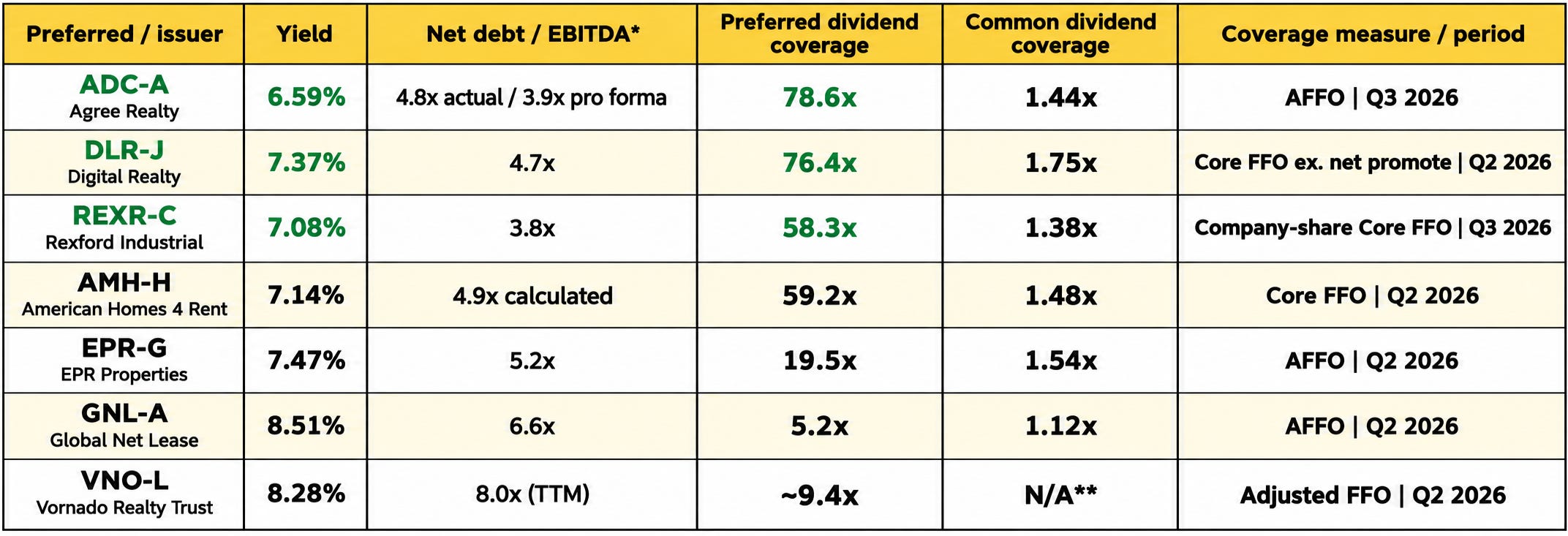
Again, when the market pushes prices lower while that dividend cushion remains strong, the risk to reward becomes particularly attractive for income investors.
💎 My Top Preferred Stock
The above all present interesting opportunities-
And more importantly, healthy risk to reward scenarios.
However, my favorite preferred stock in the market is one we added to our High Yield Portfolio on Dividendology.com earlier this year.

When we added this preferred to our portfolio, it was yielding over 10%-
And we have since seen the stock climb by double digits as well.
At today’s prices, the yield is still higher than the overall yield on cost for our High yield Portfolio-
And the dividend is covered over 17x!
Let’s take a closer look…