

Every month, I compile data on the dividend stocks with the most upside based on Wall Street analysts price targets.
Members will get access to the full list every month, as well as all other Dividendology features.
This month, we have 74 stocks on the list.
Let’s dive in.

1. 🔬 ASML Holding (ASML)
Wall St. Price Target: $2,584.04 | Upside: 55.59%
We originally added shares of ASML into our portfolio in 2025 at close to $700 a share-
And the stock has climbed well over 100% since then.
The exact same thesis then is still playing out today, making this an interesting opportunity.
The AI semiconductor supply chain runs through a company with a monopoly on some of its most important manufacturing equipment.
ASML builds lithography machines, which use light to print small circuit patterns onto silicon wafers.
Its greatest competitive advantage is extreme ultraviolet lithography, or EUV.
ASML is the world’s sole supplier of these systems, which chipmakers use to manufacture advanced processors and memory.
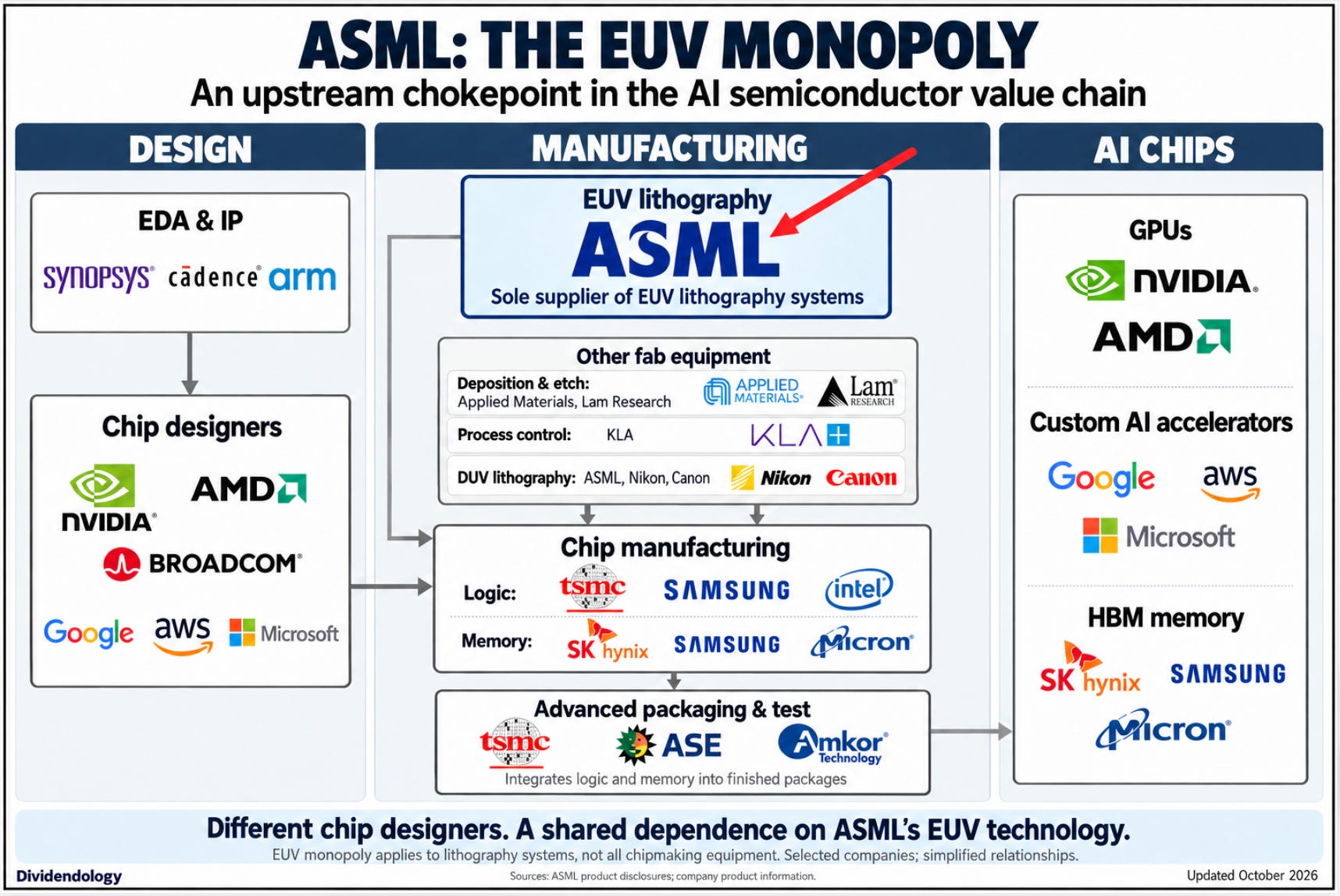
Nvidia, AMD and the cloud companies can compete over chip designs, but manufacturing their most advanced products depends on equipment further up the supply chain.
ASML occupies a critical position in that process.
Its monopoly specifically covers EUV systems, rather than every type of chipmaking equipment.
Developing the technology required decades of engineering and a specialized supplier network, creating an enormous barrier for potential competitors.
The recent earnings report shows how that position is translating into growth.
Third-quarter revenue reached €11.7 billion, with a gross margin of 57.5%. Management now expects full-year sales between €44 billion and €45 billion.
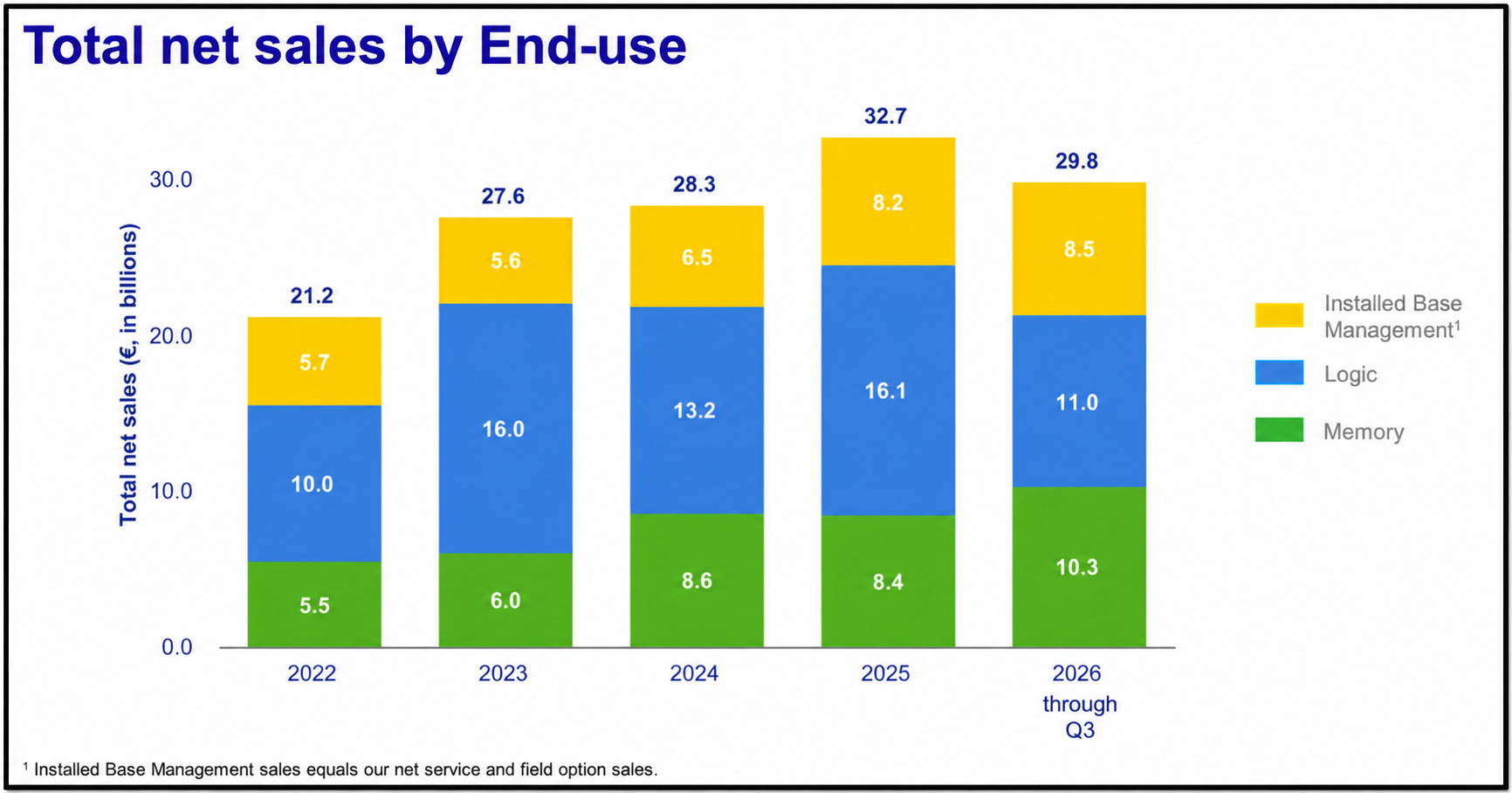
Equipment sales increased from approximately €6.6 billion in Q2 to €8.4 billion in Q3.
Logic represented 54% of system sales and memory represented 46%, showing that ASML benefits from investment across both major chip categories.
But here’s the part I truly love about the business:
The growing business of servicing and upgrading machines already installed.
The ‘Installed Base Management’ portion of the business has recurring revenue characteristics.
Each additional EUV machine sold expands the fleet that customers rely on ASML to service, maintain and upgrade throughout its operating life.
It’s a quite beautiful model.
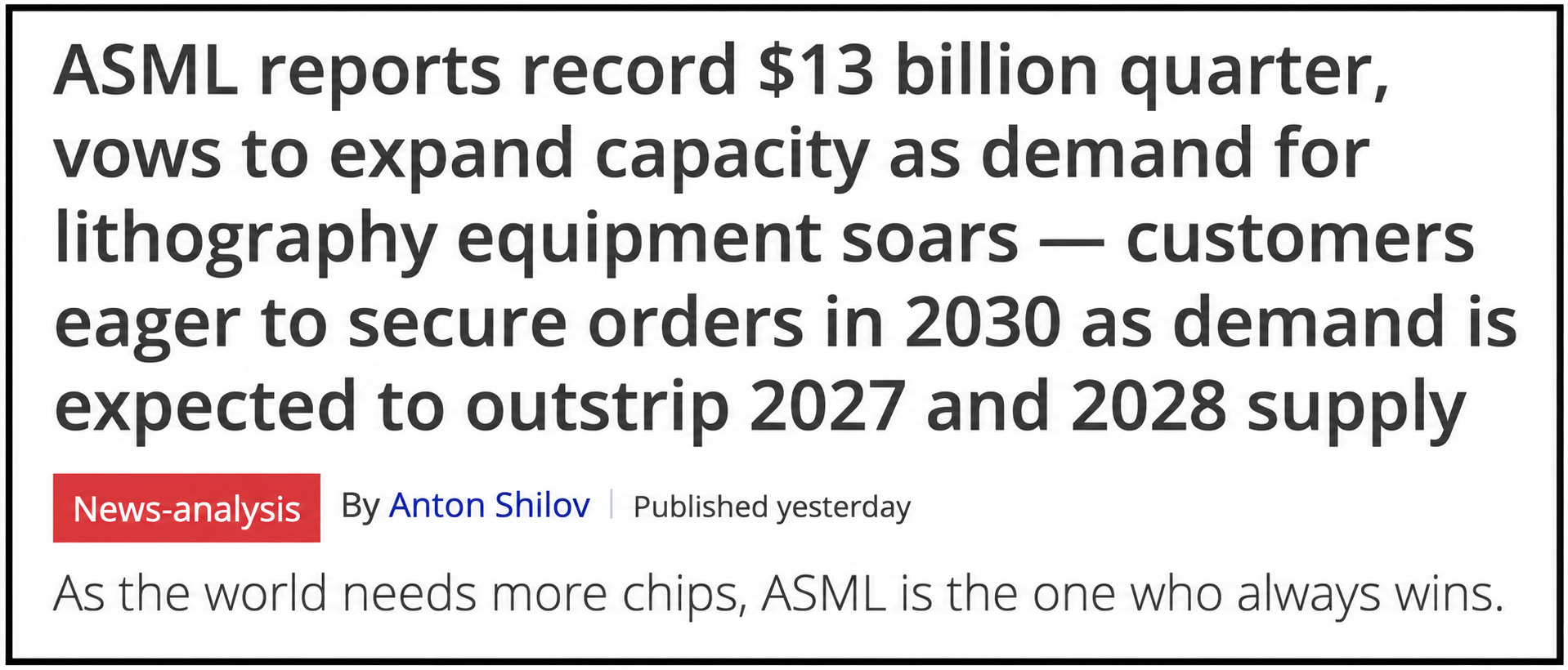
Management’s comments also suggest that demand will remain strong for years (which again leads to growing revenue in Installed Base Management).
CEO Christophe Fouquet said:
“Some customers are expressing an interest in placing orders with us for 2029 and even 2030.”
He also said planned supply for 2027 and 2028 would not fully meet expected customer demand.
As a result of this demand, EPS growth rate projections are exceptionally high over the next few years.
So while trailing twelve month P/E multiples are well above 40x-
Forward looking P/E multiples look quite attractive for a stock that is a monopoly, has growing recurring revenue streams, and customers trying to book orders years in advance.
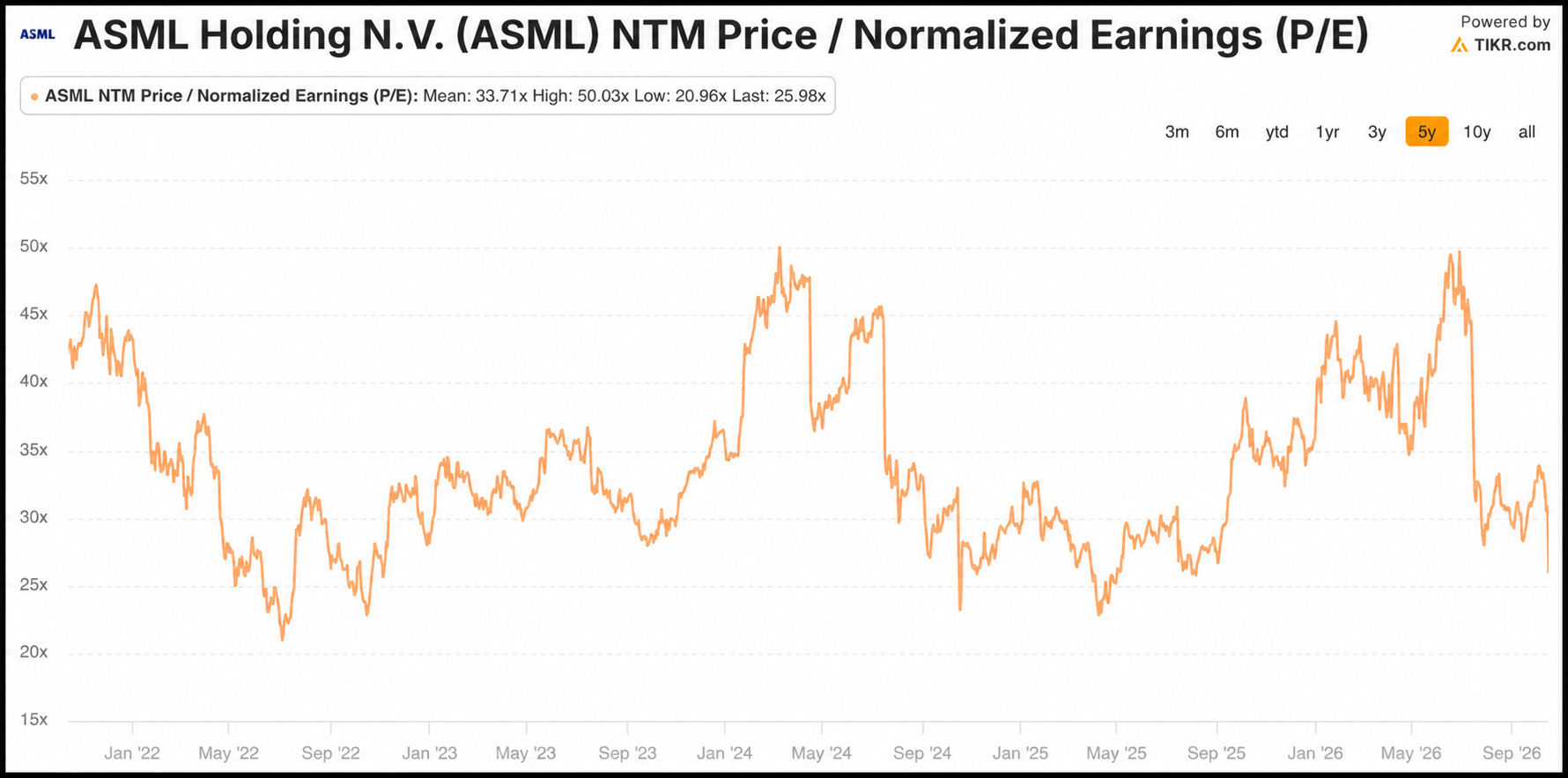
ASML trades at approximately 26 times next-12-month normalized earnings, compared with a five-year average of 33.7 times.
That’s roughly 23% below its historical average multiple.
2. 🛢️ Energy Transfer (ET)
Wall St. Price Target: $24.36 | Upside: 20.97%
At the beginning of this year, we released our top 10 high-yield stocks of 2026, and Energy Transfer made the list.
At the time, it yielded around 8.2%.
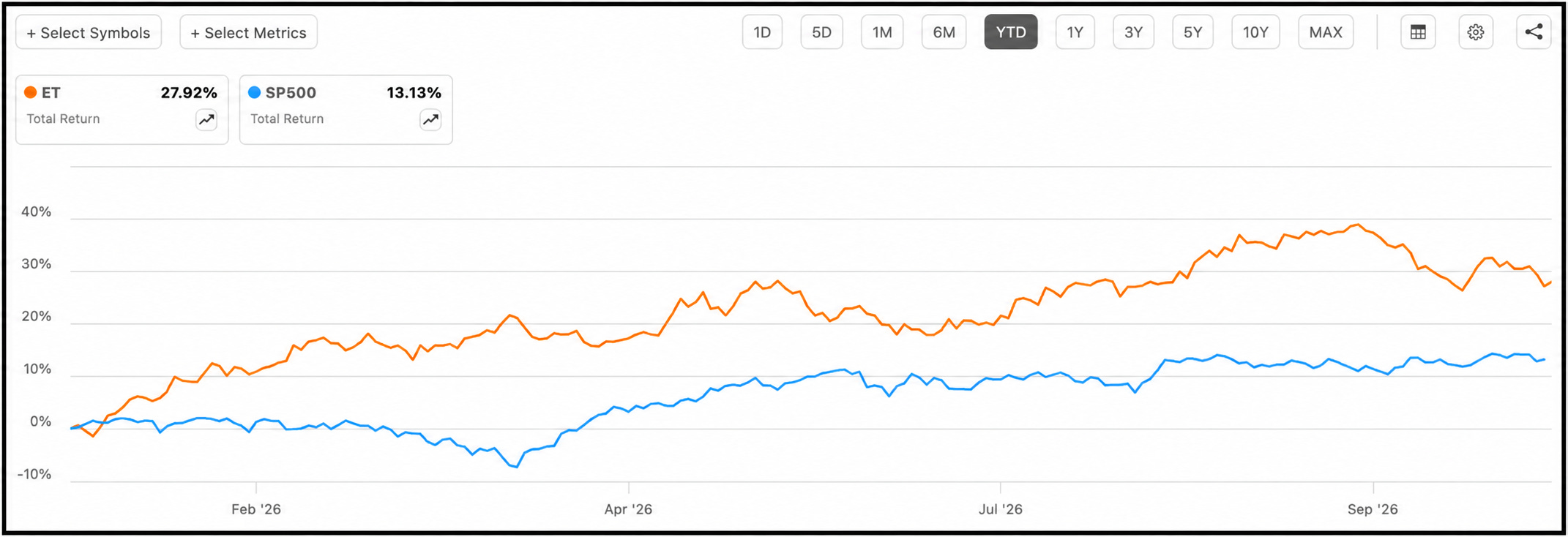
Since then, its total return has reached approximately 28%, compared with roughly 13% for the S&P 500, more than double the market’s return.
These are exactly the types of opportunities we look for as we build our high-yield portfolio on Dividendology.com.
Despite that run, Wall Street’s average price target still implies approximately 21% upside.
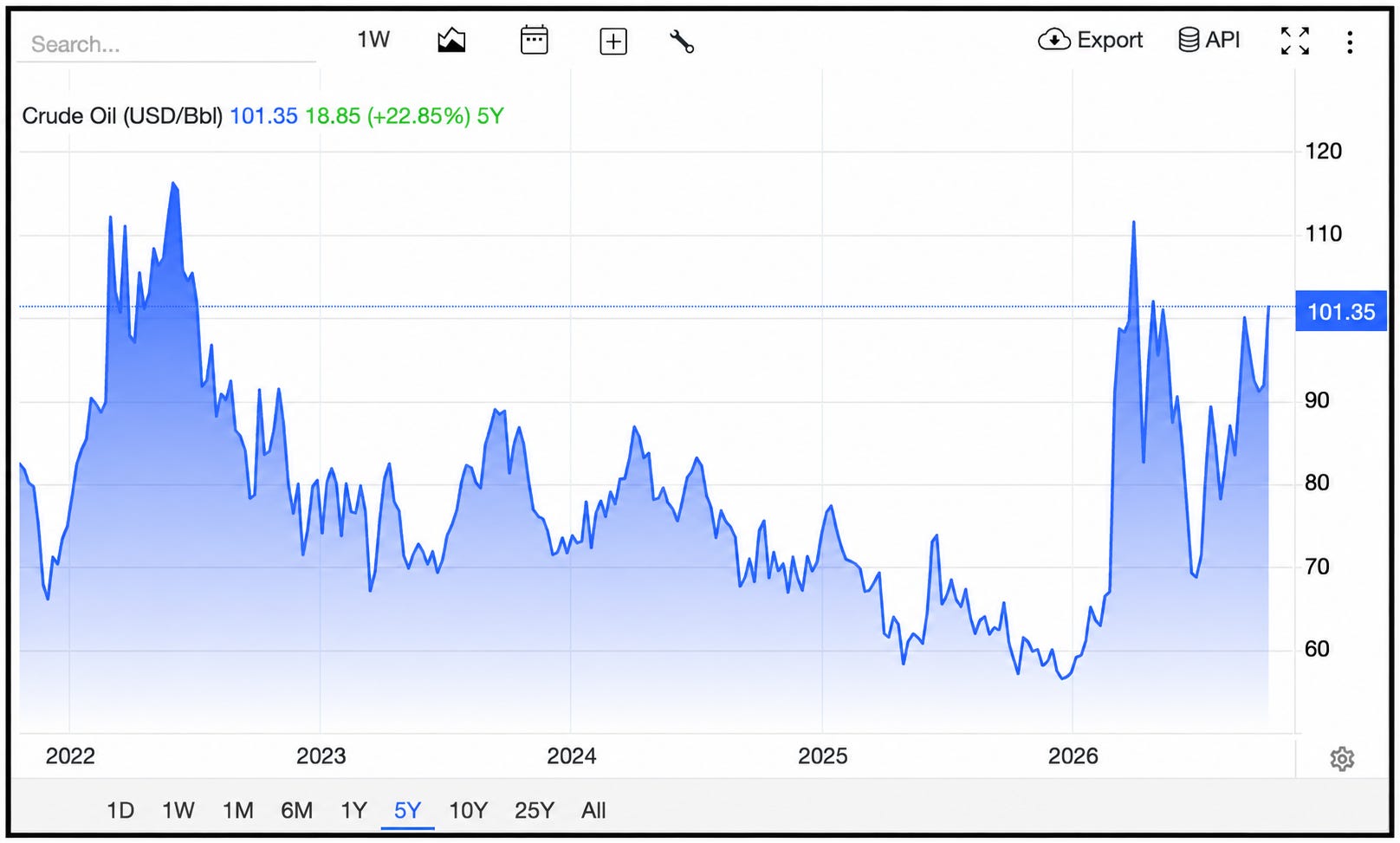
Historically, I haven’t been a huge fan of oil stocks because of the immense volatility in commodity prices.
Anyone who could consistently predict the price of oil would probably be the wealthiest person in the world.
Energy Transfer’s business model makes it particularly interesting.
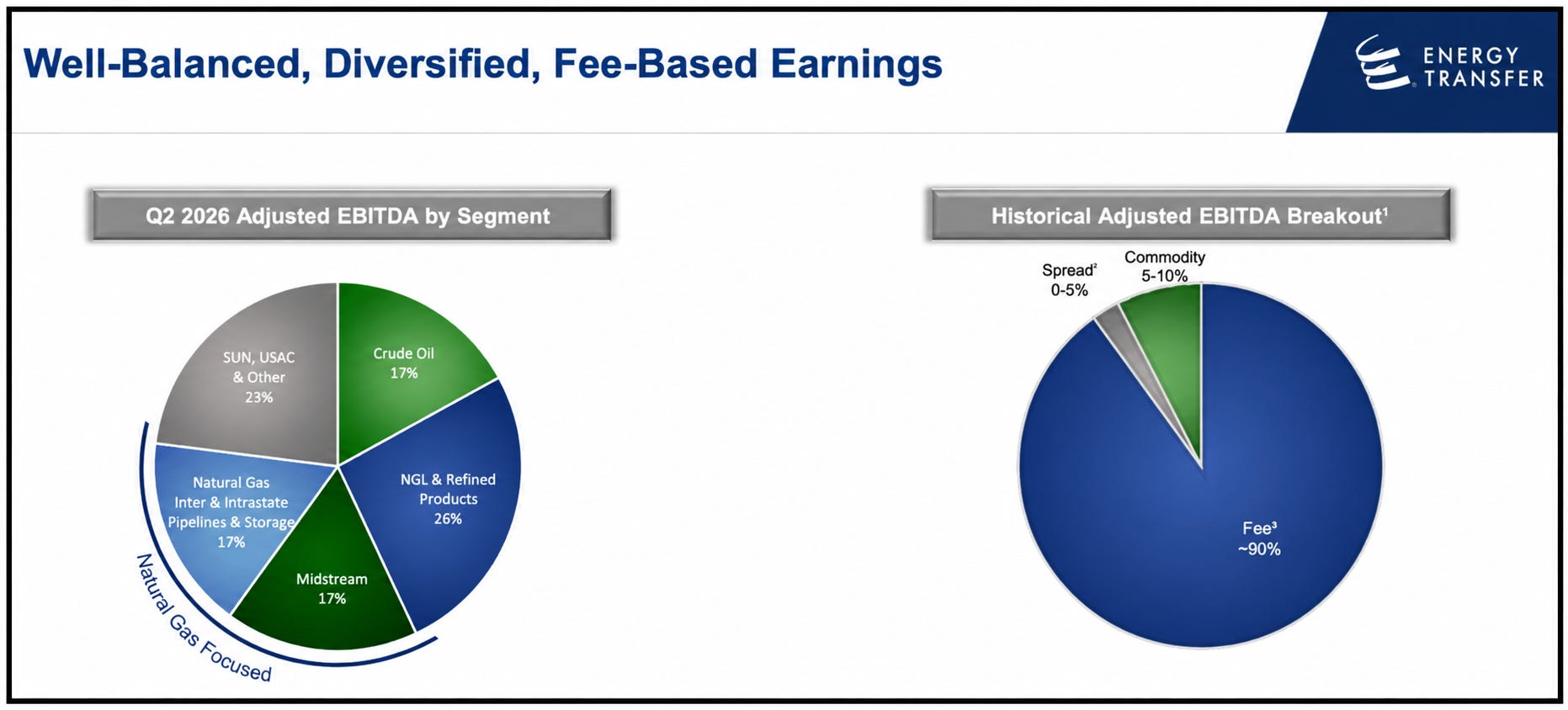
Approximately 90% of its core adjusted EBITDA is fee-based, reducing its direct exposure to commodity prices.
Customers pay Energy Transfer to gather, process, transport and store energy products.
For example, a producer can pay a contracted fee to move natural gas through a pipeline, rather than Energy Transfer’s profit depending entirely on what that gas sells for.
Commodity prices can still affect production volumes and customer health, but those fees make cash flows more predictable.
That brings us to the distribution, which currently yields approximately 6.84%-
And has continued to grow at a healthy rate over the last few years.
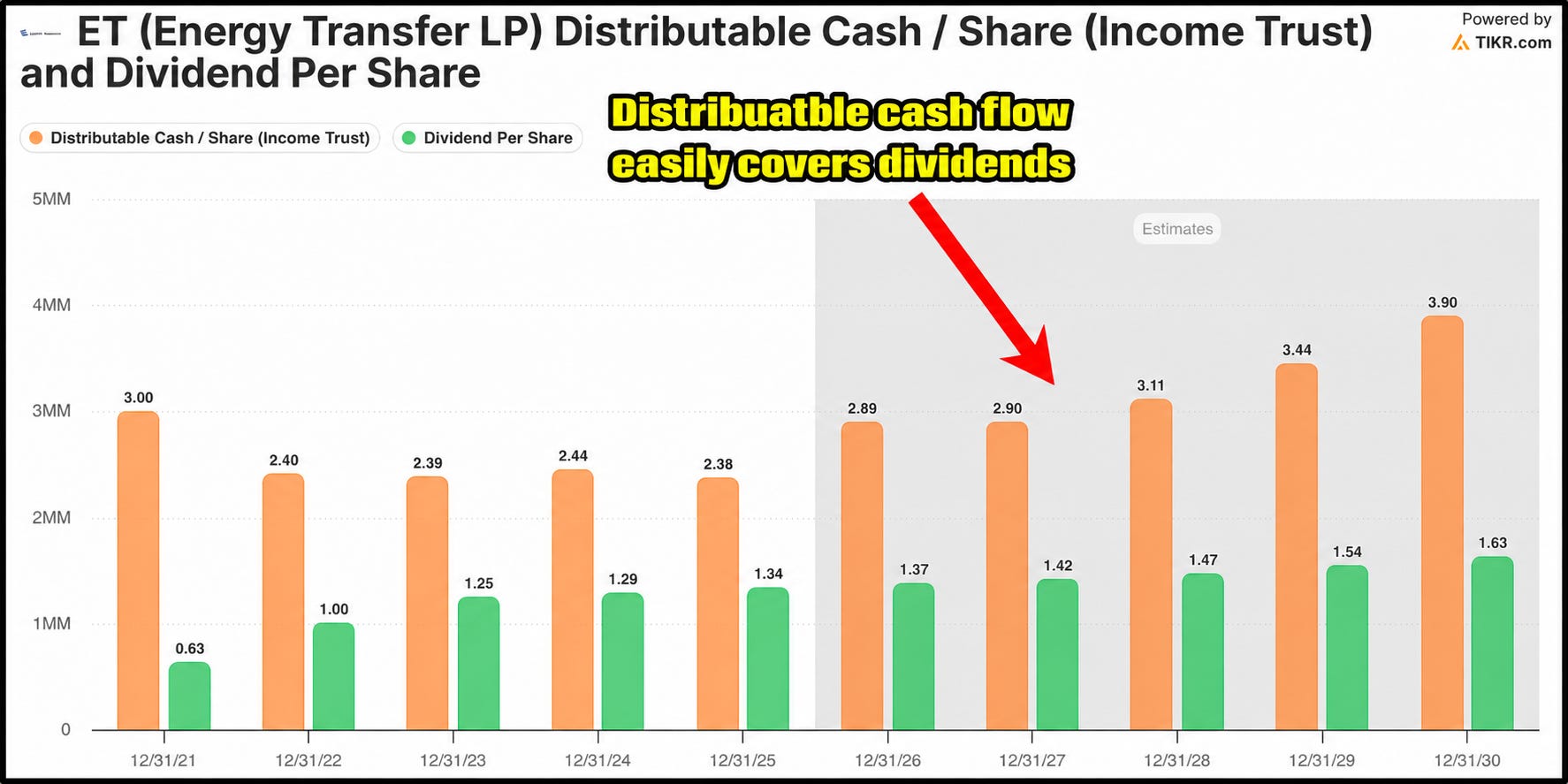
Estimates show approximately $2.89 of distributable cash flow per unit against $1.37 of distributions-
Implying roughly 2.1 times coverage and a payout ratio near 47% for 2026.
Energy Transfer is also expanding through acquisitions.
On October 6, it agreed to acquire Vaquero Midstream for $2.625 billion, with closing expected in the fourth quarter.
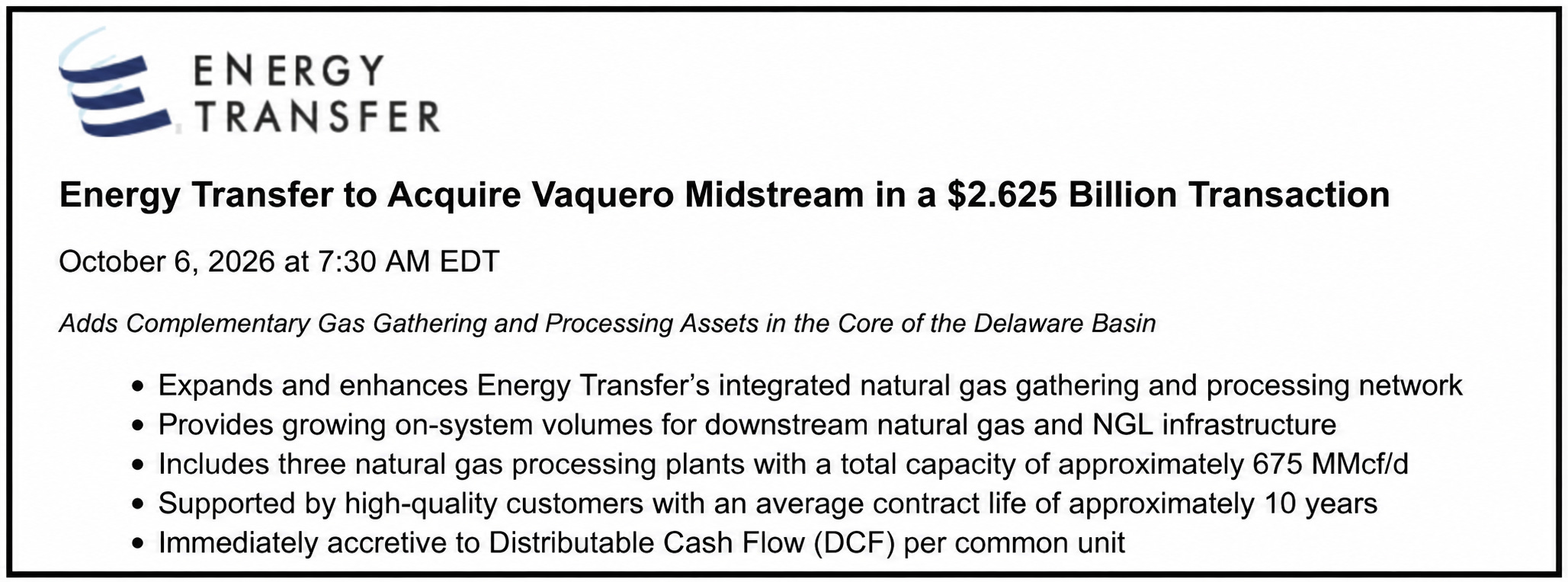
The deal adds three natural-gas processing plants with approximately 675 million cubic feet of daily capacity, supported by contracts averaging roughly 10 years of remaining life.
These assets already connect to Energy Transfer’s downstream infrastructure, creating opportunities to earn additional transportation, processing and export revenue.
Management expects the acquisition to immediately increase distributable cash flow per unit after closing.
Management is targeting 3% to 5% annual distribution growth over the long term.
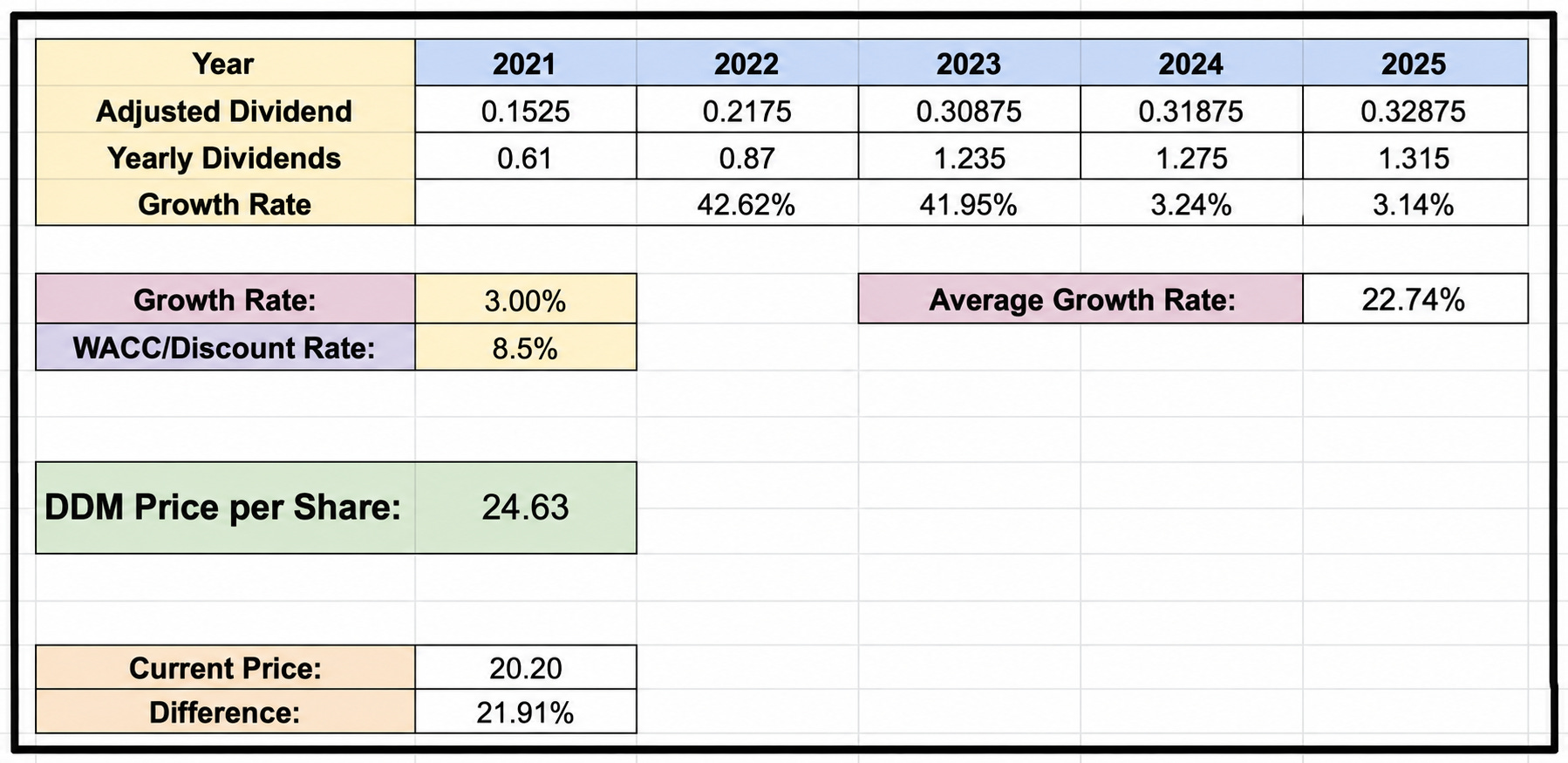
Using 3% distribution growth in a dividend discount model currently implies roughly 22% upside-
Which happens to be incredibly close to the average analyst price target.
3. 📊 Interactive Brokers (IBKR)
Wall St. Price Target: $106.64 | Upside: 28.99%
You may have heard of Interactive Brokers because it’s the broker we use at Dividendology.com to track our Dividend Growth and High Yield Portfolios.
You can check out Interactive Brokers here:
But have you ever considered Interactive Brokers as a potential investment?
Interactive Brokers operates a global brokerage platform that helps individuals, financial advisers and institutions invest across more than 175 markets.
The company generates revenue when customers:
Trade
Borrow against their portfolios
Hold cash on the platform
Trading generates commissions, while margin loans and customer cash generate interest income.
After paying interest and funding costs, the difference contributes to net interest income.
Its appeal to customers is broad market access, competitive pricing and sophisticated tools, supported by decades of investment in automation.
For shareholders, the investment thesis starts with attracting more accounts and assets.
A larger customer base creates more opportunities to earn commissions and interest. Automation helps the company serve those customers without requiring expenses to increase proportionally.
This strategy is continuing to gain traction.
Customer accounts increased 35% to 5.58 million, while customer equity rose 27% to approximately $965 billion.
Margin loans increased 36% to $105.2 billion, expanding the balances on which Interactive Brokers earns interest.
Third-quarter commission revenue increased 12% to $602 million, while net interest income rose 19% to $1.15 billion.
Dividend investors also received a meaningful increase.
Management raised the quarterly dividend from $0.0875 to $0.15 per share-
An increase of approximately 71%.
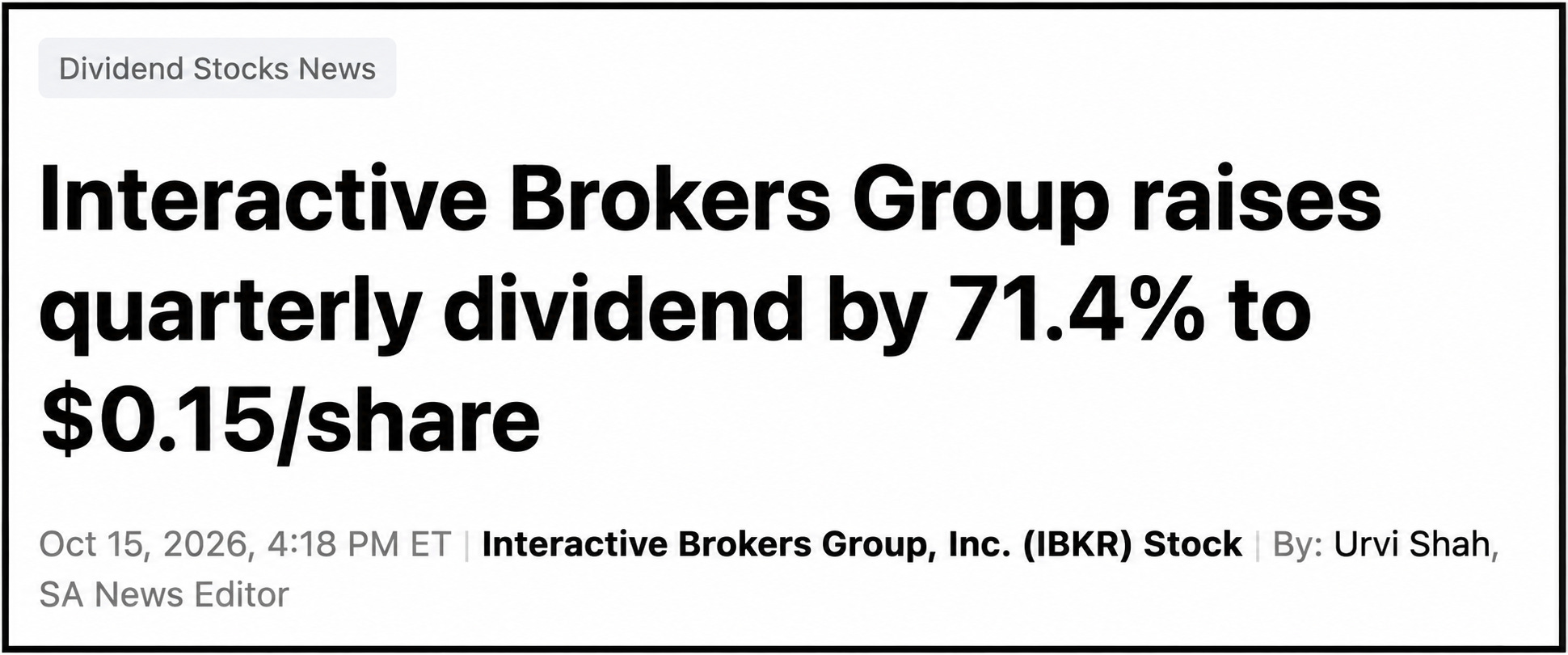
The new annualized payment is $0.60, producing a forward yield of approximately 0.73%.
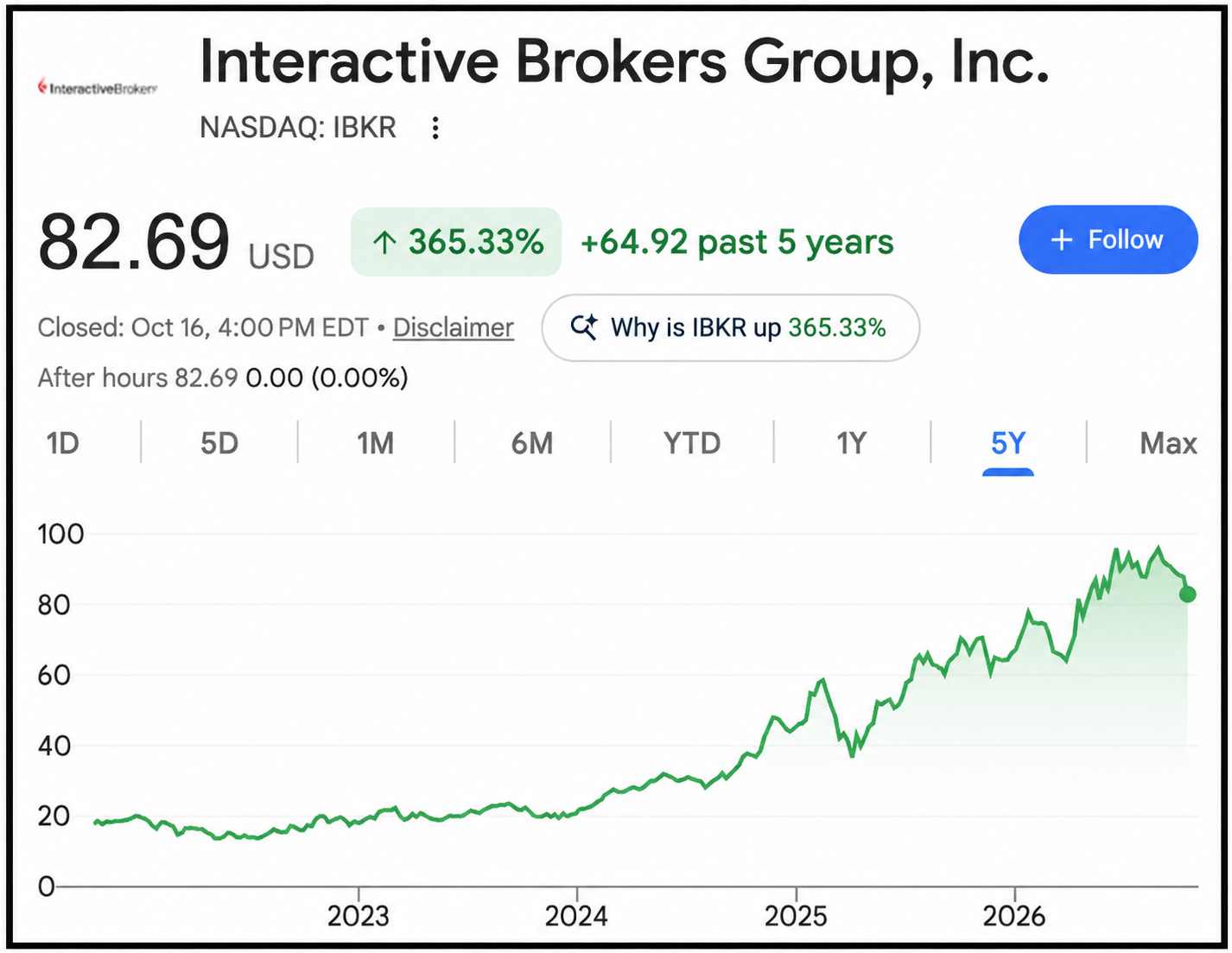
At approximately $83, the stock trades around 31 times 2026 earnings.
If we look at them from a price-to-earnings-growth (PEG) perspective, we see they trade at a premium due to projected 21% EPS CAGR over the next 3-5 years.
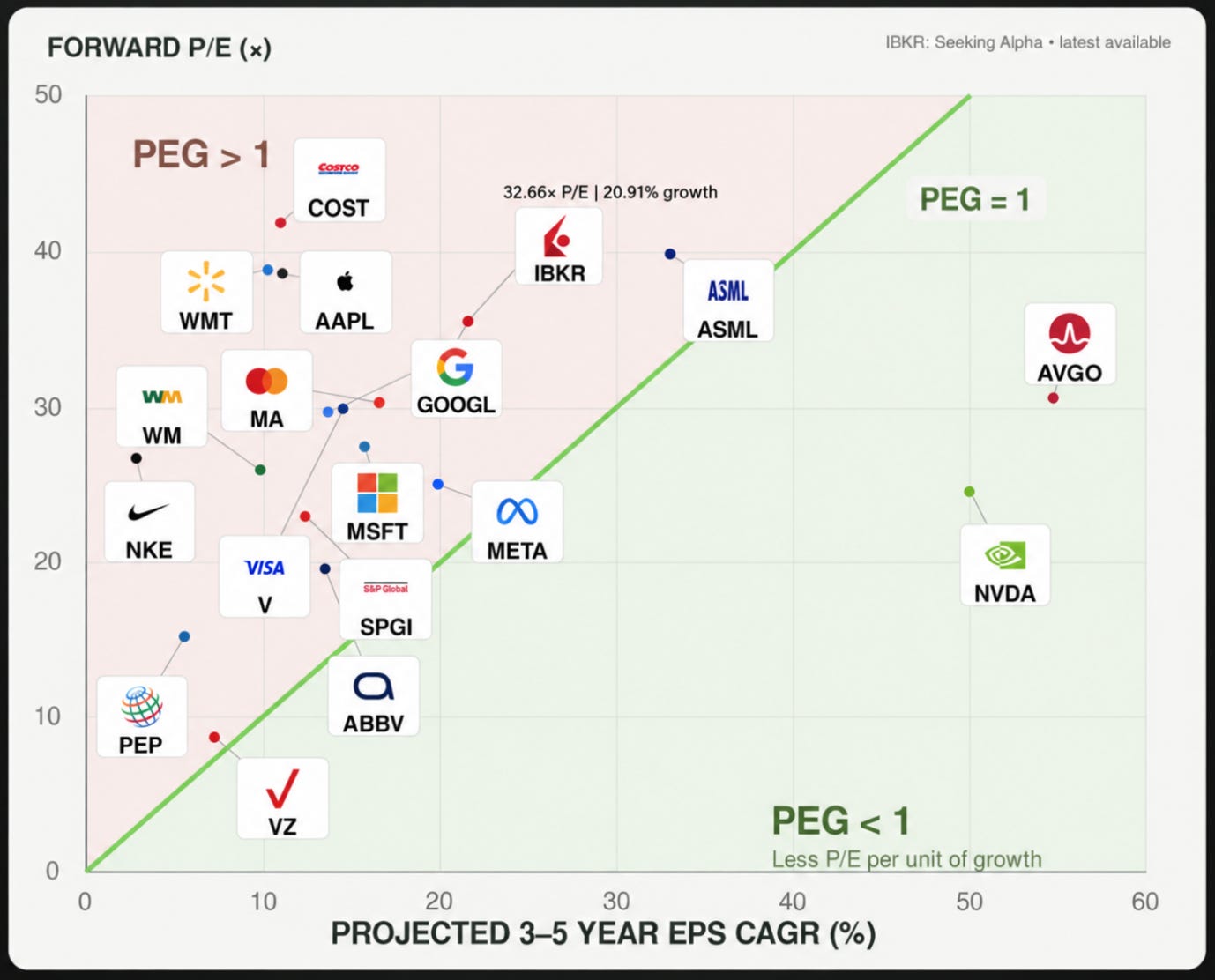
This certainly doesn’t make them the ‘cheapest’ on a PEG basis-
But that level of earnings growth does does justify a premium valaution.
The supplied forecast shows 12 analysts with an average price target of $106.64, implying approximately 29% upside from $82.67, before dividends.
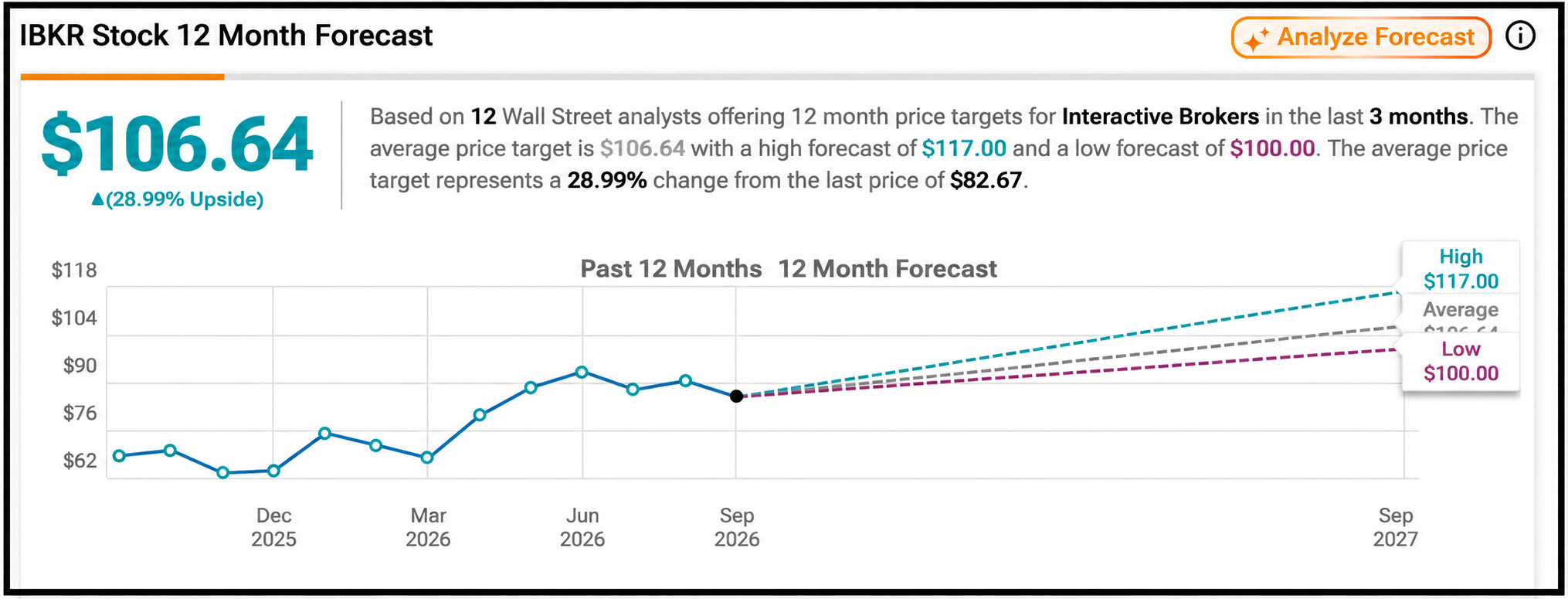
The case for owning Interactive Brokers rests on continued customer growth, efficient operations and rising earnings supporting future dividend increases.
Now, let’s dive into the full list of dividend stocks with the most upside according to Wall Street.